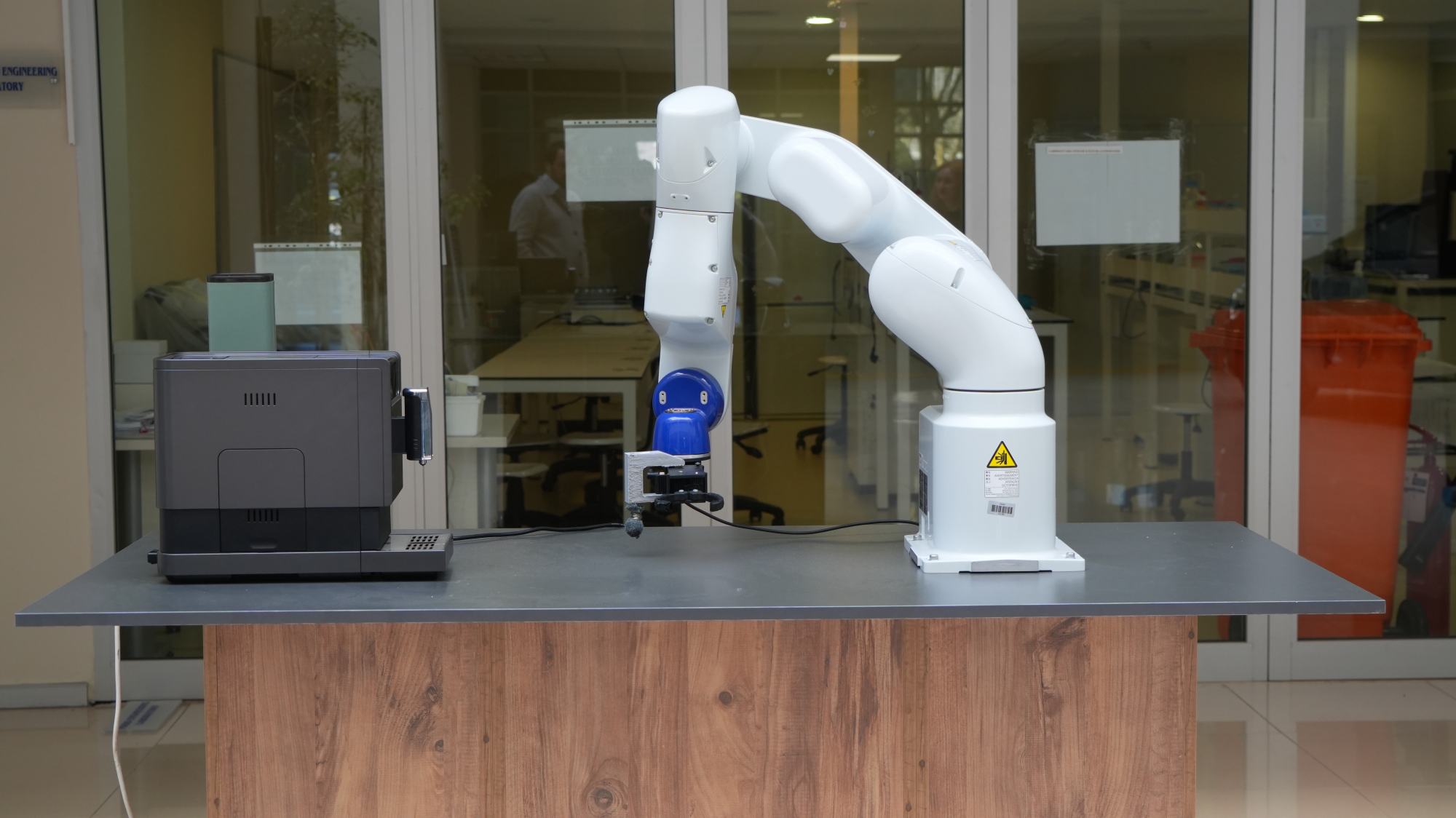
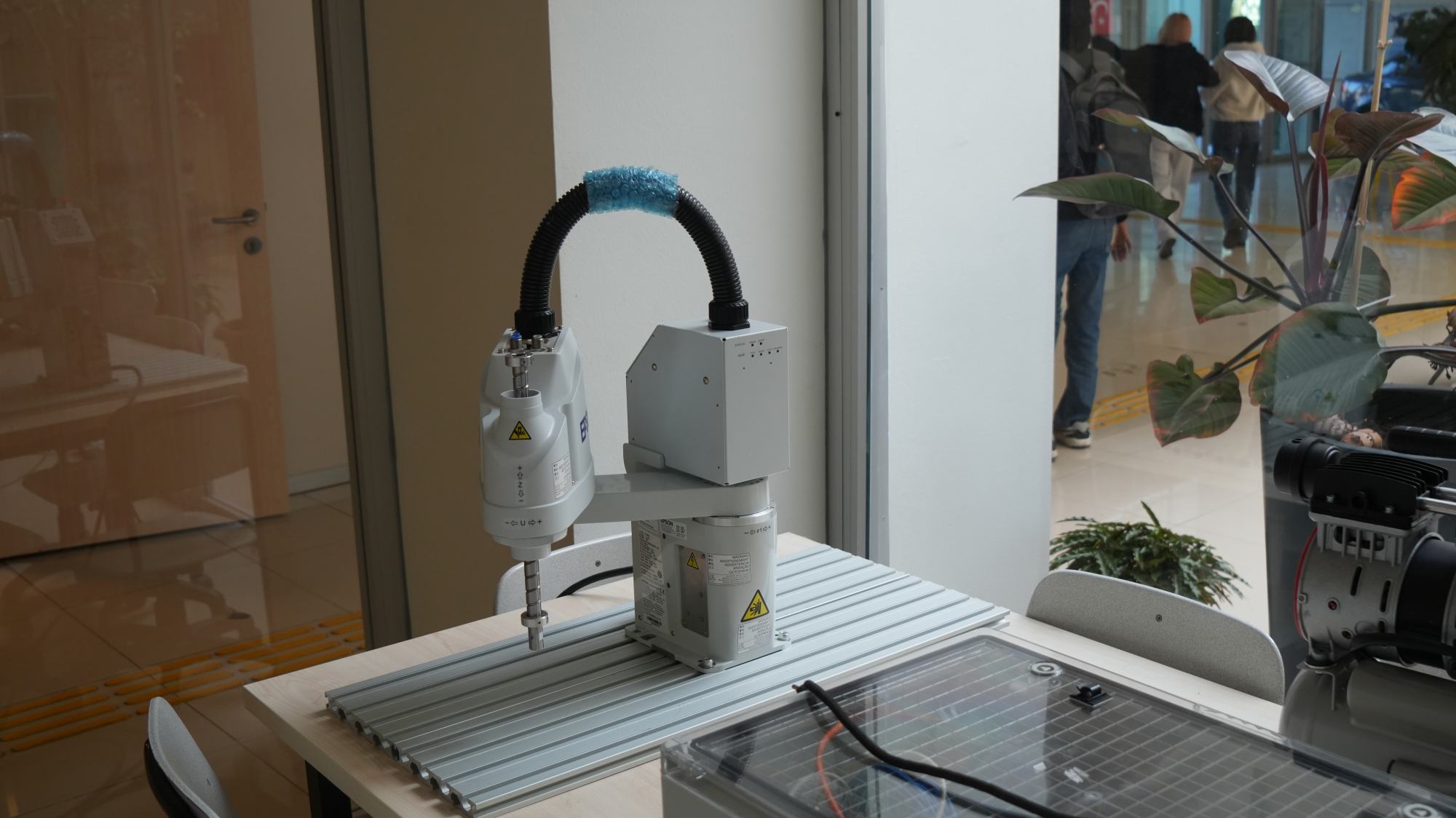
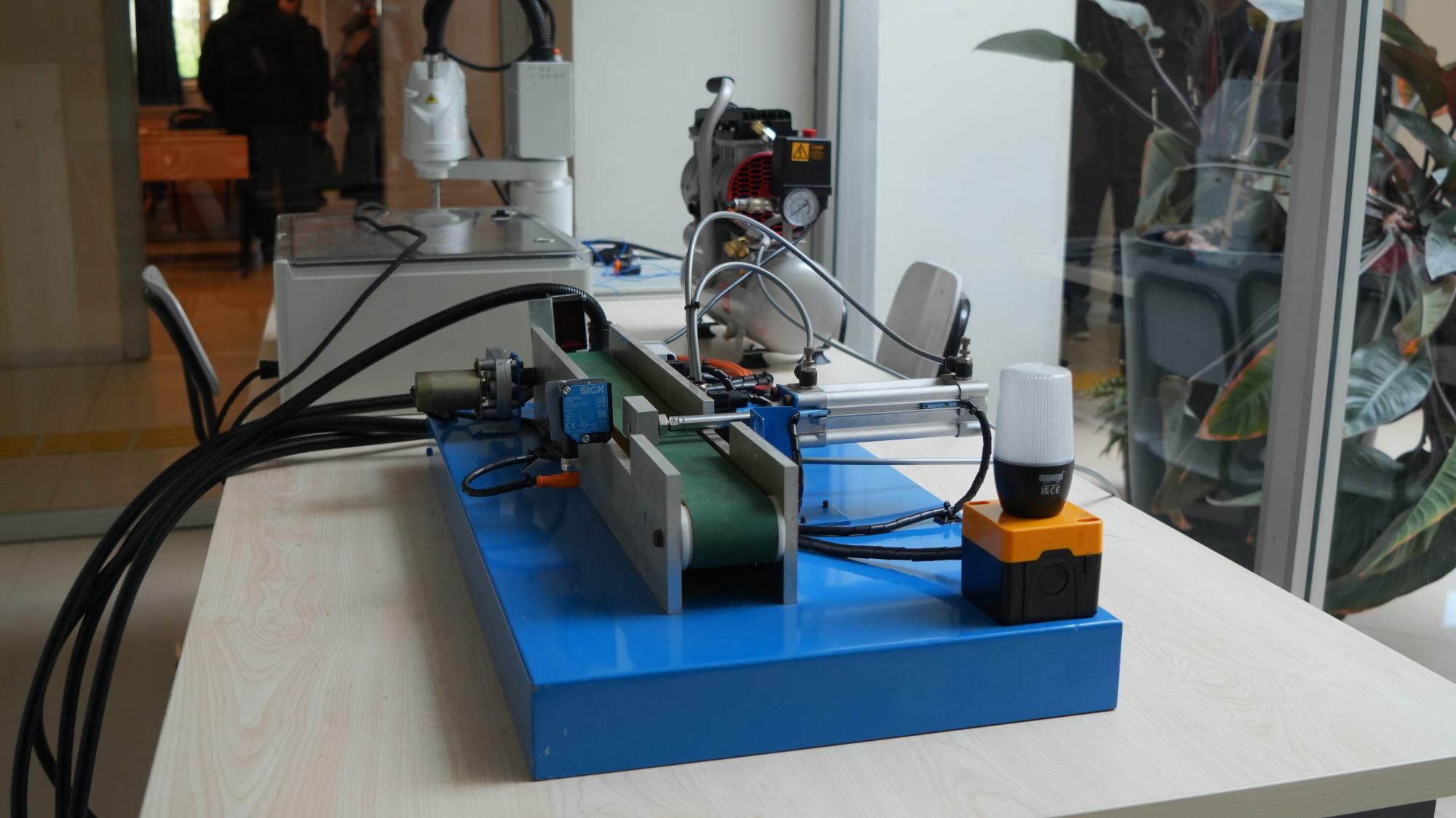
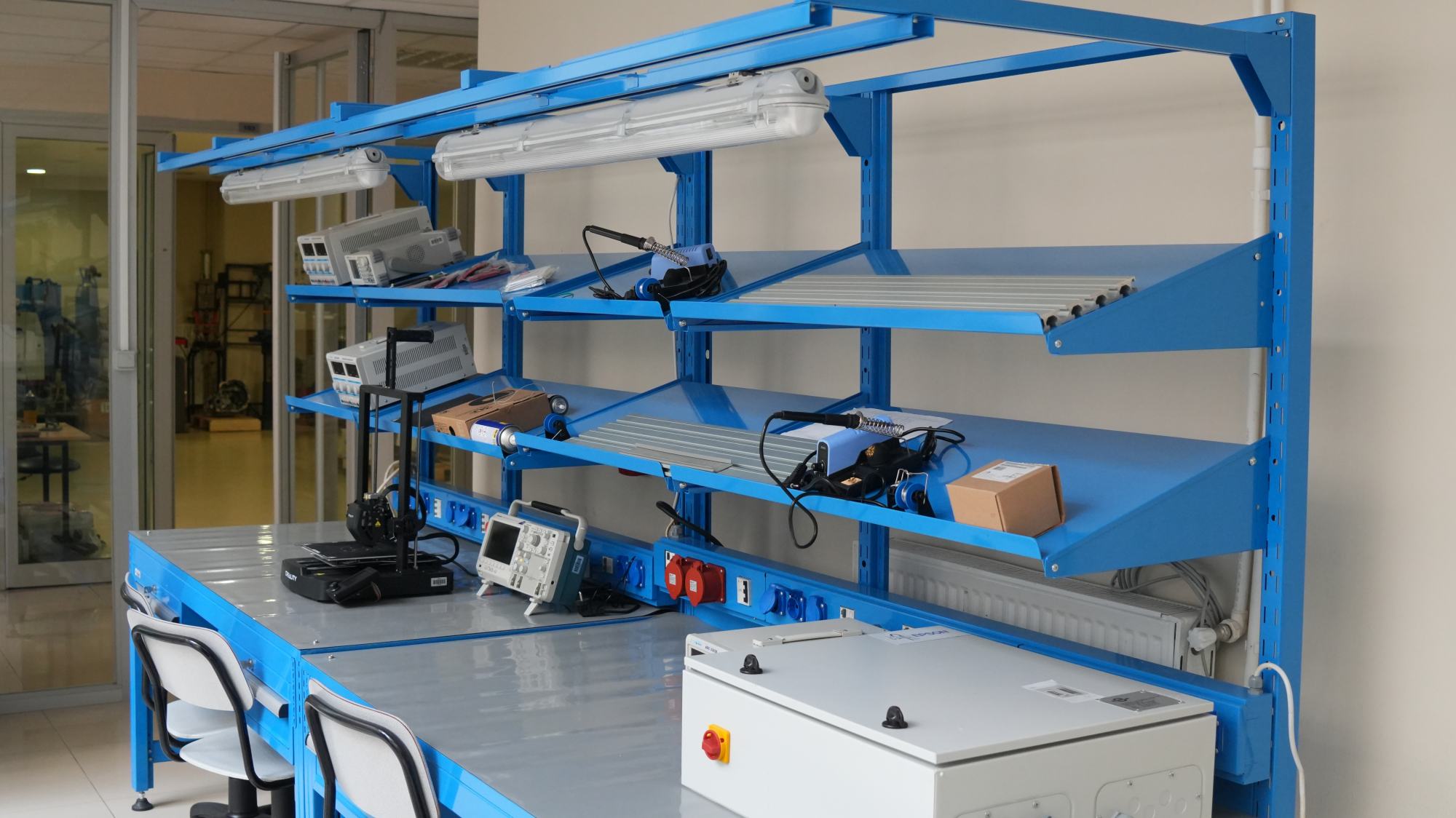
The Industrial Robotics Laboratory provides an advanced hands-on environment where students can learn modern manufacturing systems through a holistic approach and experience Industry 4.0–based automation applications. The laboratory infrastructure integrates six-axis industrial robots, SCARA robot systems, conveyor and elevator modules, PLC-based control units, various industrial sensors, and 3D printing technologies within a simulated automated production line. Through this integrated setup, students are able not only to study individual components but also to analyze and program fully integrated automation systems.
The six-axis robot systems available in the laboratory enable programming of multi-axis industrial applications such as welding, assembly, material handling, and pick-and-place operations. SCARA robots, which are widely used in high-speed and high-precision assembly tasks, allow students to gain practical experience in robot kinematics, trajectory planning, and motion optimization. Production line scenarios created using conveyor and elevator modules teach automated material flow control and synchronized system management.
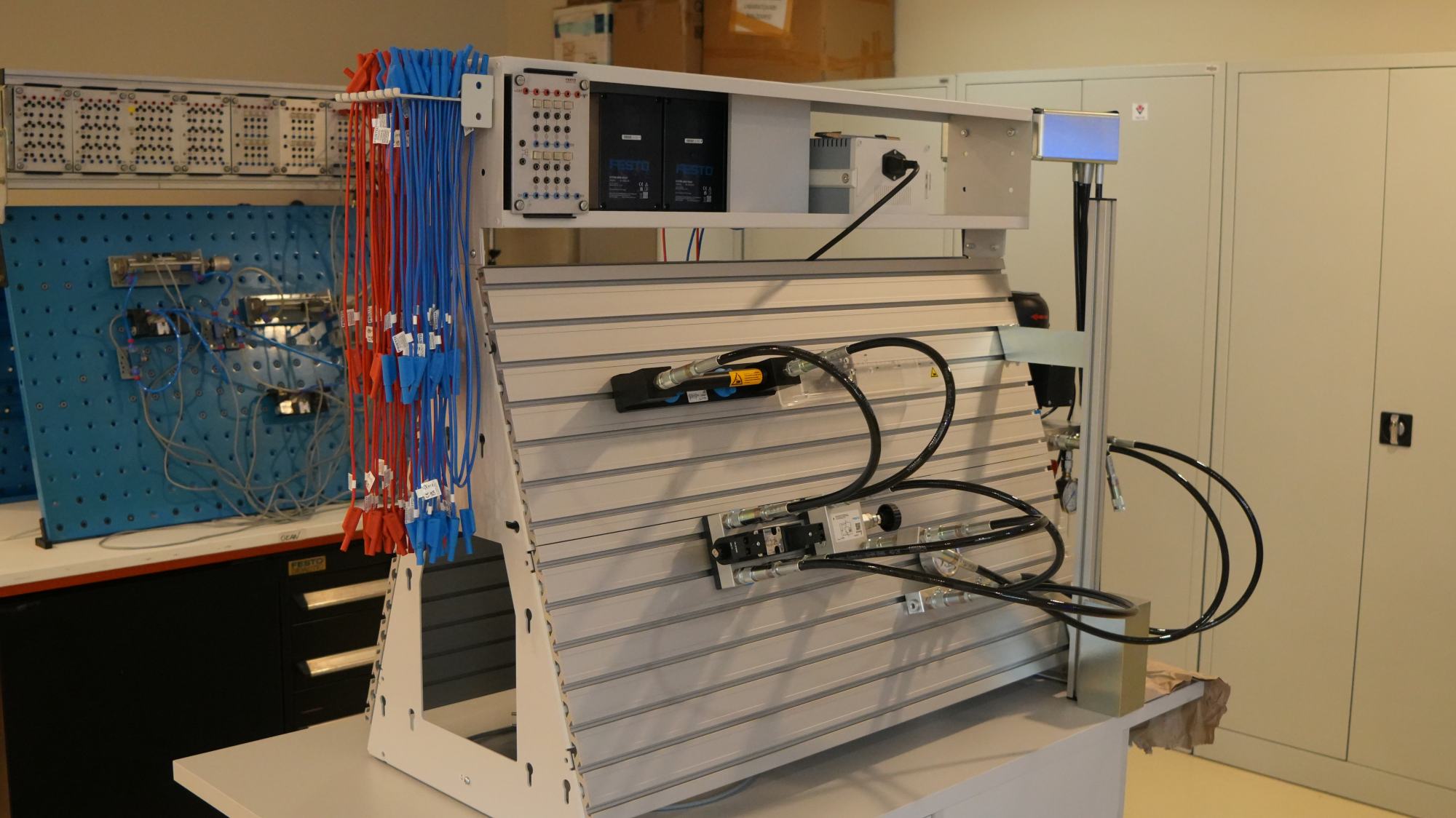
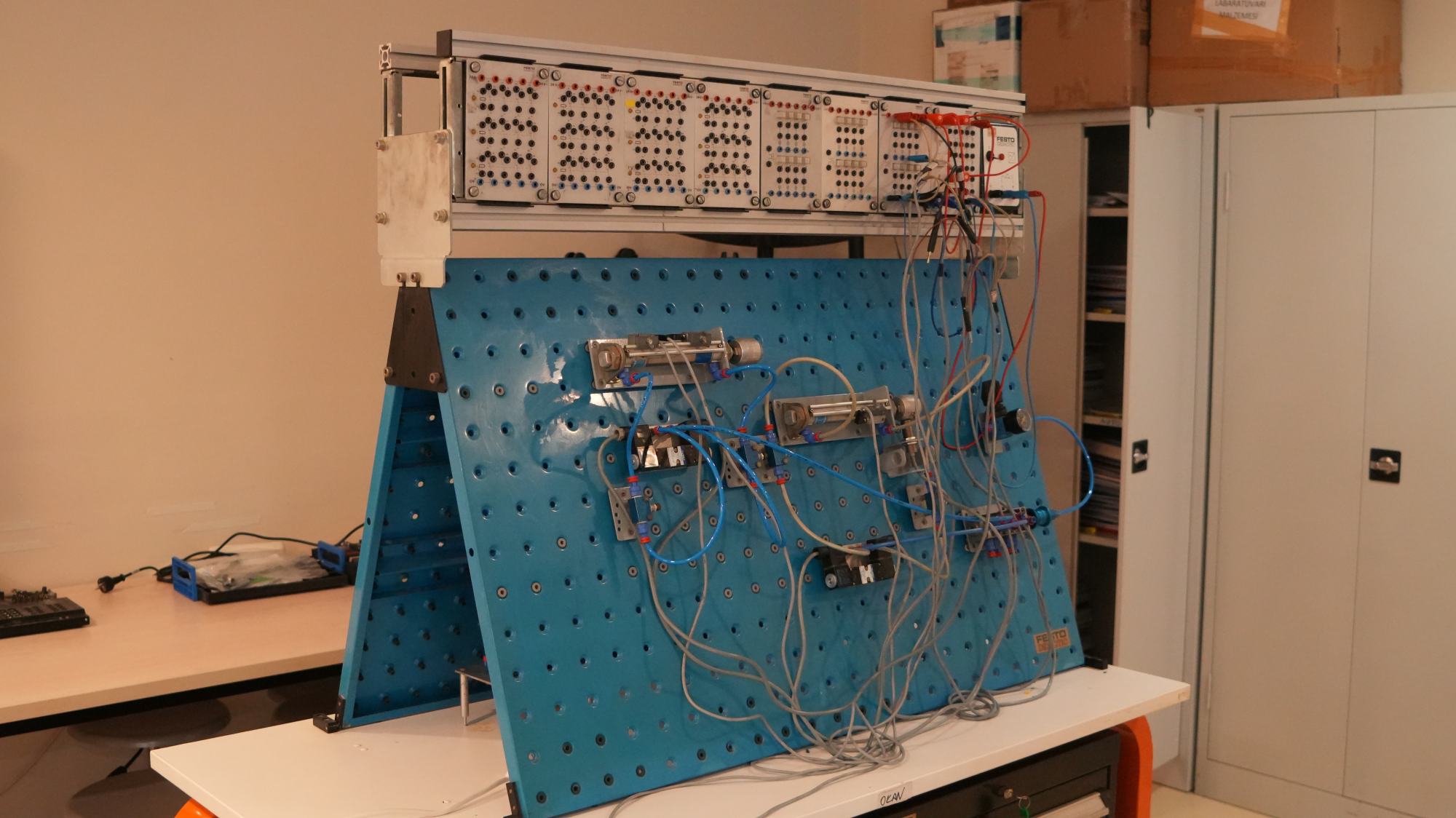
With the support of PLC control systems and industrial sensor infrastructure, students learn to read sensor data, develop logic control algorithms, and implement integration between robots, conveyors, and actuators. Using photoelectric sensors, limit switches, and position detection systems, real-time feedback mechanisms are established, enabling the practical application of closed-loop control principles. This process helps students develop technical competencies in automation system design, fault analysis, and troubleshooting.
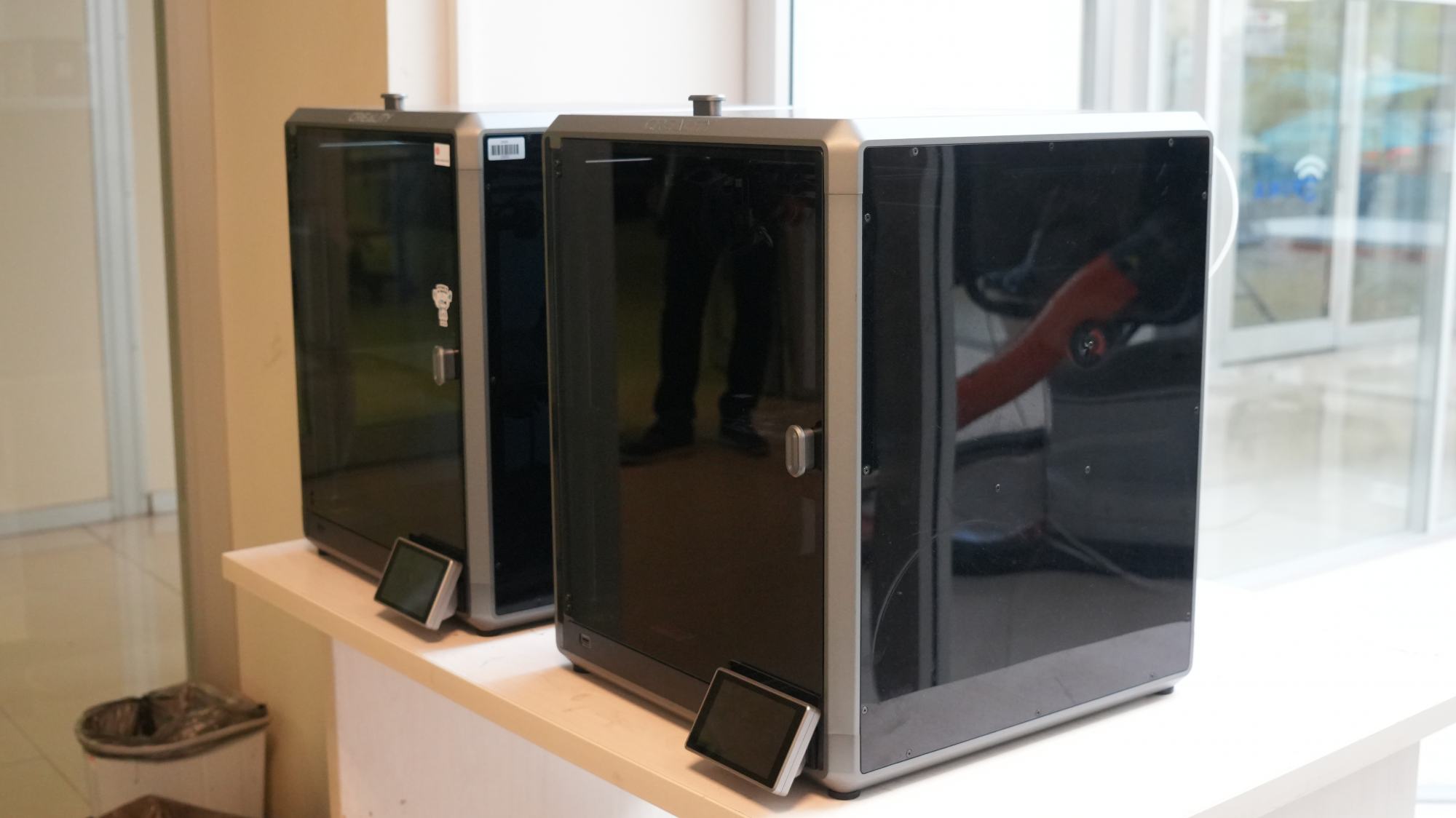
The laboratory also includes 3D printing technologies, which support rapid prototyping and fast design validation processes. Students can quickly manufacture robotic grippers, mechanical connectors, or production line components that they design and immediately test them within the system. In this way, the entire design–manufacturing–integration cycle can be carried out within a single laboratory environment.
The Industrial Robotics Laboratory aims not only to teach robot programming but also to train future engineers capable of designing fully integrated automation systems that operate with sensor feedback, PLC control architectures, and complete production line logic.