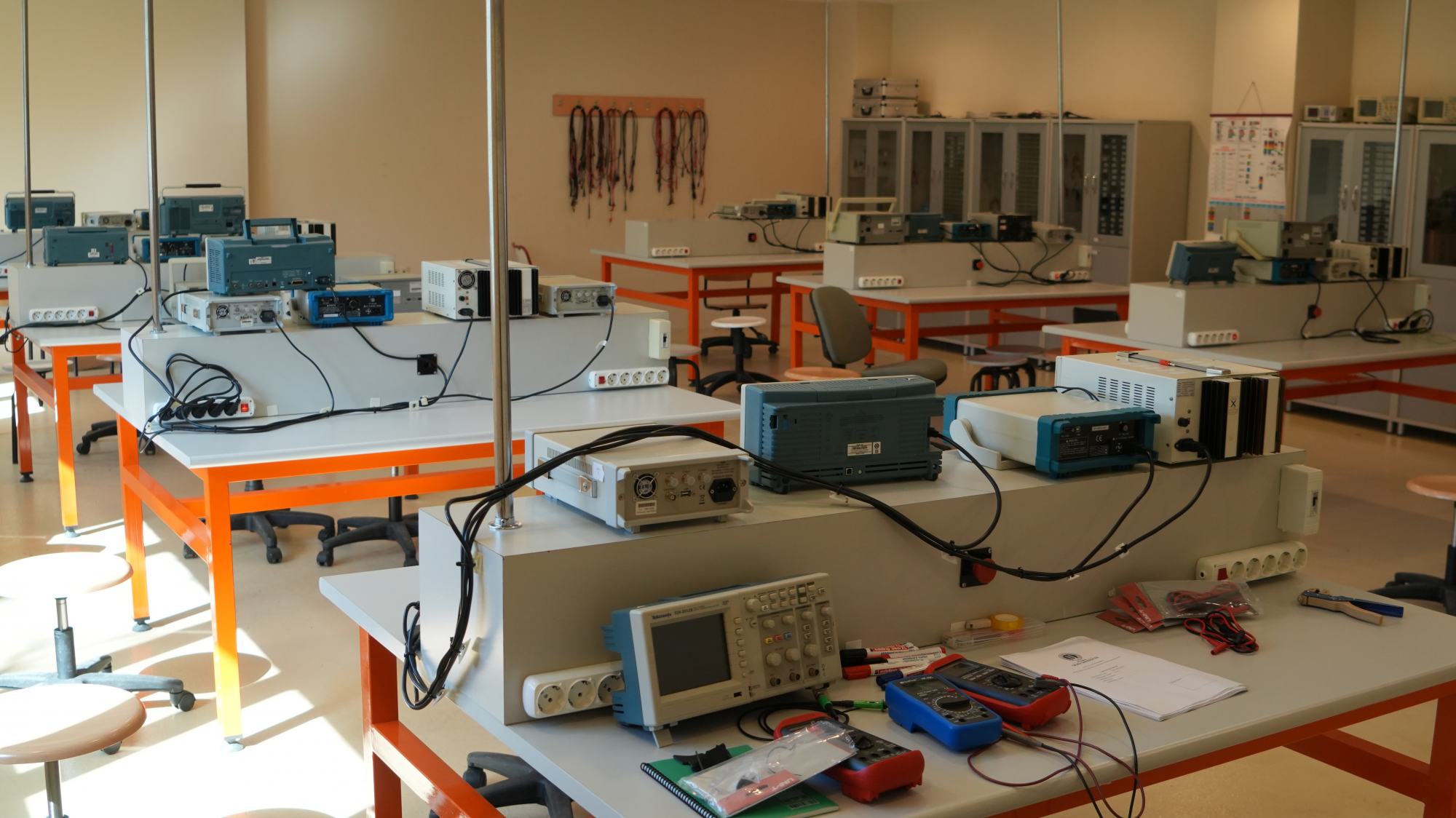
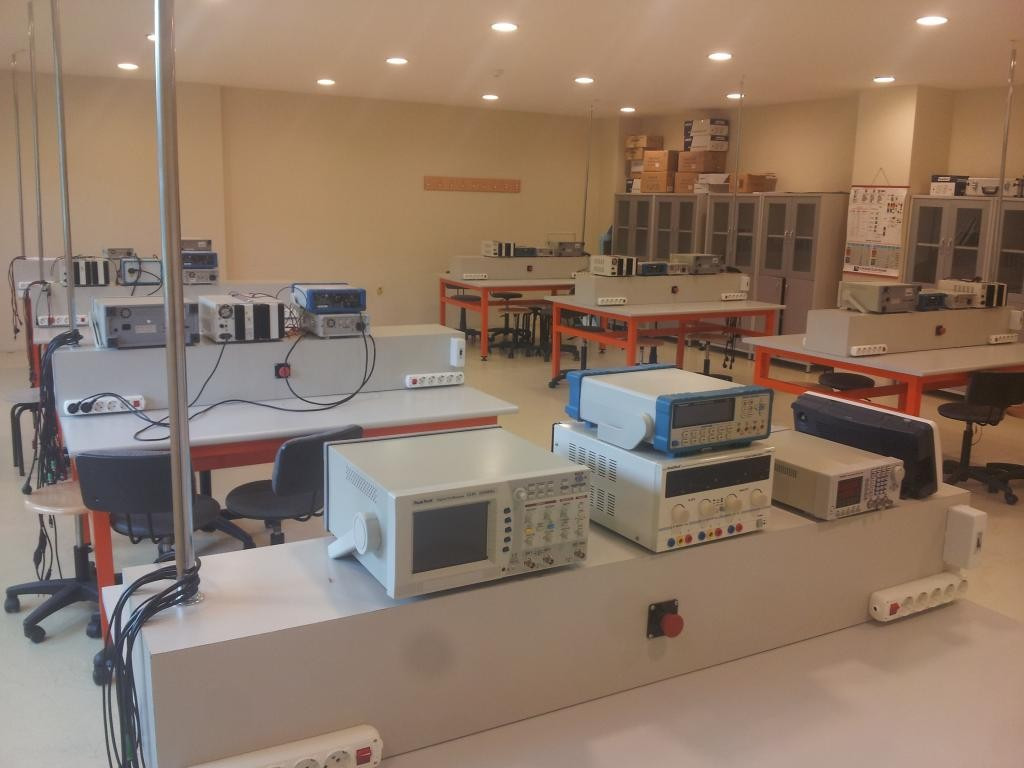
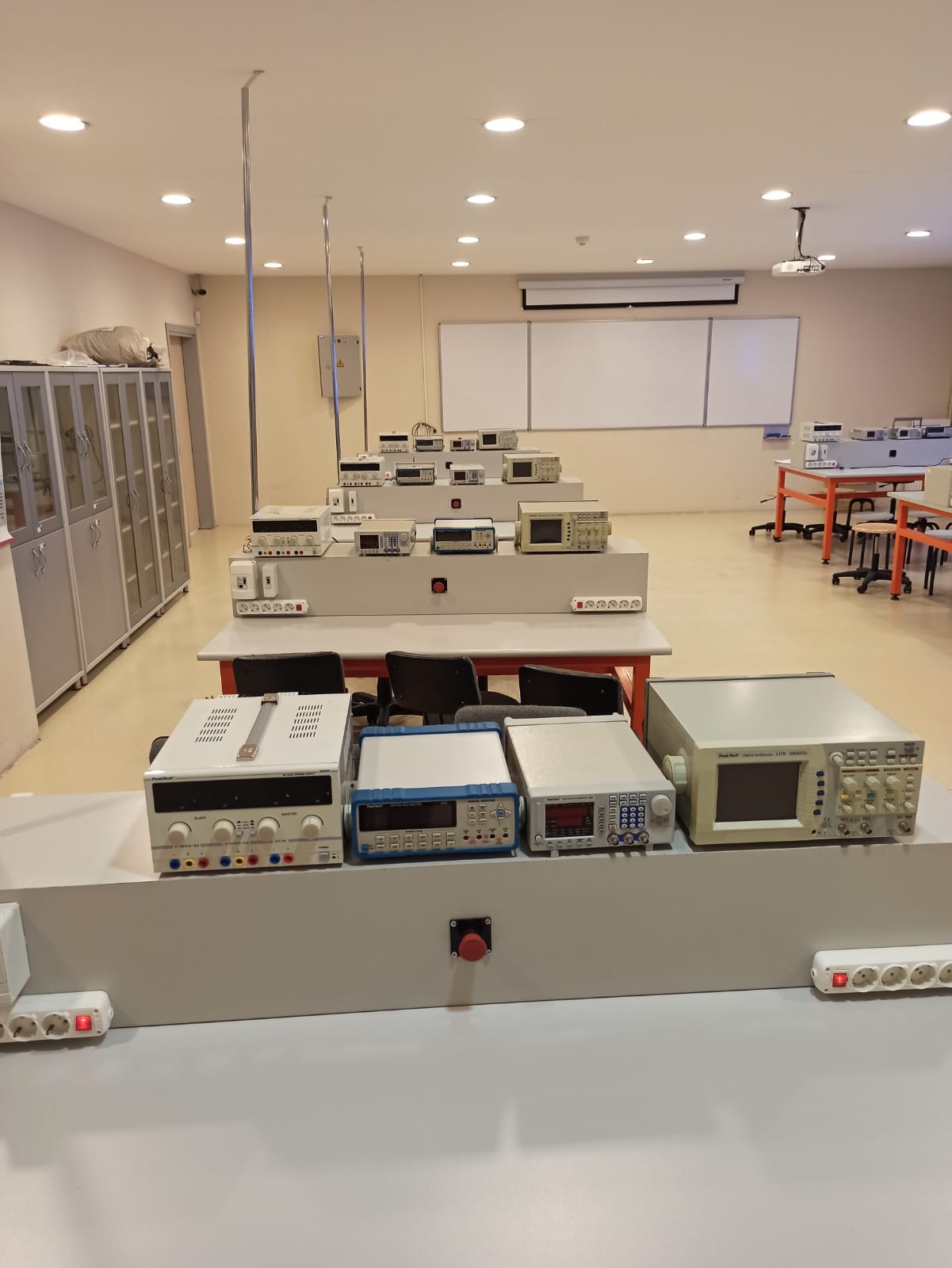
The Basic Electronics Laboratory is designed to introduce students to the fundamental procedures of electrical measurement techniques and to enable them to learn circuit theory through hands-on experimentation. Laboratory activities are structured to experimentally verify the core concepts of electrical circuits while allowing theoretical knowledge to be tested in real measurement environments. Through this approach, students gain not only an understanding of circuit analysis methods but also competencies in measurement accuracy, error analysis, and safe laboratory practices.
The experimental content covers linear and nonlinear resistive circuits, simple dynamic circuits, and single-phase linear AC circuits. Students experimentally verify Ohm’s Law and Kirchhoff’s Laws, investigate the behavior of RC and RL circuits, and analyze phase, impedance, and frequency relationships in alternating current circuits. In this way, fundamental electrical and electronic principles are understood through concrete measurement data and experimental observation.
The laboratory also provides infrastructure support for undergraduate courses in basic electronics and logical design. Each workstation is equipped with modern test and measurement instruments, including a power supply, multimeter, signal generator, mixed-signal oscilloscope, and a personal computer. This equipment allows students to observe analog and digital signals, analyze circuit responses in real time, and test the circuits they design using professional measurement devices.
The Basic Electronics Laboratory aims to educate students not only as individuals capable of building circuits but also as future engineers who can interpret measurement results, perform systematic analysis, and approach electronic system design with a strong and reliable foundation.