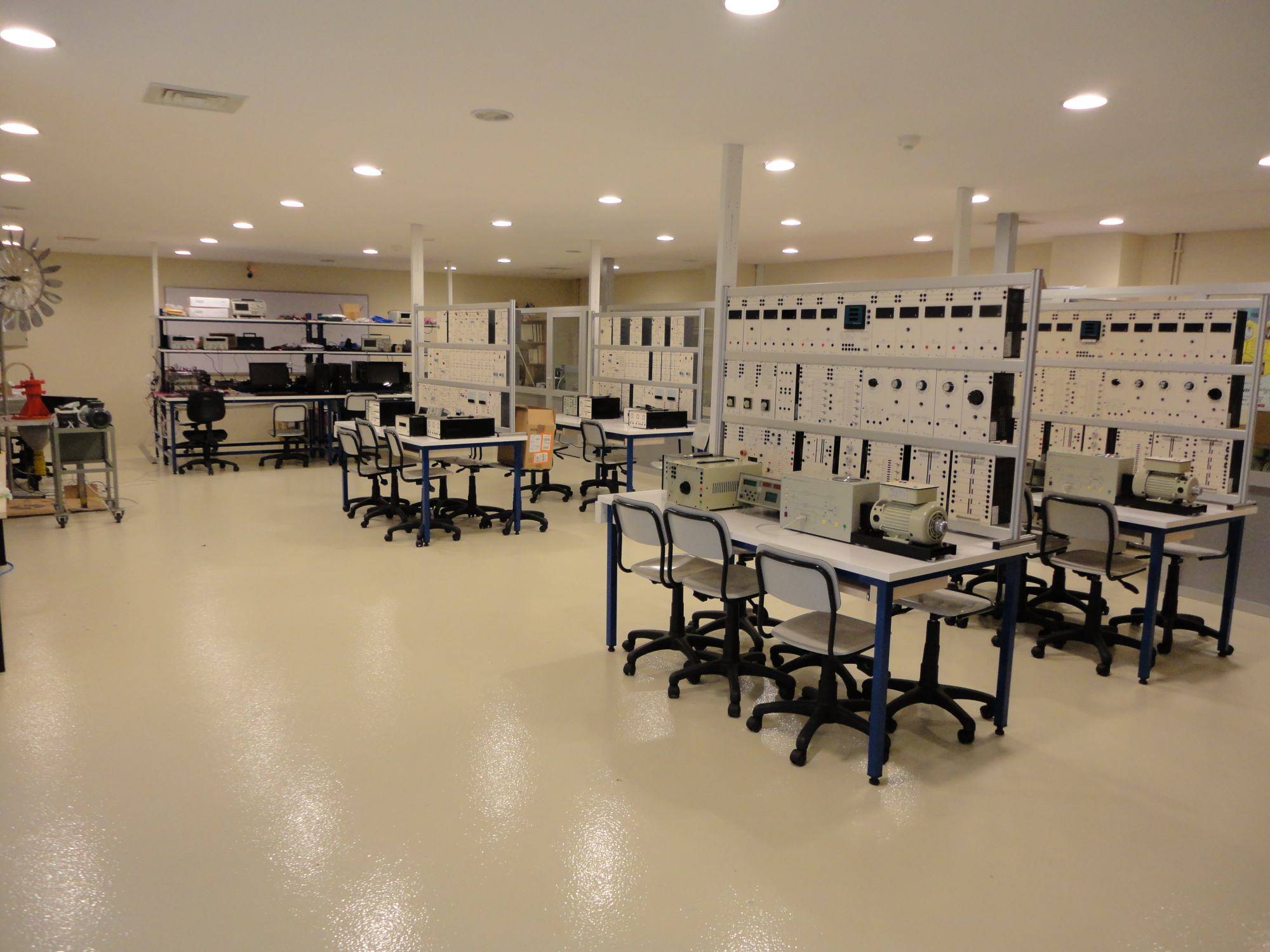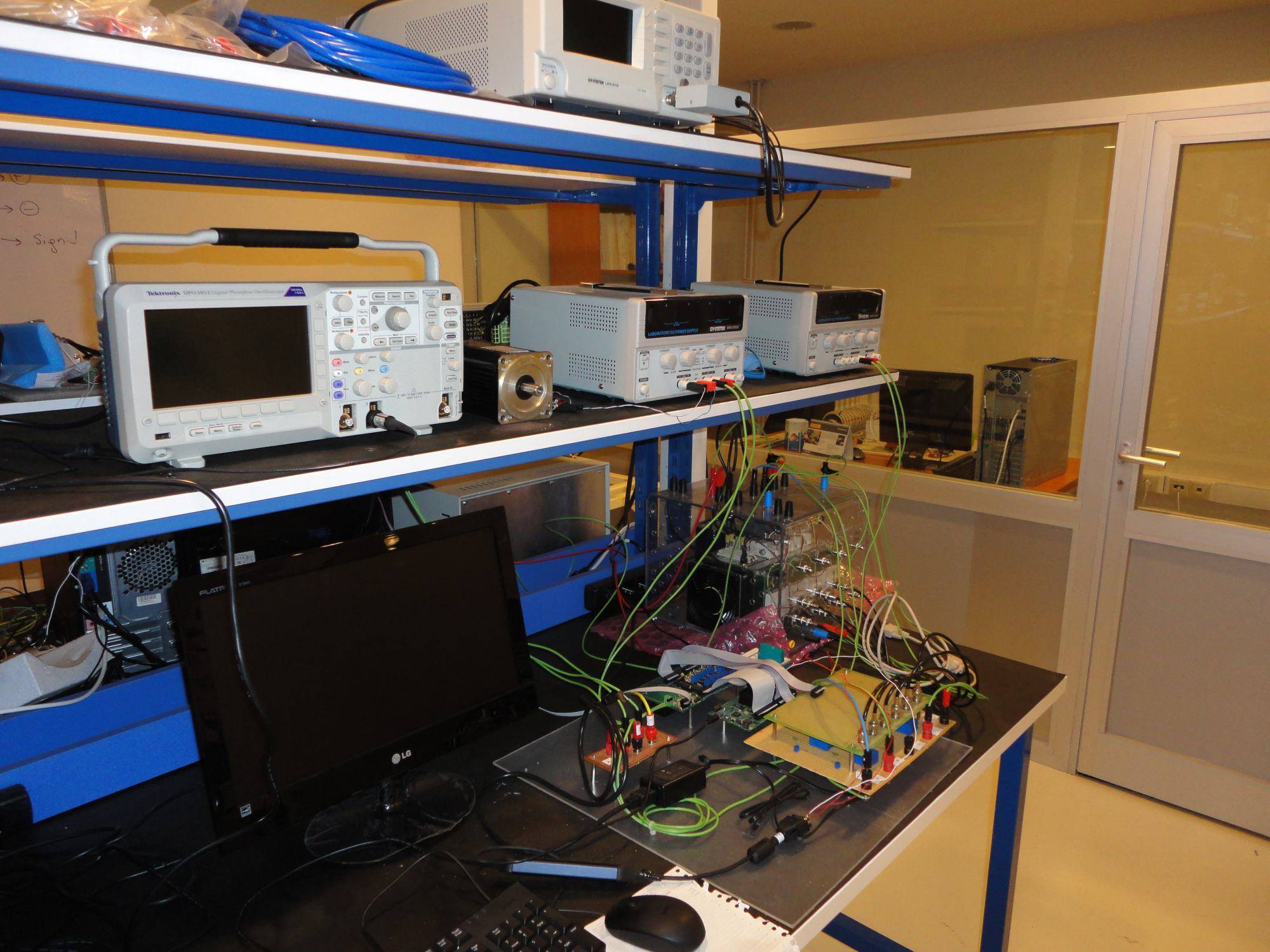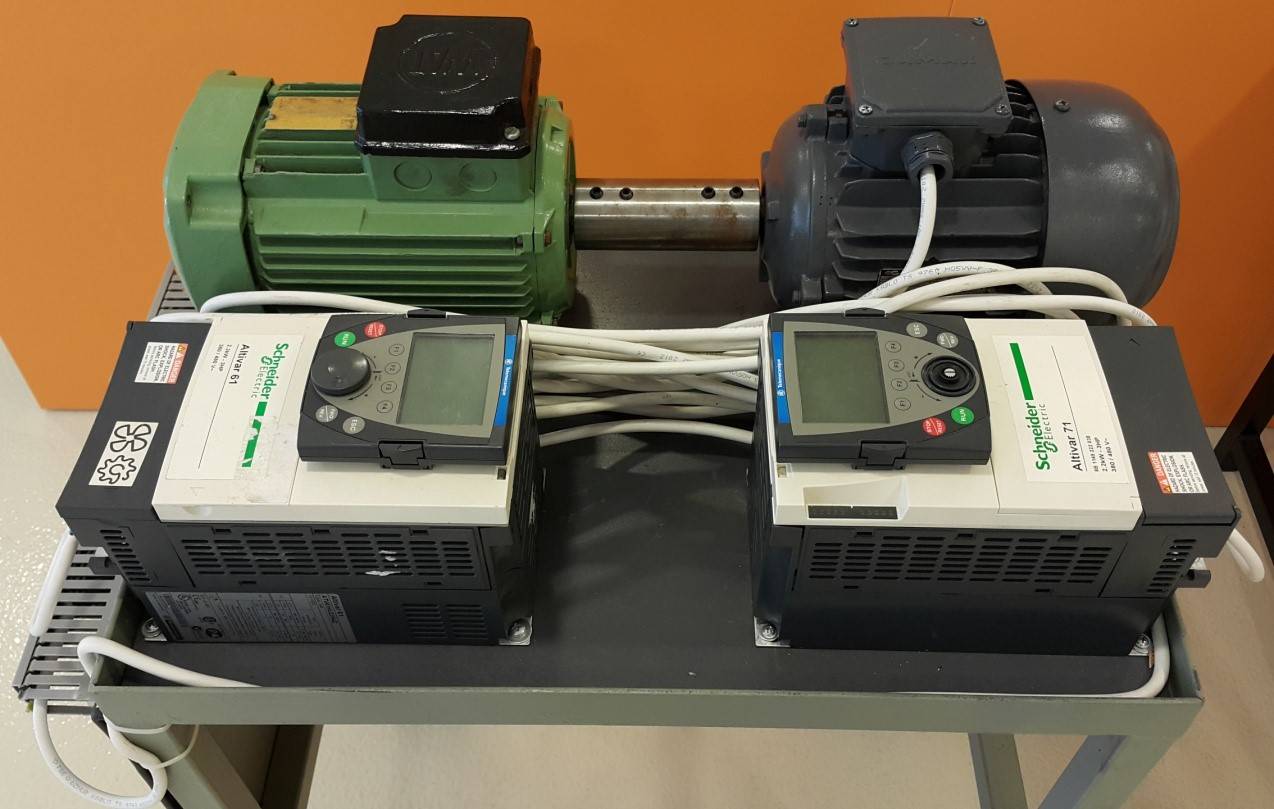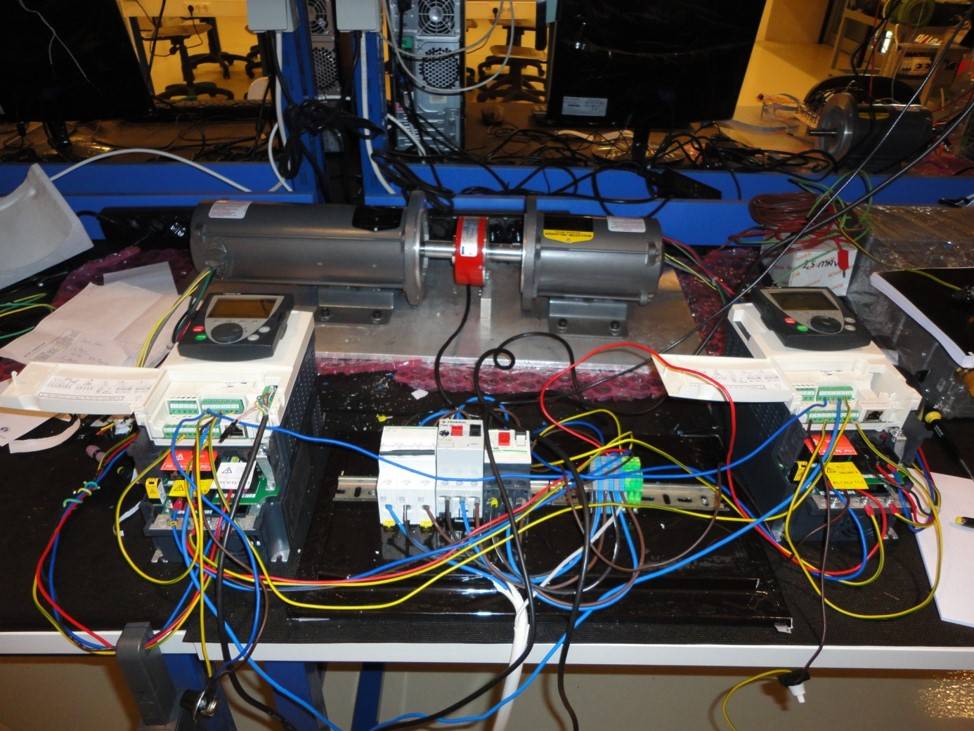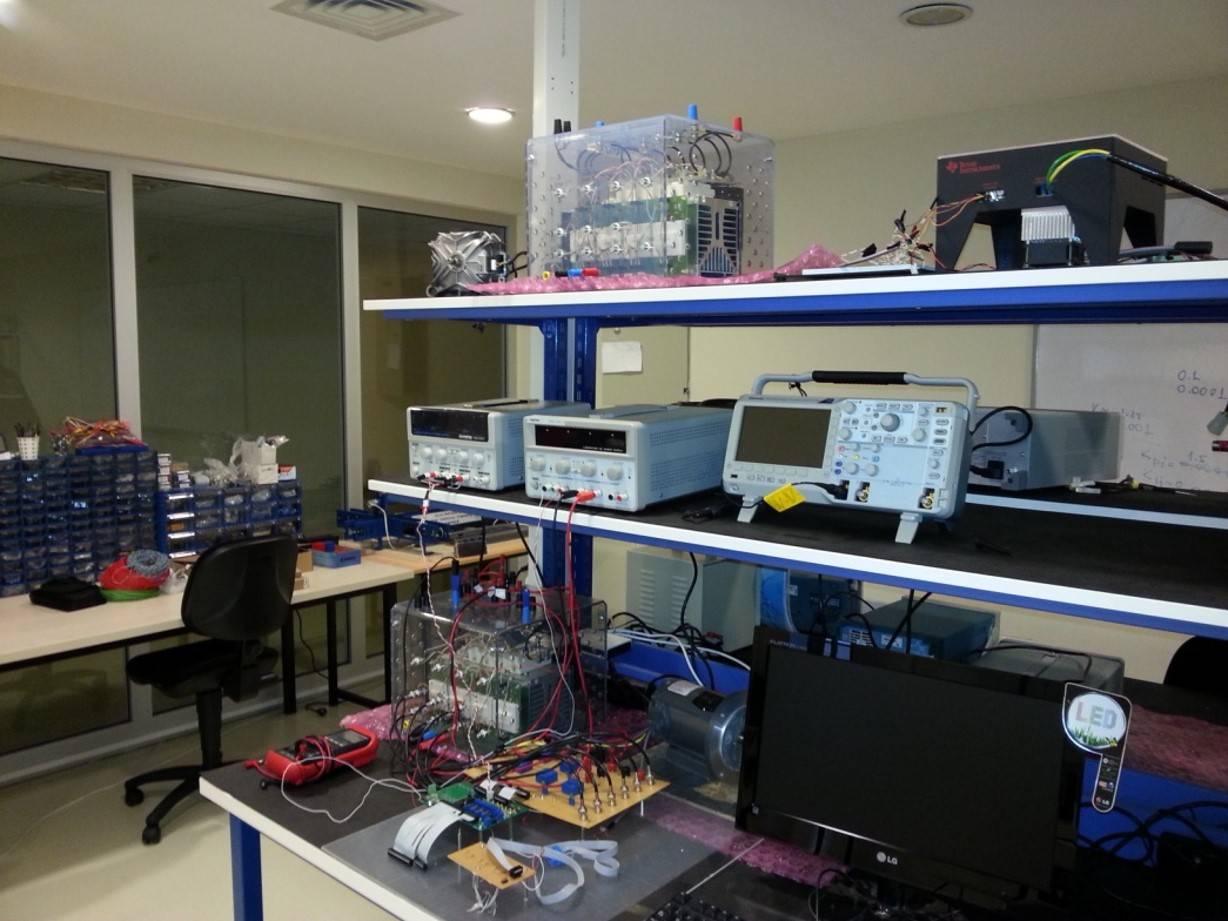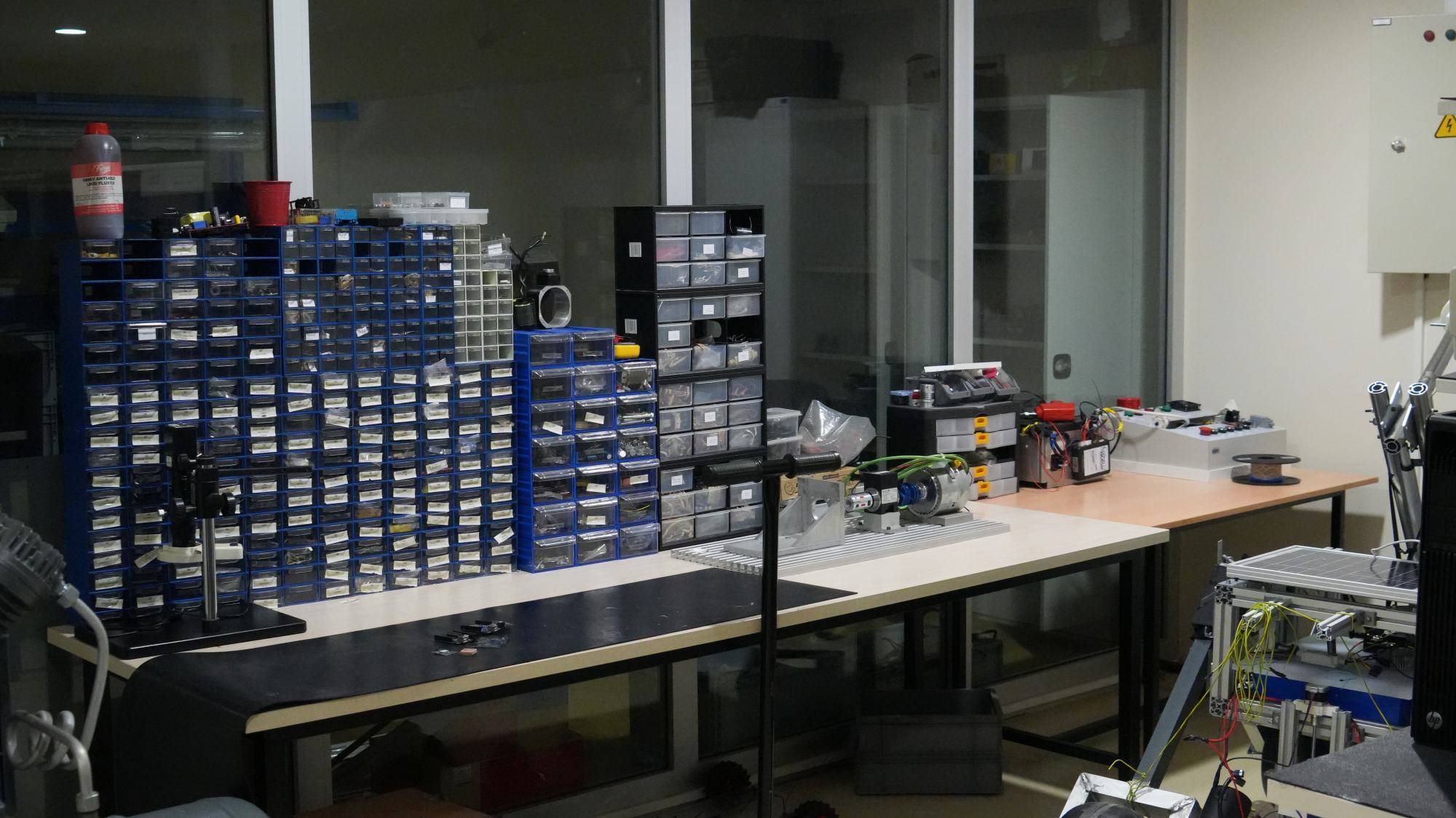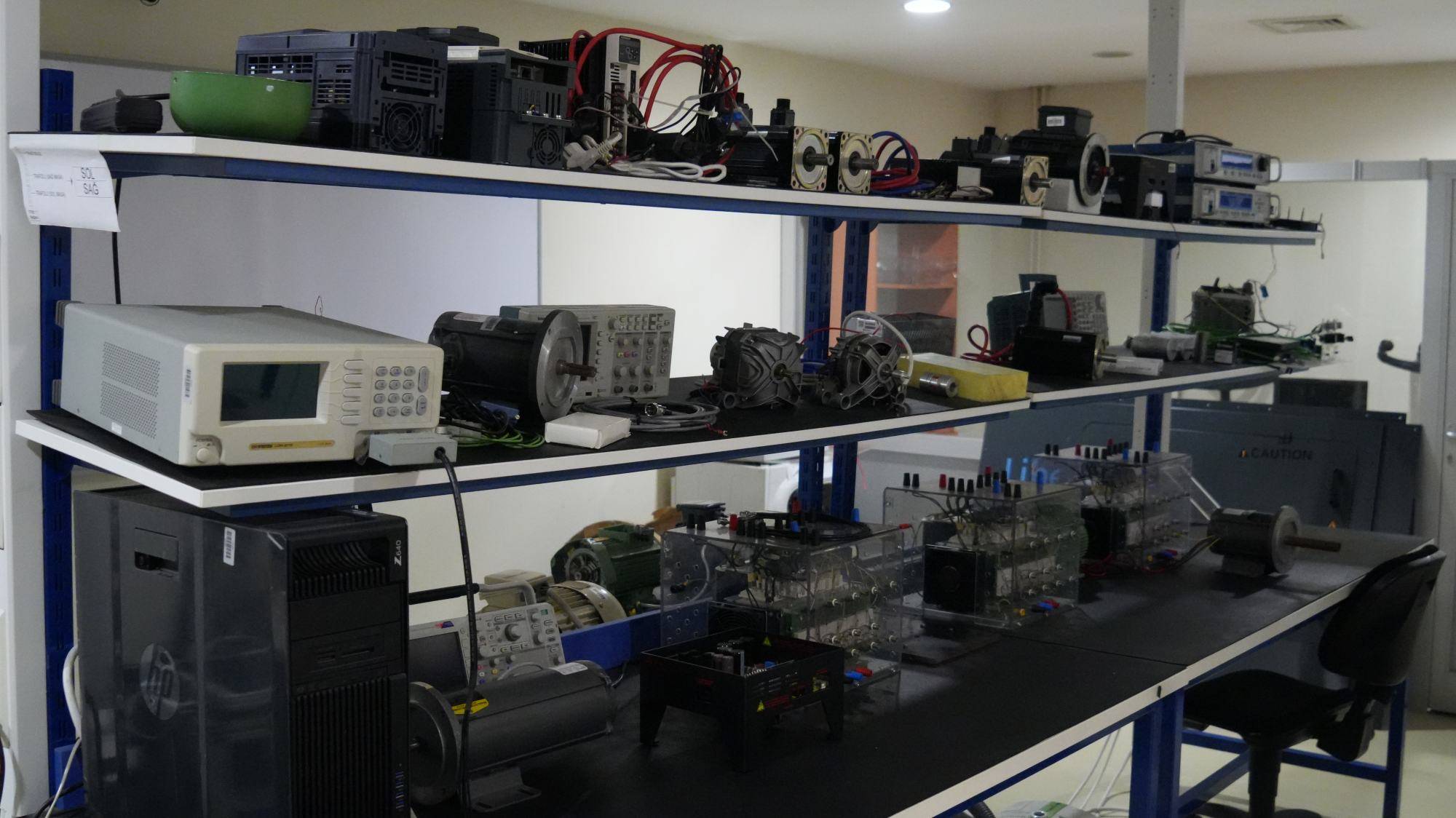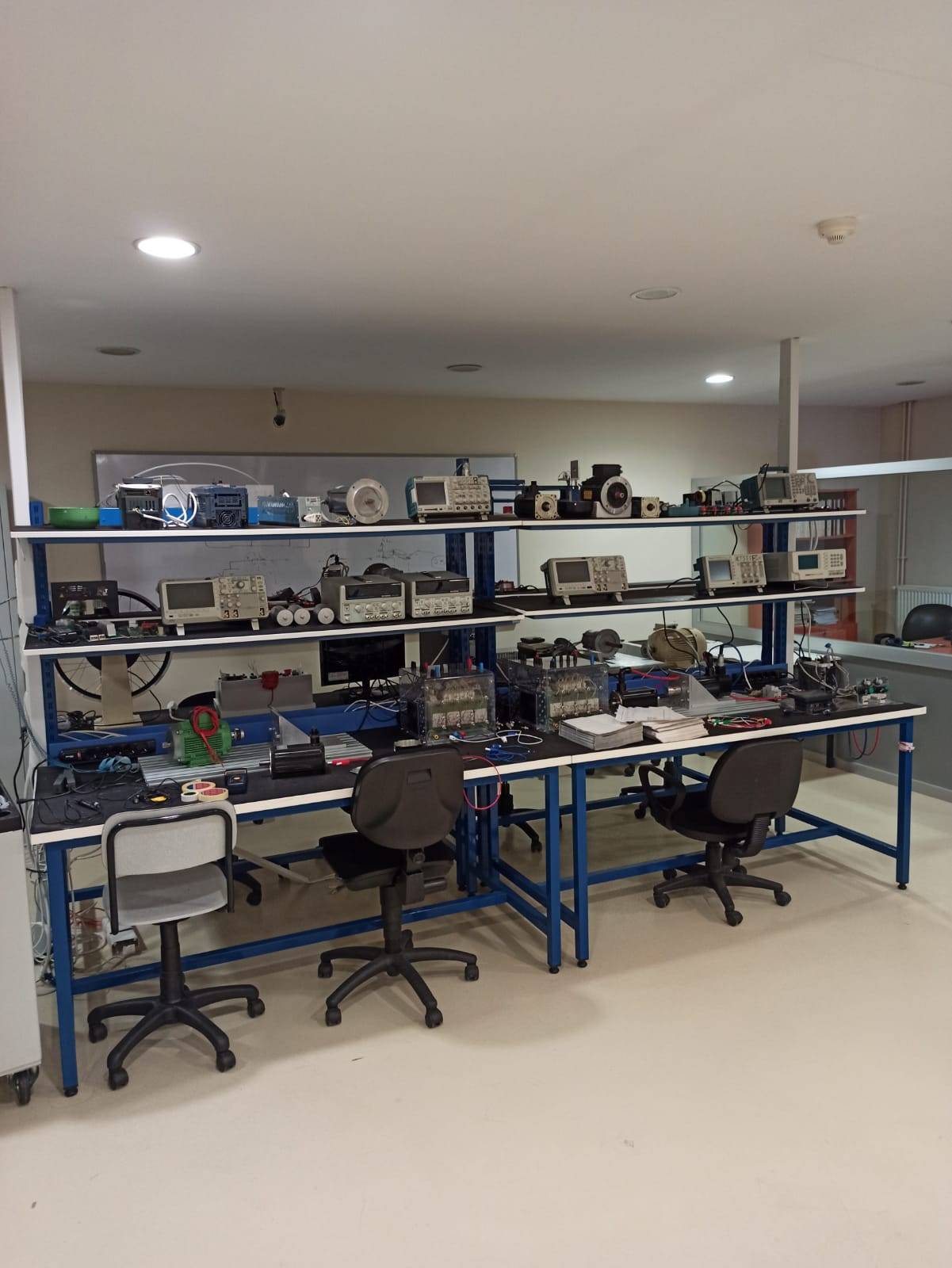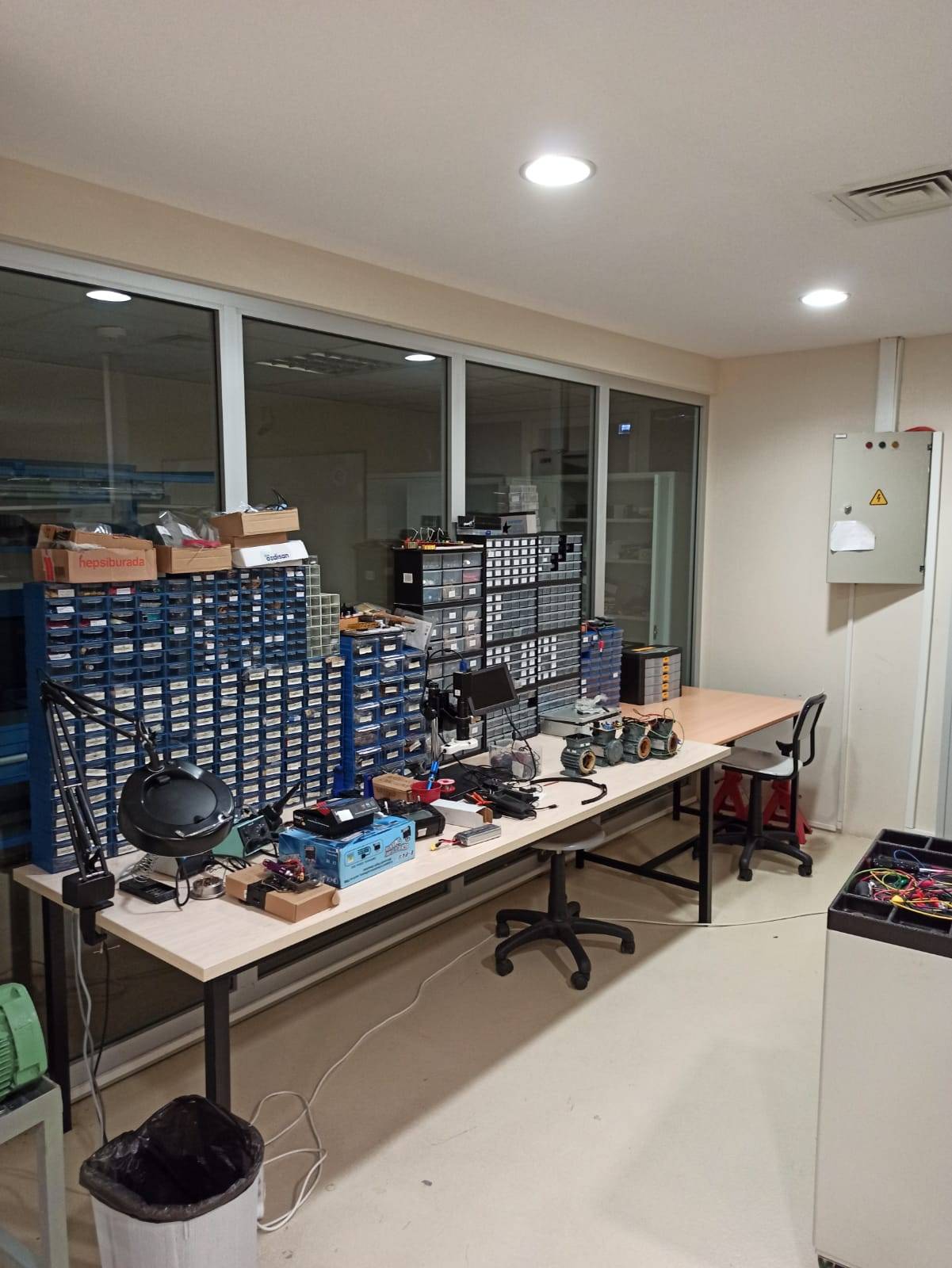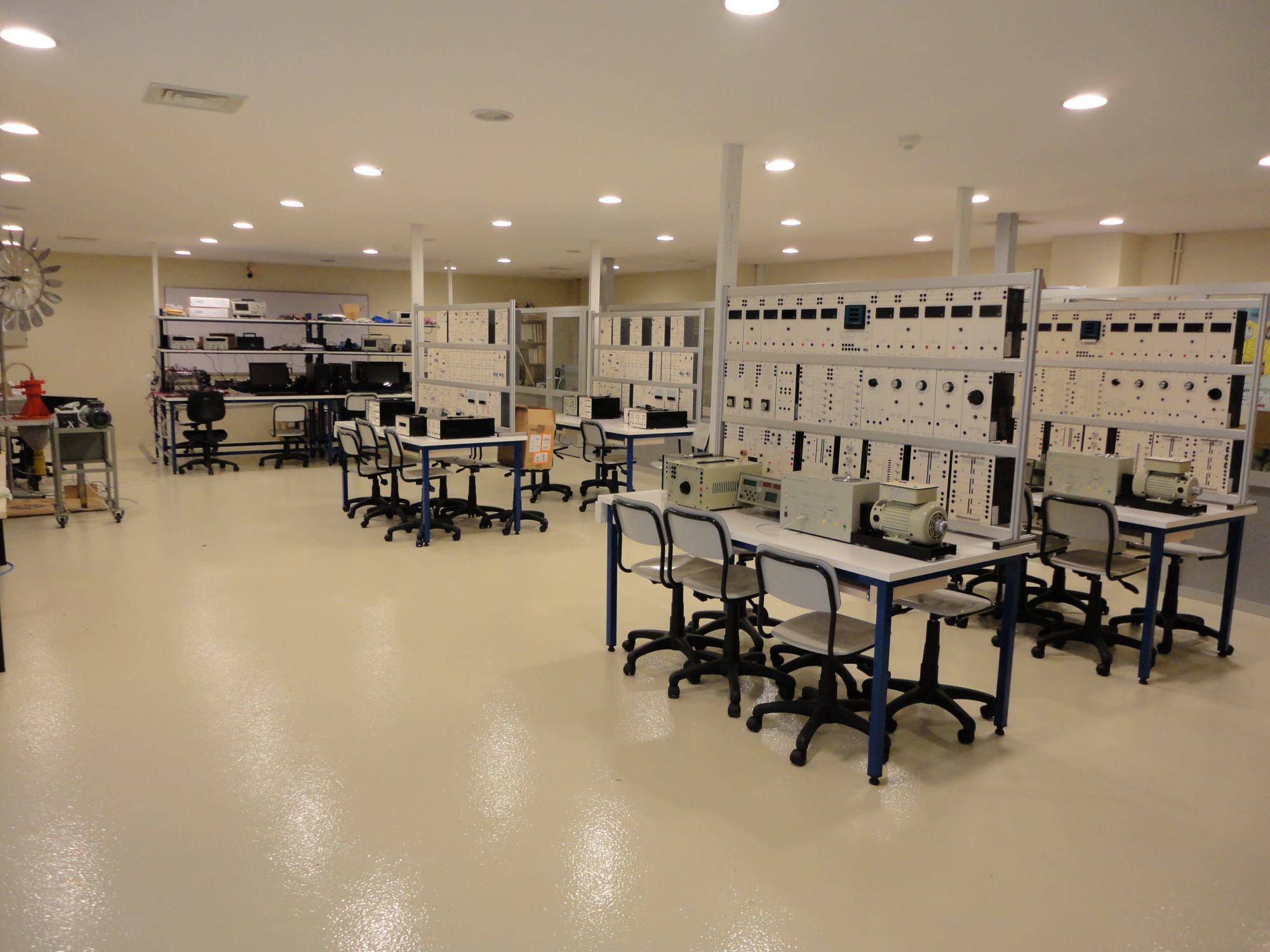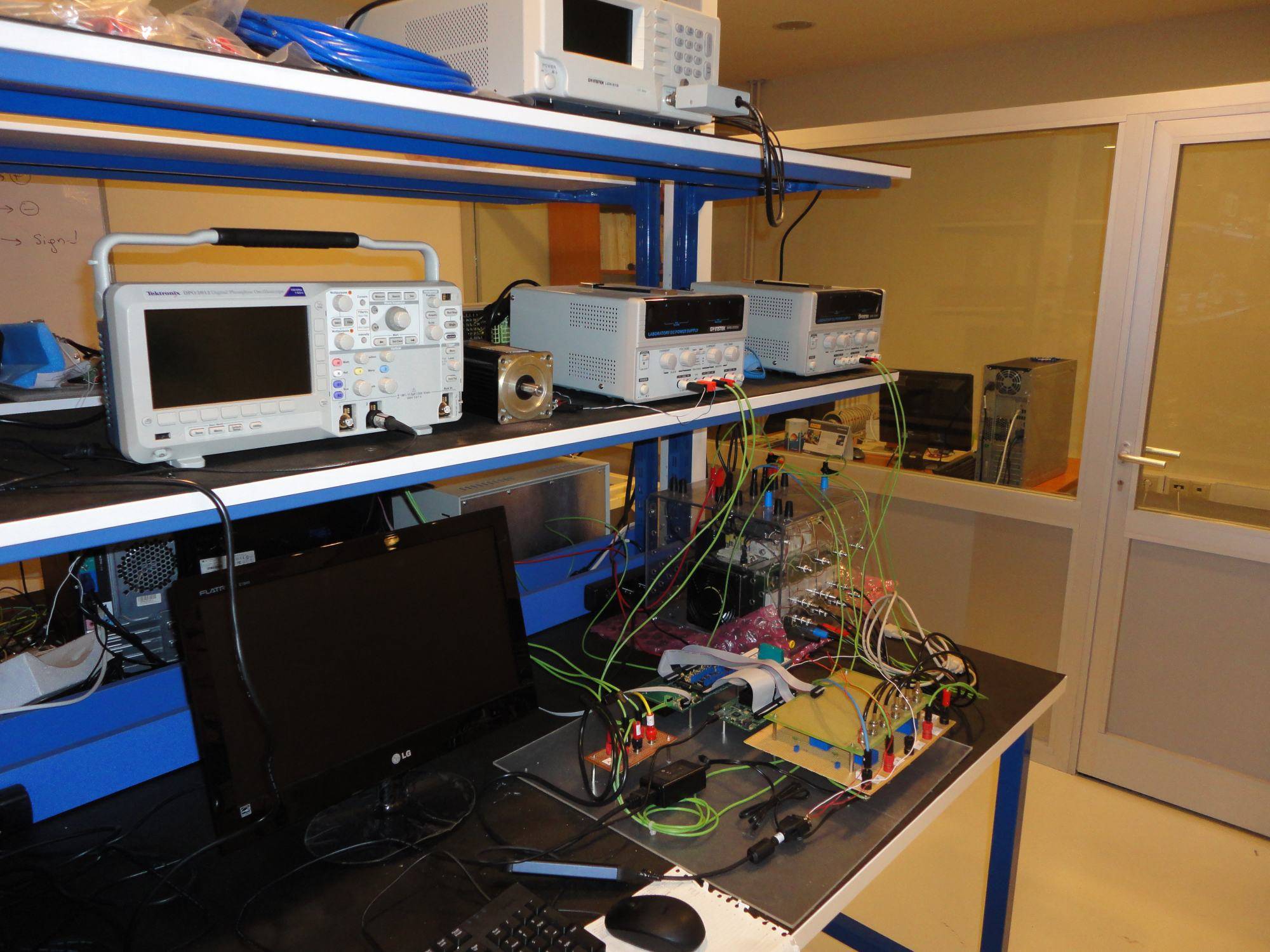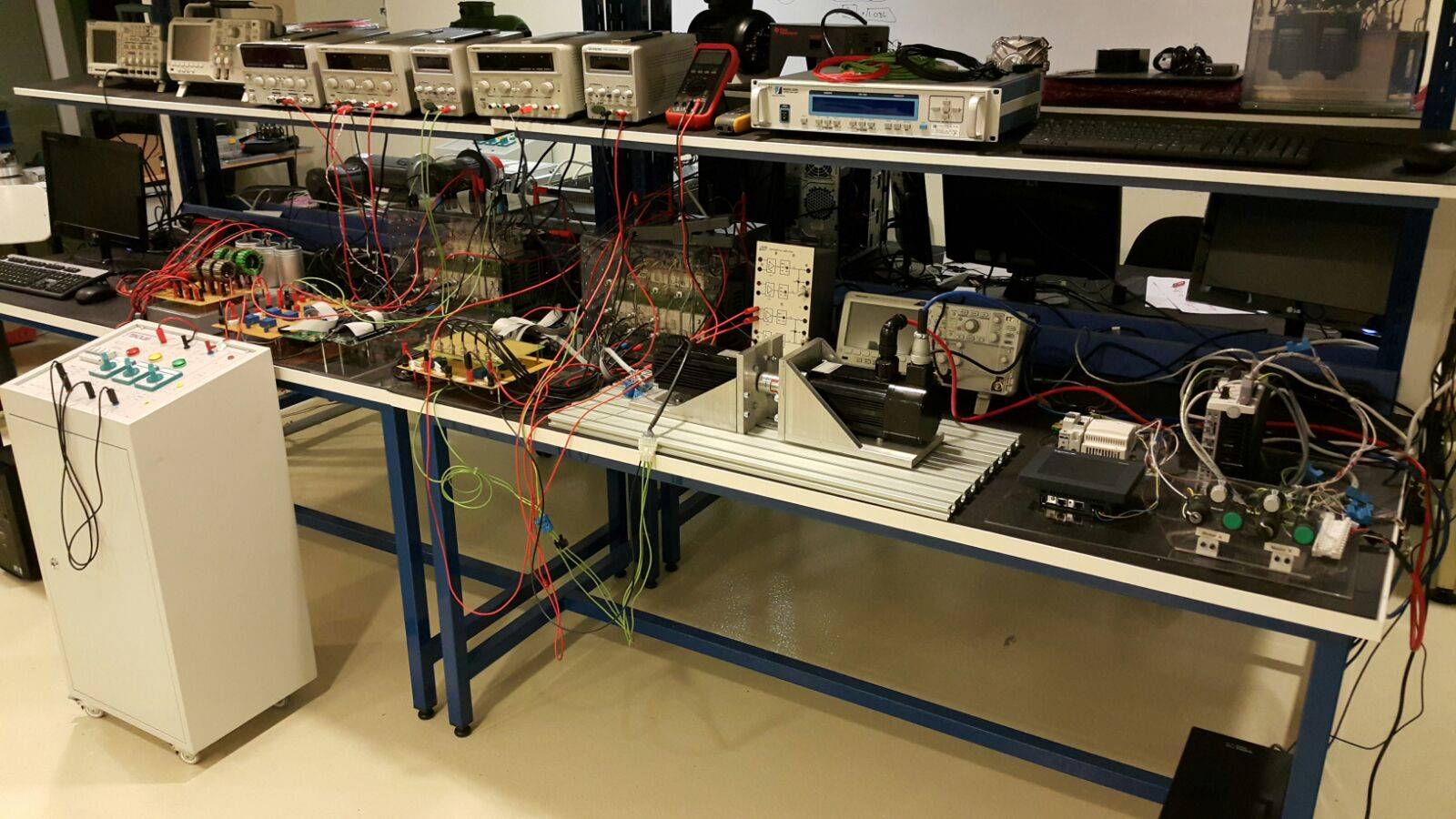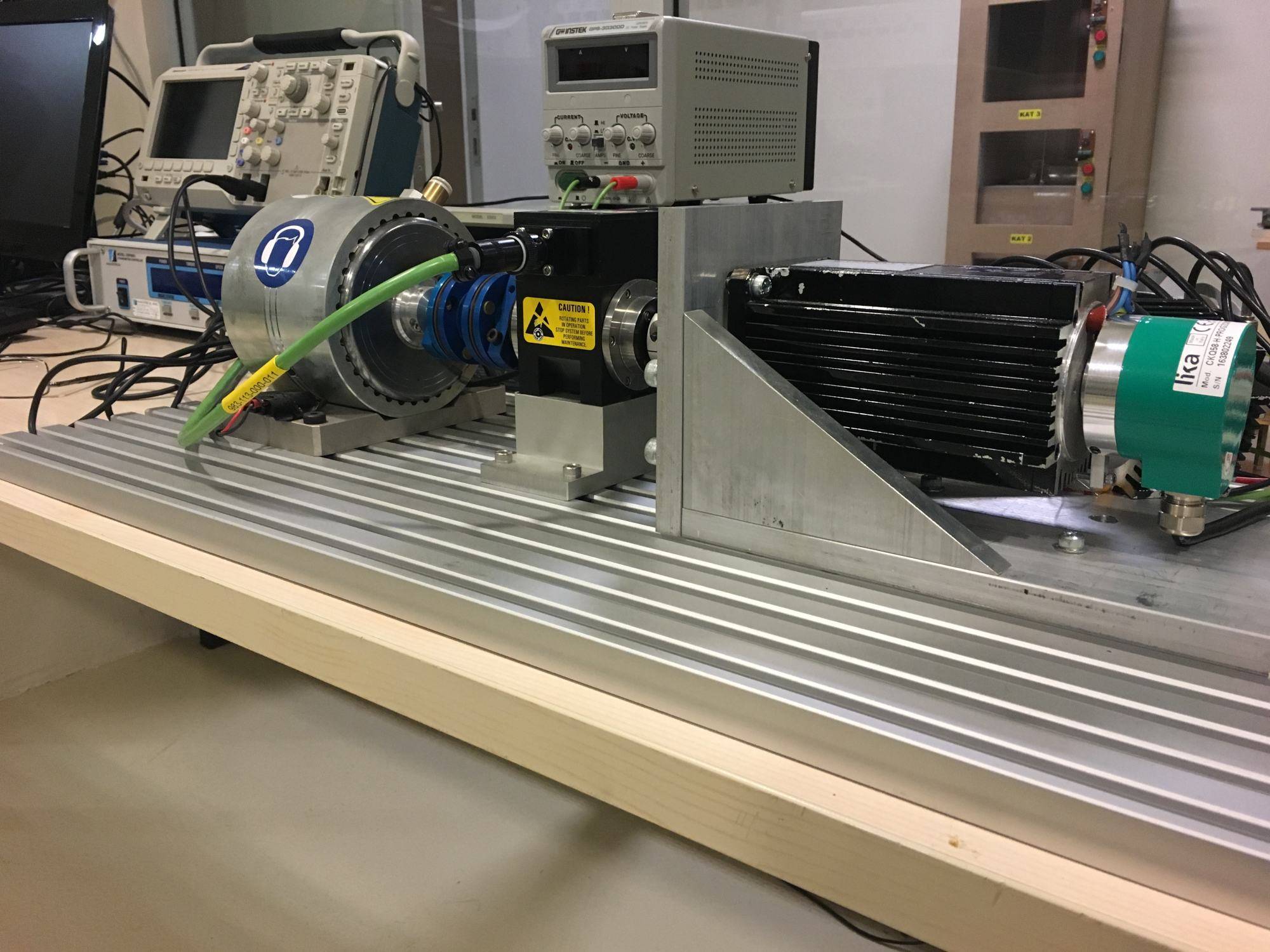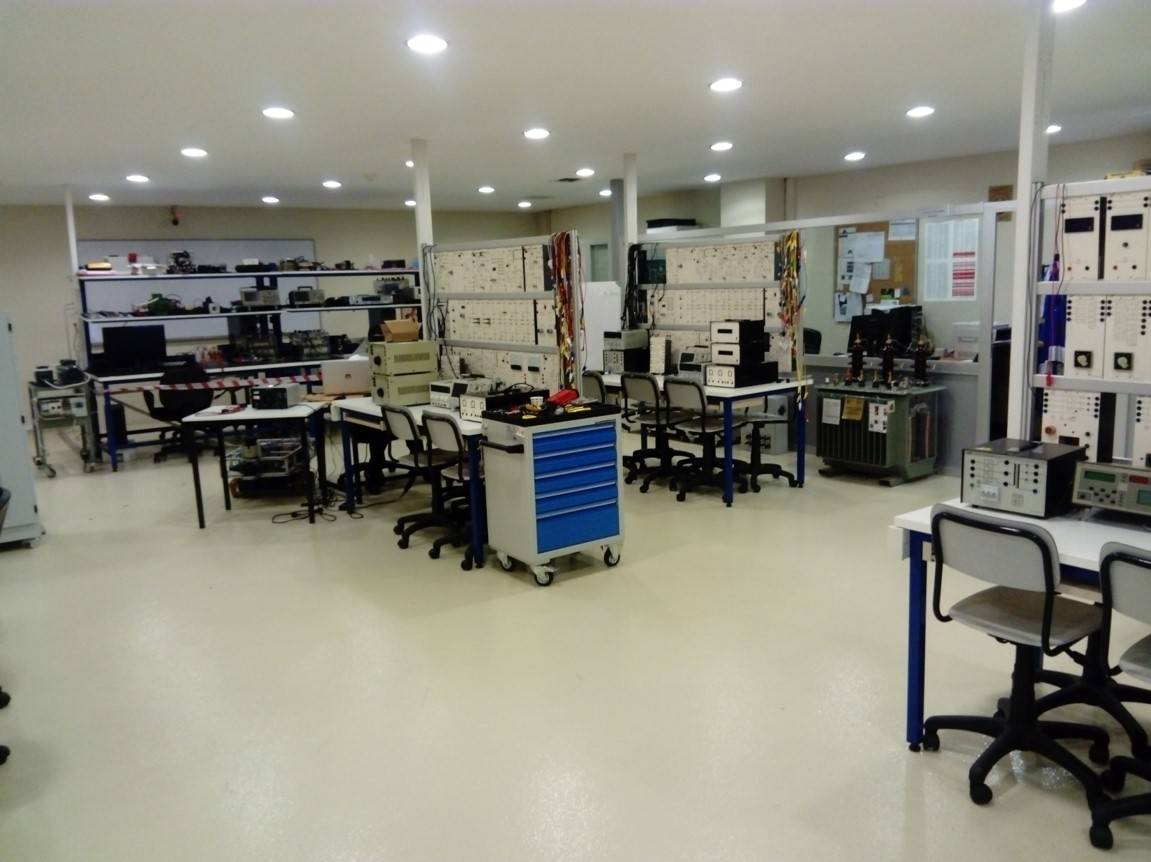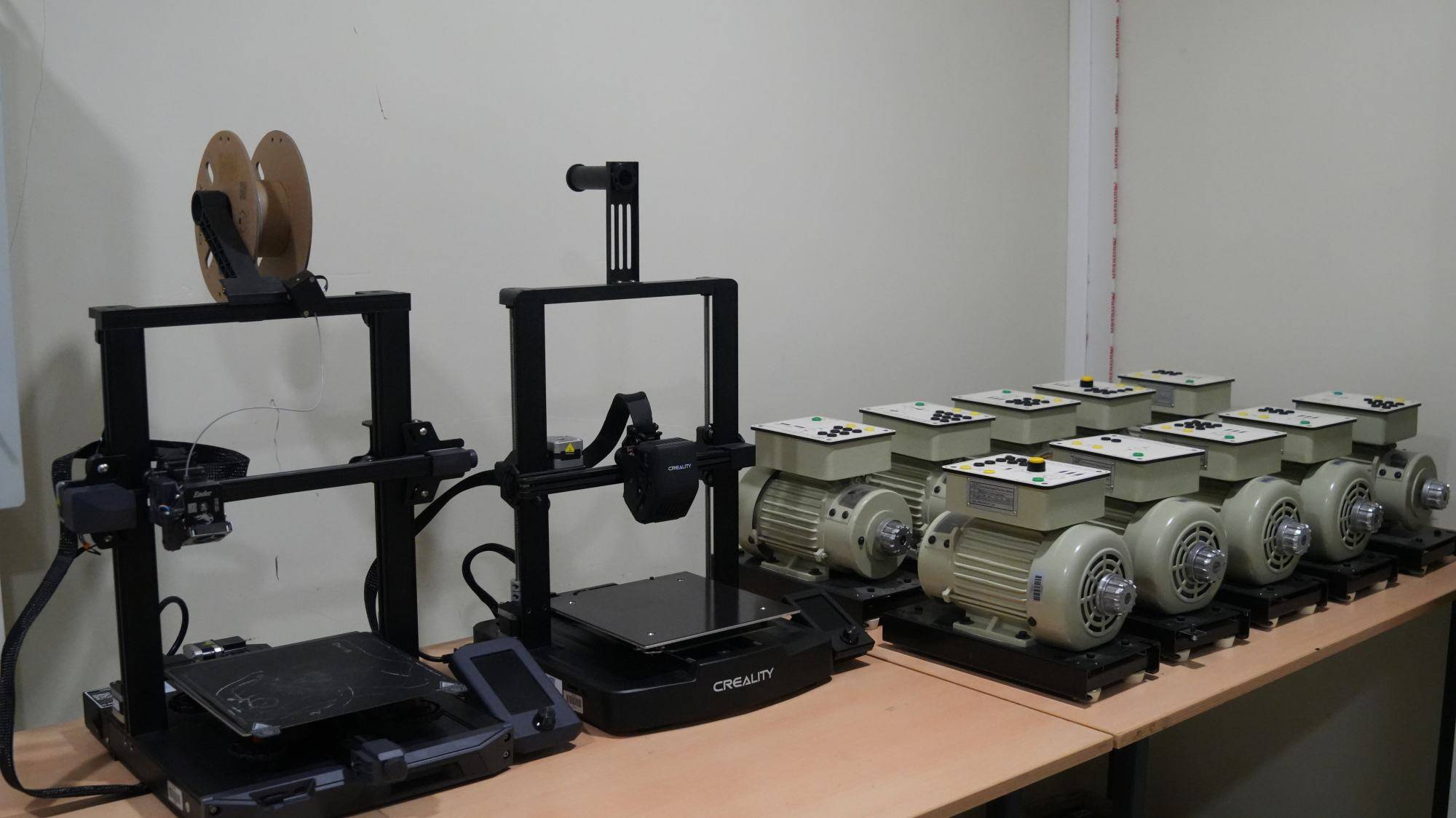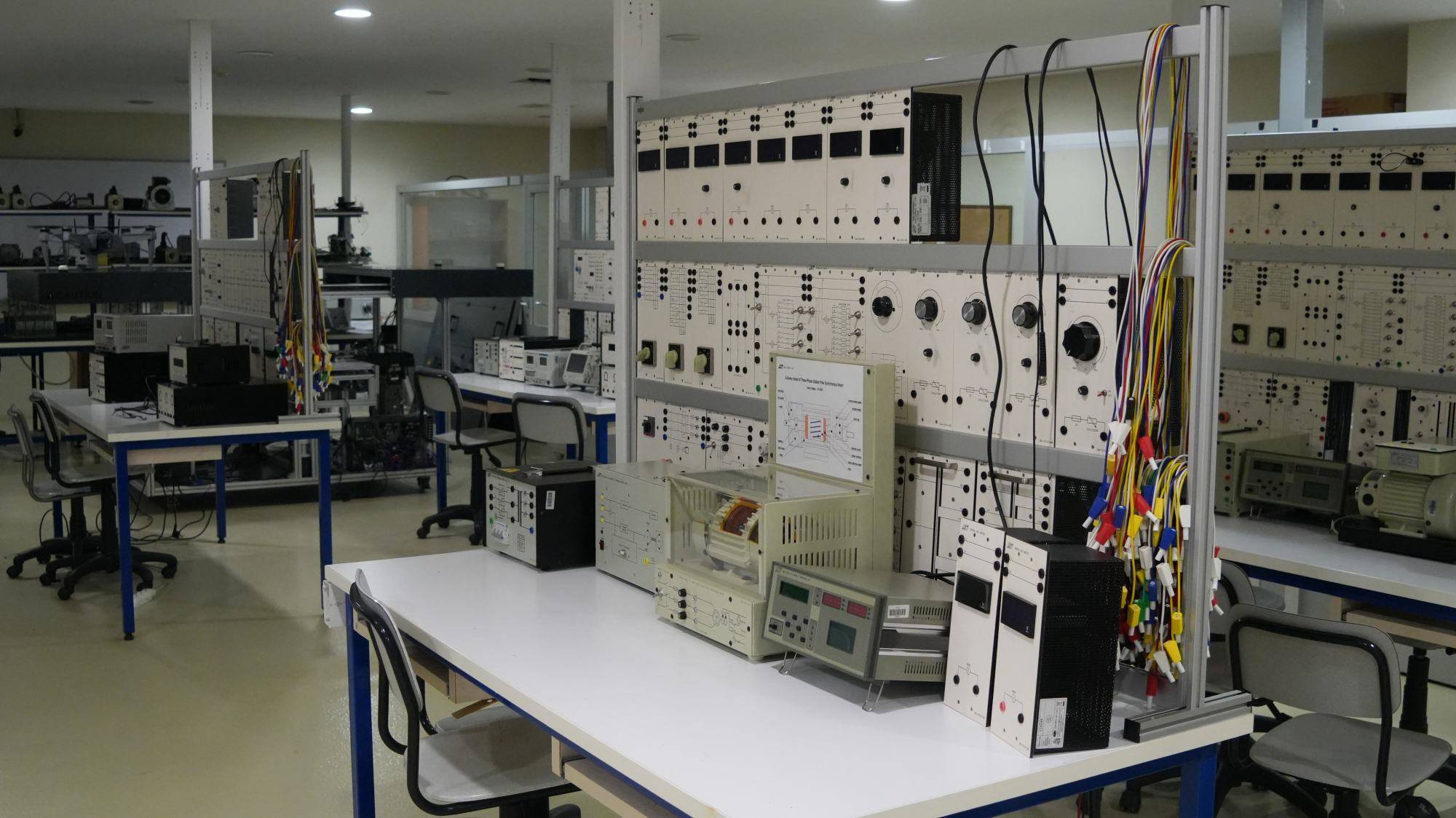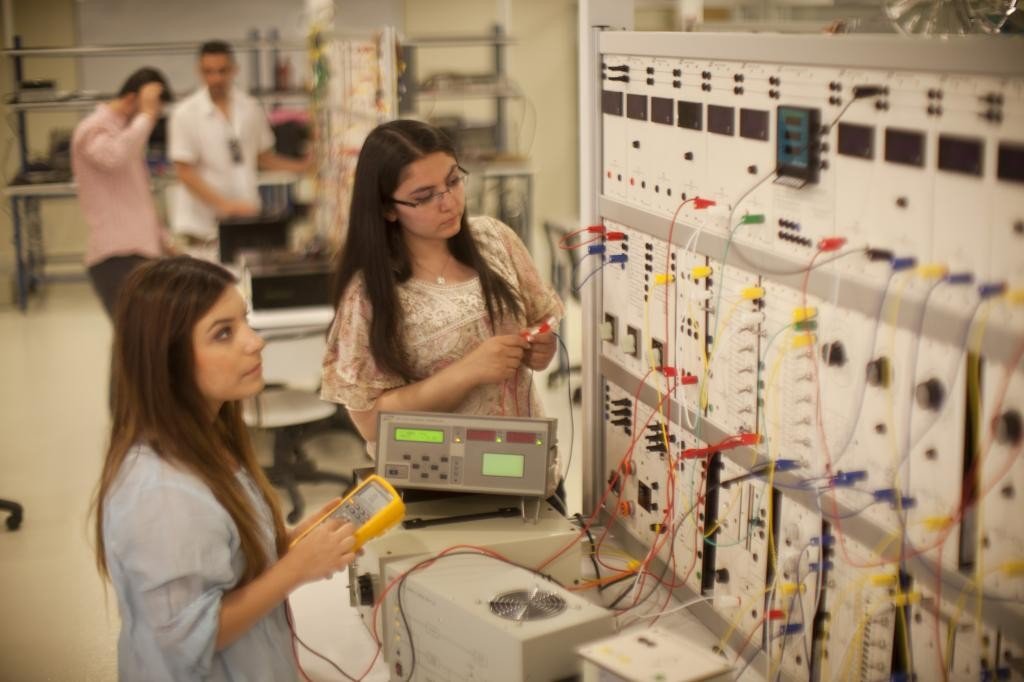
The Power Electronics and Energy Conversion R&D Laboratory is equipped with advanced technological infrastructure that enables the simulation and real-time control of electrical machines, motor drives, and power electronics systems up to 30 kW. The laboratory provides a comprehensive platform for the modeling, analysis, and experimental validation of modern electromechanical energy conversion systems.
Located within the Department of Electrical and Electronics Engineering at Istanbul Okan University, the laboratory supports the experimental components of key third-year undergraduate courses such as Power Electronics, Motion Control Systems, and Electromechanical Energy Conversion. In addition to its educational role, the laboratory contributes to research and development activities by addressing industrial needs in next-generation electrical machines, energy conversion systems, power electronics topologies, and advanced motor drive technologies across a variety of application domains.
The primary objective of the Power Electronics and Energy Conversion Laboratory is to analyze fundamental engineering challenges in the fields of power electronics, electrical machines, and motor drives. These challenges are first modeled and analyzed in simulation environments based on theoretical findings, and subsequently addressed through prototype development processes that incorporate practical engineering design. This approach aims to produce simple, efficient, and cost-effective solutions to complex engineering problems.
The laboratory’s research activities are closely aligned with the “Power Electronics and Clean Energy Systems” master’s program and the “Mechatronics Engineering” doctoral program through the research capabilities of the PEEC Lab (Power Electronics and Energy Conversion Laboratory). The laboratory infrastructure has the capacity to support approximately 20 master’s and doctoral students, providing the necessary computing resources, specialized software, and hardware platforms required for thesis and project development.
Research conducted in the laboratory focuses on advanced modeling, design, and experimental validation in the fields of power electronics, electrical machines, and electromechanical energy conversion systems. These activities aim to develop sustainable and high-efficiency technological solutions across a wide spectrum—from energy generation and transmission to energy storage and smart grid integration.
In the area of electrical machines, research includes the design of next-generation machine topologies, sensor-based and sensorless motor drives, multi-level power converter systems, and fuel-cell-supported electric motor drives. Real-time control of power electronic systems is implemented using DSP- and microcontroller-based hardware platforms. In addition, algorithm development studies are conducted for condition monitoring, fault diagnosis, and fault analysis in electromechanical systems.
Electric and hybrid electric vehicles represent one of the primary application areas of the research group. Within this context, modeling and control studies are carried out on electromechanical energy storage technologies such as batteries, fuel cells, flywheel systems, and supercapacitors. Battery management systems (BMS) and advanced energy management strategies are also developed to create integrated solutions with power electronics technologies.
The Power Electronics and Energy Conversion Laboratory aims to develop innovative, efficient, and sustainable technologies in the fields of power electronics and electromechanical systems while training highly qualified engineers specialized in these critical engineering domains.