7 Governance and Digitalization
7.4 University run sustainability website (GD2)
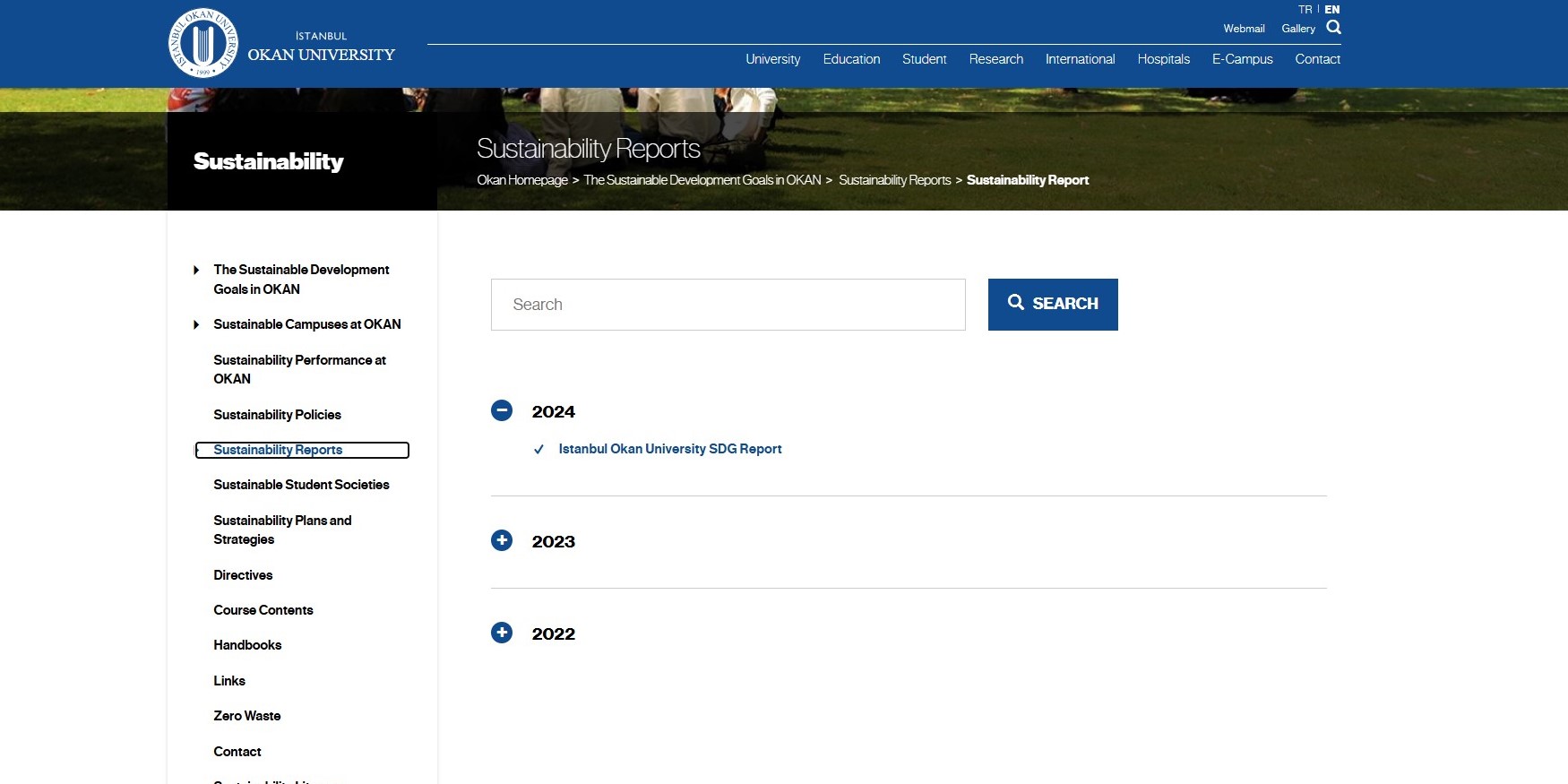 | 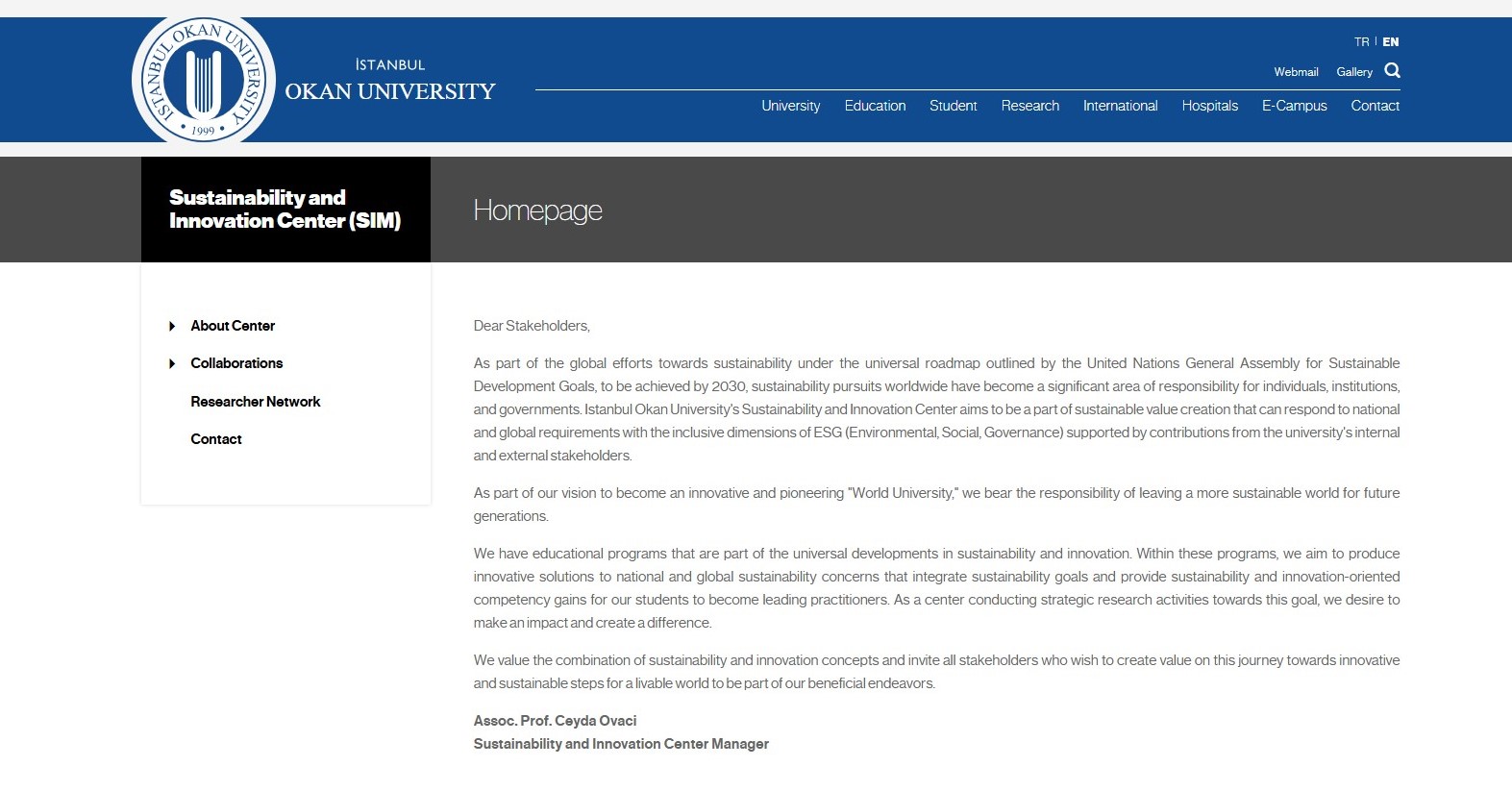 |
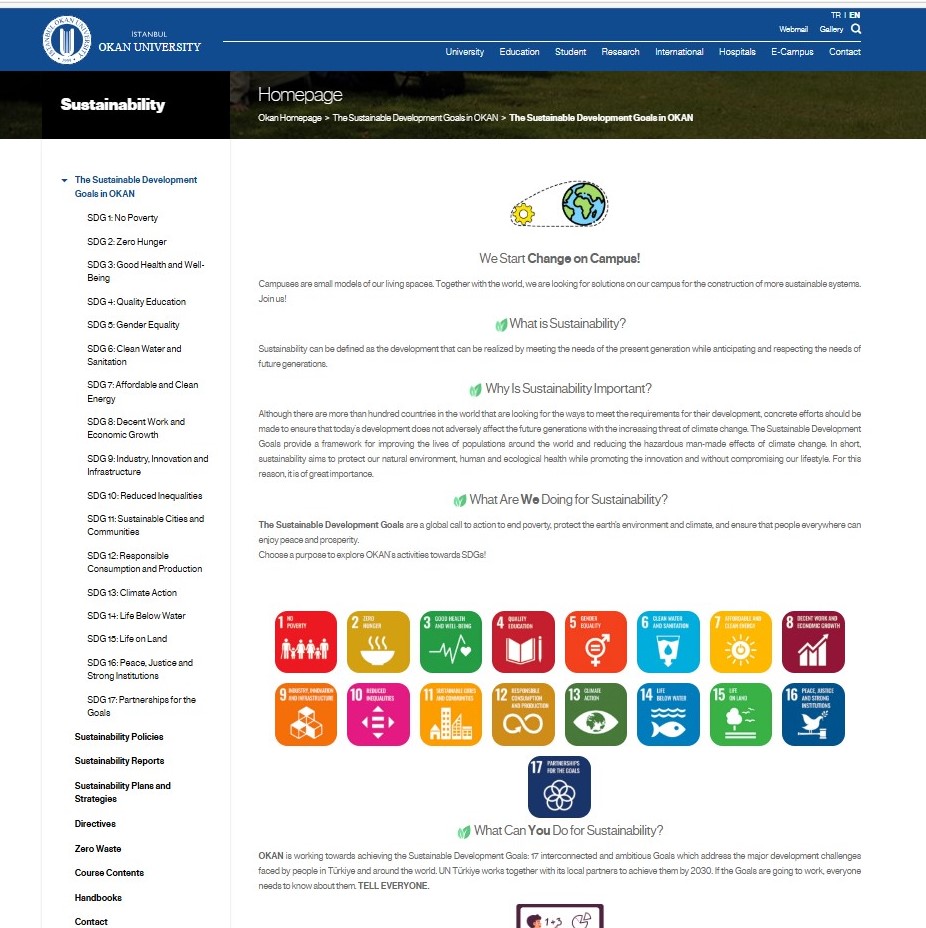
Istanbul Okan University has established a comprehensive sustainability web platform managed by the university to ensure transparency in sustainability practices, enhance stakeholder engagement, and regularly communicate sustainability performance. The university’s official sustainability portal provides publicly accessible and up-to-date information on sustainability policies, strategic plans, Sustainable Development Goals (SDGs) initiatives, performance indicators, reports, directives, handbooks, student organizations, and campus sustainability practices.
Through the website, the university publishes its activities and achievements aligned with the United Nations Sustainable Development Goals (SDGs) under dedicated SDG sections. Stakeholders can access information on various sustainability dimensions, including energy management, climate action, waste management, water stewardship, sustainable transportation, education and research, governance, and digital transformation. The portal also regularly shares sustainability policies, climate action plans, watershed management strategies, and institutional sustainability targets.
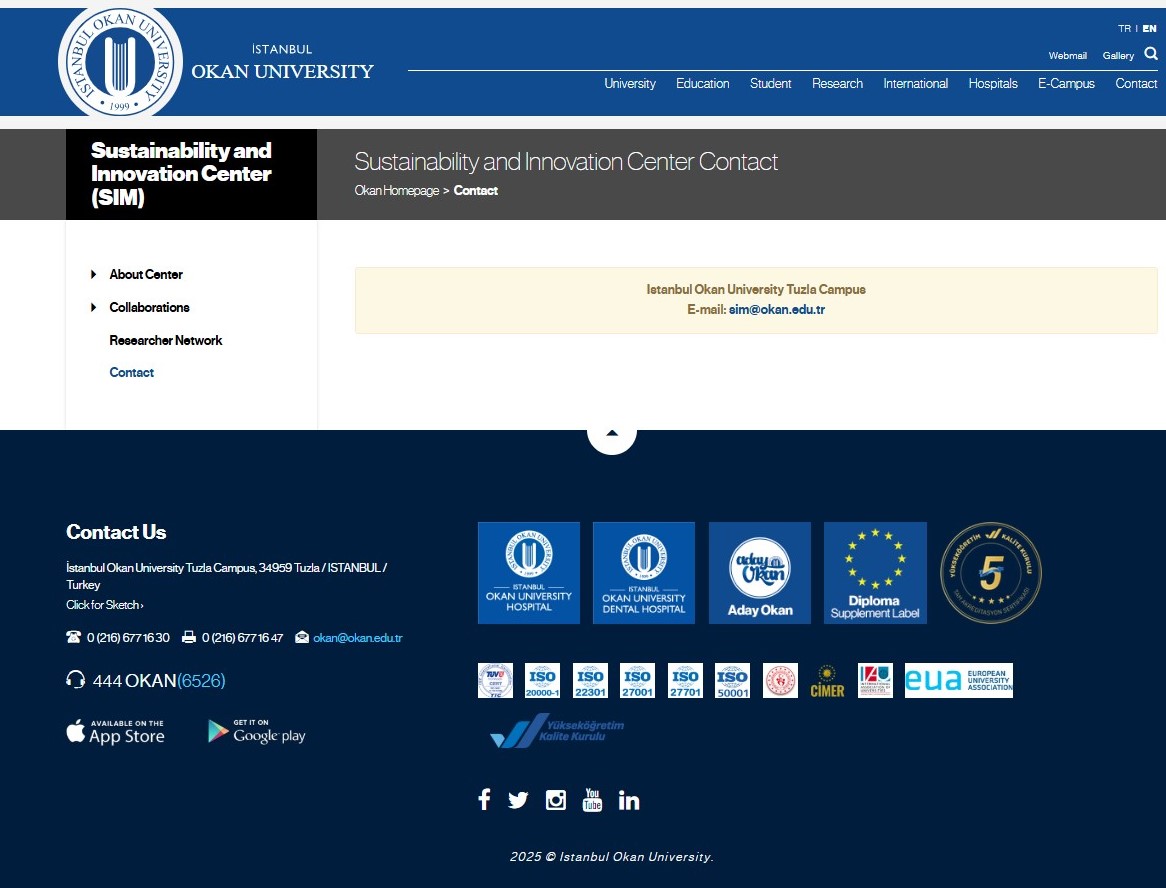
The Sustainability and Innovation Center (SIM), operating within the university, coordinates sustainability initiatives and implements educational, research, and community engagement activities in line with Environmental, Social, and Governance (ESG) principles. Information regarding the center’s organizational structure, areas of operation, and sustainability-focused programs is publicly available through its dedicated website.
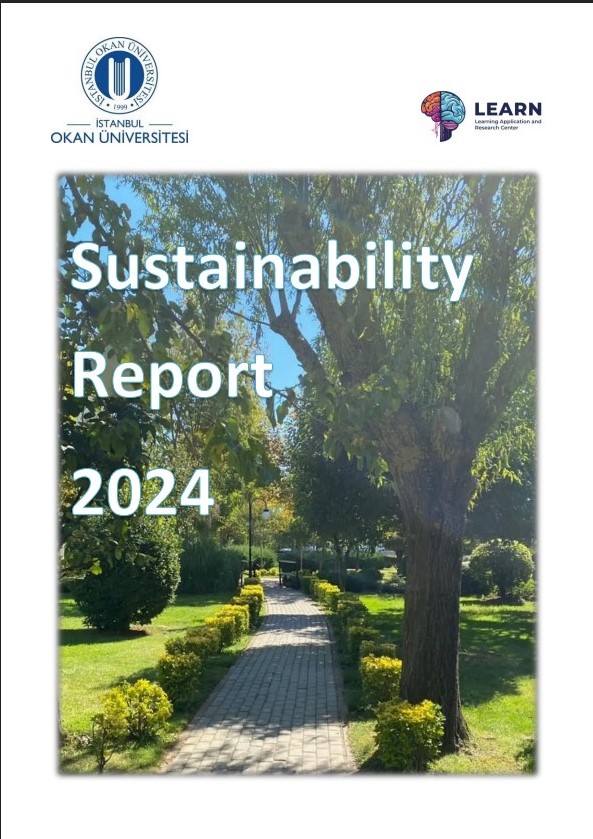
The sustainability portal serves as a central platform for publishing annual sustainability reports, SDG reports, carbon footprint reports, and water footprint reports, enabling the university’s sustainability performance to be monitored and communicated transparently to the public. In addition, institutional directives, policies, and handbooks related to sustainability, energy management, waste management, accessibility, and other sustainability-related topics are made available online, ensuring easy access for all stakeholders.
7.5 Sustainability website adress
https://www.okan.edu.tr/en/sustainability/
https://www.okan.edu.tr/en/sim/
7.3 Sustainability Report (GD.3)
 | |
 | |
| Examples of sustainability report (Istanbul Okan University, Türkiye) |
7.7 Sustainability Report link adress (URL) if available
https://www.okan.edu.tr/en/sustainability/page/8403/sustainability-reports/
https://www.okan.edu.tr/en/sustainability/page/9375/carbon-footprint-report/
7.8 Financial Report (GD.4)
Istanbul Okan University adopts the principles of financial transparency and accountability as fundamental components of its institutional governance framework. To ensure the effective use of financial resources, strengthen stakeholder trust, and support institutional sustainability, the university regularly reports its financial performance and makes relevant information available to stakeholders.
The university’s financial management system encompasses the planning, monitoring, and evaluation of resources allocated to education and teaching activities, research and development initiatives, infrastructure investments, sustainable campus practices, and community engagement programs. Financial reports prepared within this framework include information on income and expenditure structures, investment expenditures, operational budget utilization, and institutional resource management.
Financial reporting processes are carried out in alignment with the university’s long-term strategic objectives and sustainability priorities. Investments related to energy efficiency projects, renewable energy systems, waste management practices, water management infrastructure, digital transformation initiatives, and sustainable campus development are monitored and evaluated through financial planning and budgeting processes.
Through its financial reports, the university transparently demonstrates how financial resources are allocated and utilized, the proportion of investments dedicated to sustainability objectives, and the resources assigned to institutional development. This approach strengthens institutional governance while contributing to the university’s long-term economic sustainability.
7.9 Financial Report Link Adress
https://www.okan.edu.tr/sayfa/7518/kurum-ic-degerlendirme-raporu/
https://www.okan.edu.tr/sayfa/8989/kurumsal-akreditasyon-ve-ara-degerlendirme-raporlari/
https://www.okan.edu.tr/sayfa/7730/kalite-yonetimi-dis-denetim/
https://www.okan.edu.tr/sayfa/9056/universite-faaliyet-raporlari/
https://www.okan.edu.tr/sayfa/8865/akademik-birim-faaliyet-raporlari/
https://www.okan.edu.tr/sayfa/8866/idari-birim-faaliyet-raporlari/
https://www.okan.edu.tr/sayfa/8874/il-brifing-raporlari/
https://www.okan.edu.tr/sayfa/8875/ilce-brifing-raporlari/
7.10 Availability of unit(s) or office(s) that coordinate sustainability on campus (GD5)
 | |
| International Accreditations and Rankings Unit(Istanbul Okan University, Türkiye) | |
| International Accreditations and Rankings Unit - Learning Application and Research Center - İstanbul Okan Üniversitesi | |
 | |
| The Sustainable Development Goals in Istanbul Okan University (Istanbul Okan University, Türkiye) | |
| Homepage - Sustainability - İstanbul Okan Üniversitesi | |
 | |
| Sustainability and Innovation Center (SIM) ( Istanbul Okan University, Türkiye) | |
| Homepage - Sustainability and Innovation Center (SIM) - İstanbul Okan Üniversitesi | |
 | |
| Istanbul Okan University International Accreditations and Rankings Unit (Istanbul Okan University, Türkiye) | |
| International Accreditations and Rankings Unit - Learning Application and Research Center - İstanbul Okan Üniversitesi | |
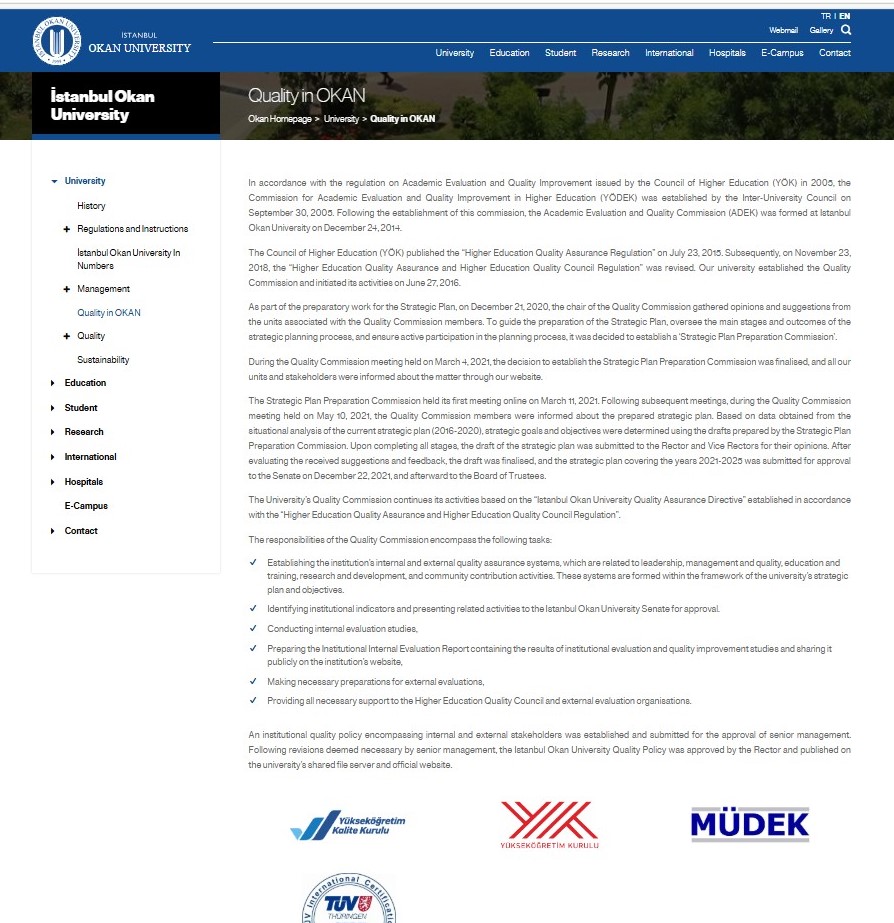 | |
| Quality Manegament Unit in Istanbul Okan University ( Istanbul Okan University, Türkiye) |
Quality in OKAN - İstanbul Okan Üniversitesi
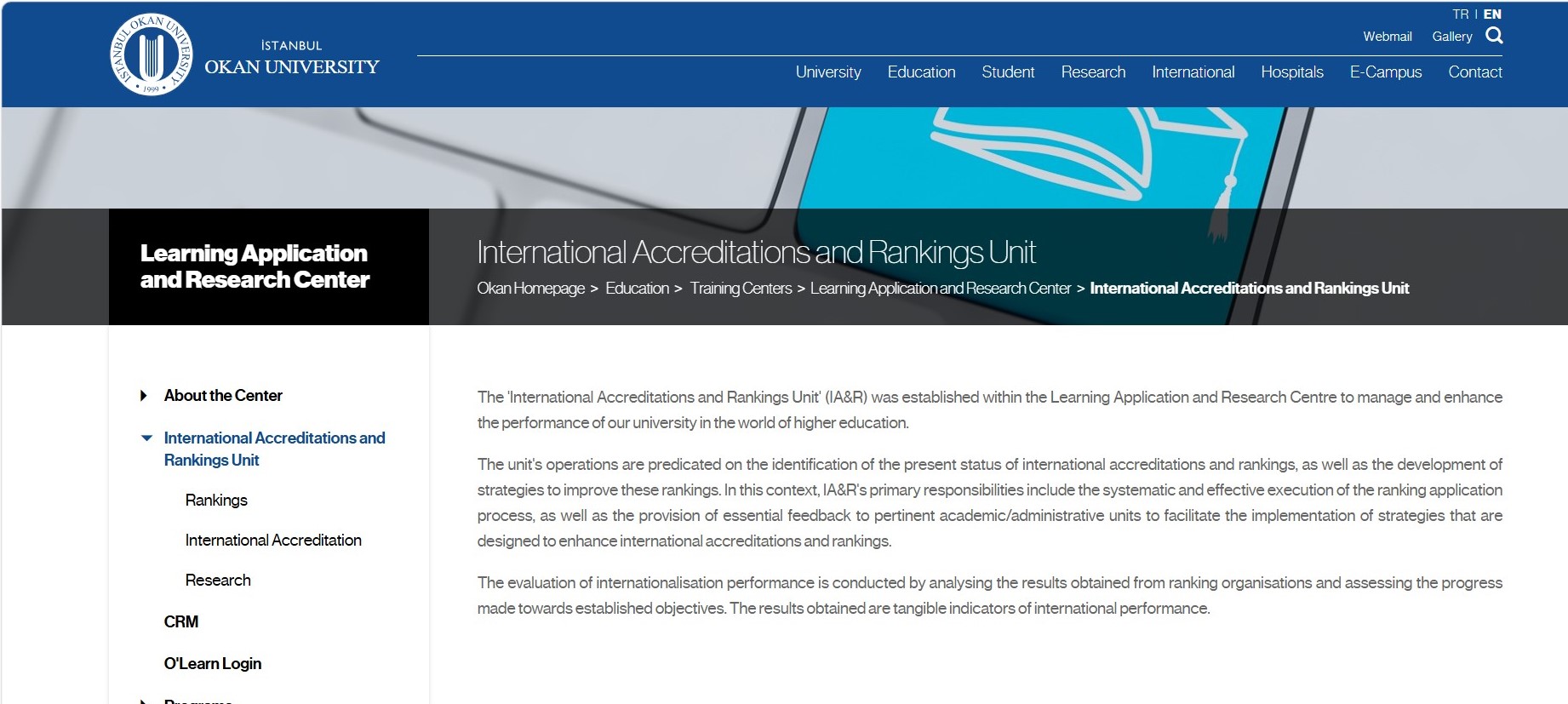
The Sustainability and Innovation Center, the International Accreditations and Rankings Unit (IA&R) operating under the Learning Application and Research Center, and the Quality Management Unit collectively constitute the institutional framework responsible for coordinating sustainability, quality assurance, and continuous improvement activities across Istanbul Okan University.
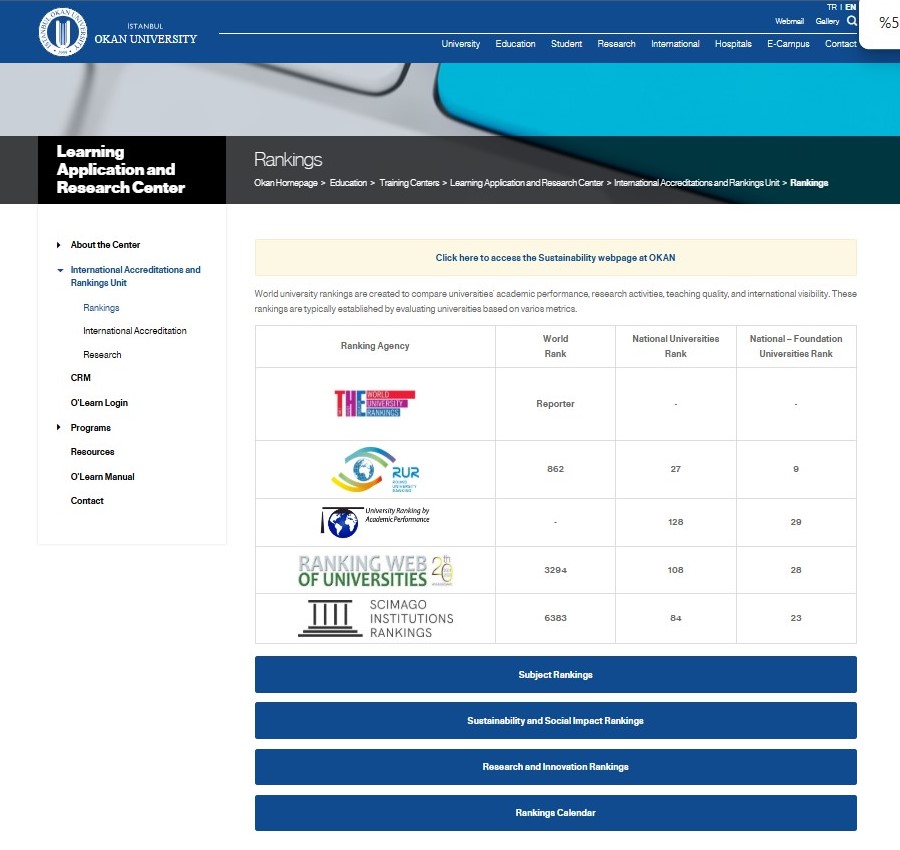
The International Accreditations and Rankings Unit (IA&R) is responsible for monitoring and enhancing the university’s performance in international rankings and accreditation systems. The unit identifies areas for improvement, coordinates accreditation processes, and analyzes institutional performance to ensure continuous development and alignment with global higher education standards. By promoting quality, transparency, and performance-based governance, the unit contributes directly to sustainability efforts. Furthermore, it supports the integration of the United Nations Sustainable Development Goals (SDGs) into academic programs, coordinates sustainability reporting processes such as carbon footprint and ESG reporting, and serves as a key coordinating body for the university’s sustainability strategy.
The Sustainability and Innovation Center leads sustainability-focused education, research, consultancy, and community engagement activities throughout the university. It also develops collaborations with national and international stakeholders to strengthen sustainability awareness and foster innovation-driven transformation.
The Quality Management Unit serves as the central coordinating body for quality assurance, institutional development, and continuous improvement. The unit ensures that all educational, research, administrative, and community engagement activities are conducted in accordance with national and international standards, particularly the framework of the Higher Education Quality Council of Türkiye (YÖKAK) and the ISO 9001:2015 Quality Management System. It organizes internal and external audits, coordinates stakeholder satisfaction assessments, and supports accreditation processes. Its core mission is to establish a transparent, measurable, and effective quality system across the university by integrating the principles of sustainability, institutional governance, and accountability.
Taken together, these units form a comprehensive institutional mechanism that supports sustainability at Istanbul Okan University not only from an environmental perspective but also through governance, strategic planning, quality assurance, and continuous improvement. Therefore, these units provide direct and strong evidence for the UI GreenMetric indicator concerning the availability of units or offices that coordinate sustainability on campus.
Homepage - Sustainability - İstanbul Okan Üniversitesi
Contact - Sustainability and Innovation Center (SIM) - İstanbul Okan Üniversitesi
Rankings - Learning Application and Research Center - İstanbul Okan Üniversitesi
Quality in OKAN - İstanbul Okan Üniversitesi
Kalite Yönetimi Birimi - İdari Birimler - Yönetim - Hakkımızda - İstanbul Okan Üniversitesi
7.11 Number of Dedicated Staff Members Assigned To The Unit or Office Responsible for Coordinating Sustainability İnitiatives on Campus
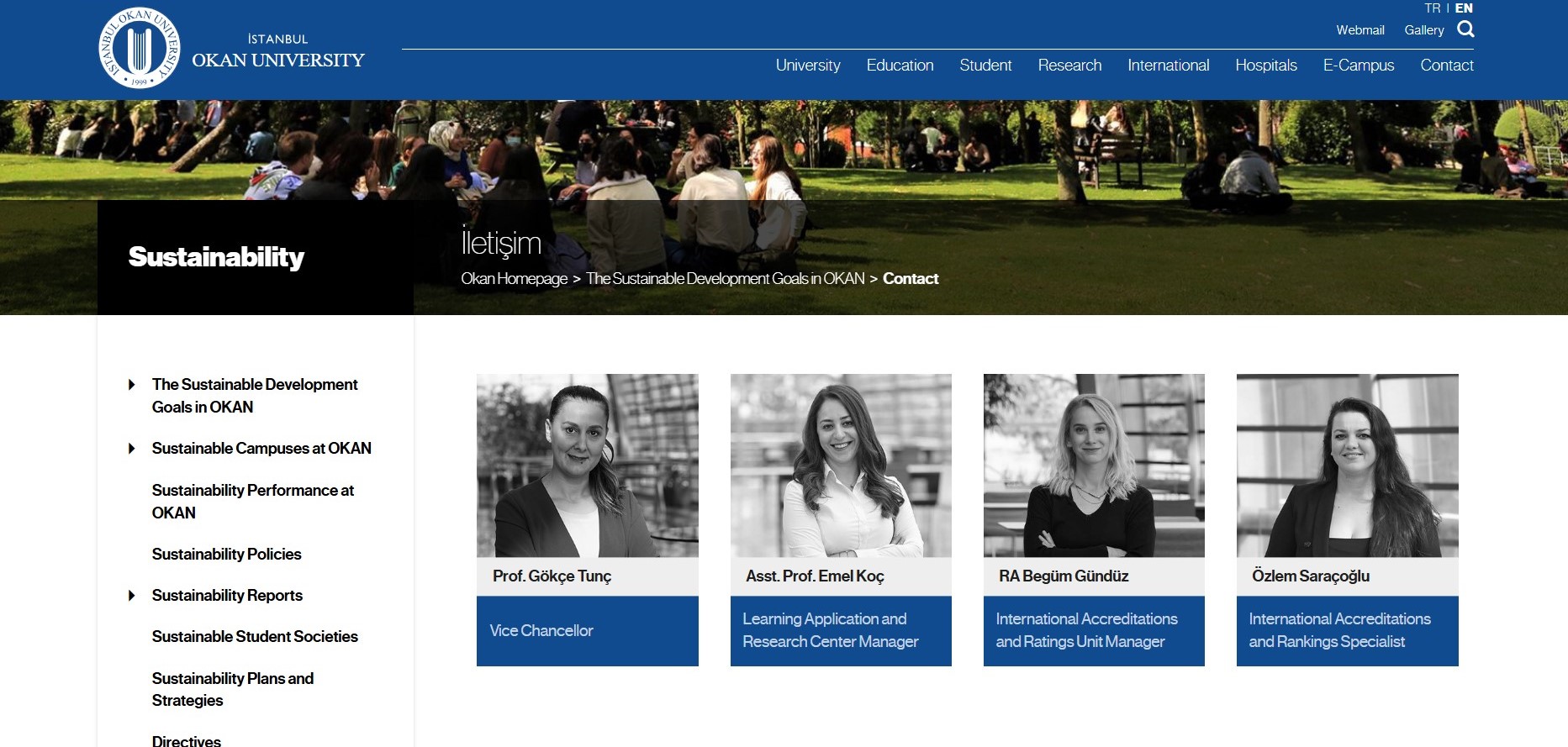 | |
| Staff Members Assigned To The Unit Responsible for Coordinating Sustainability İnitiatives on Campus | |
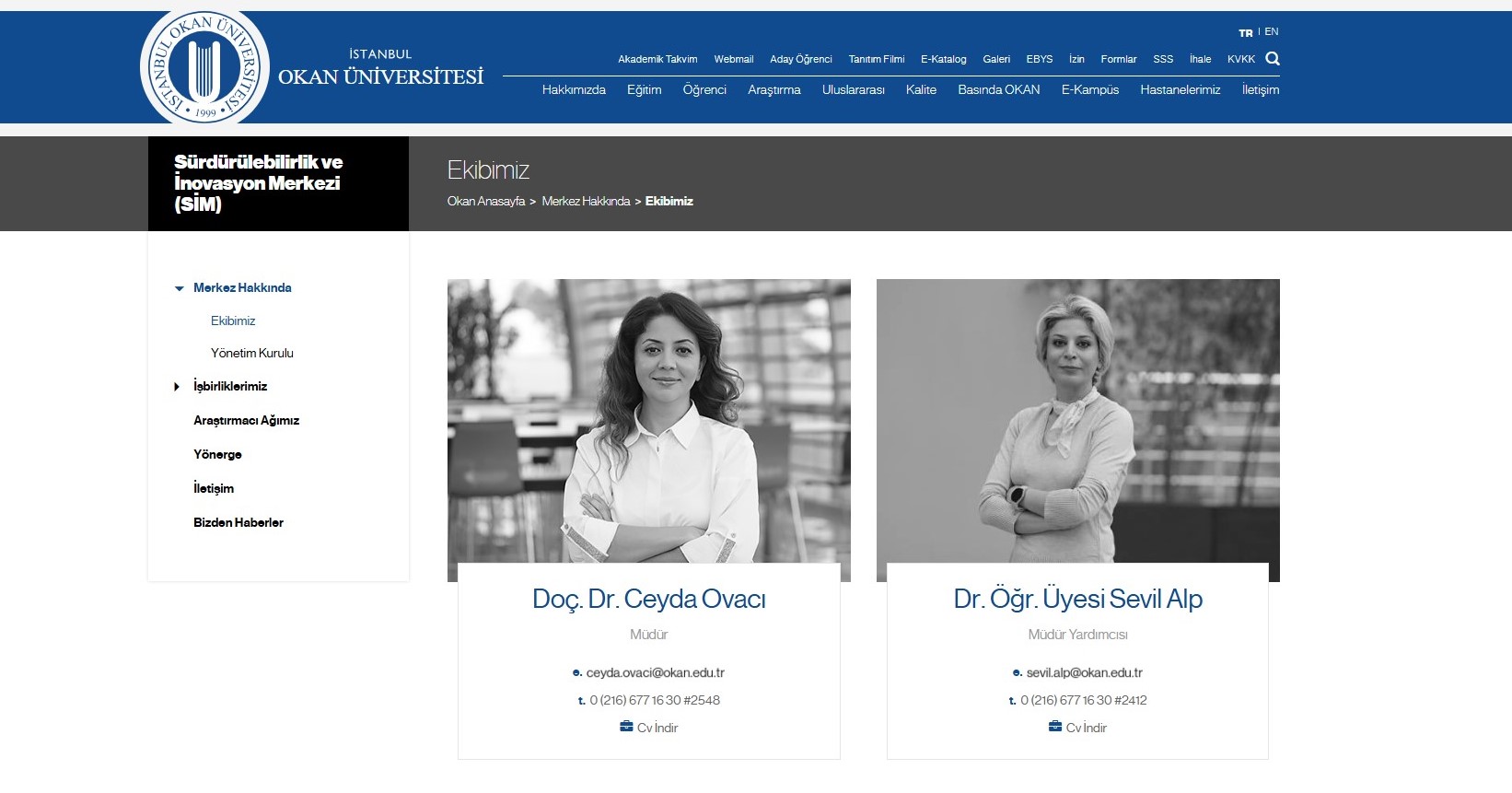 | |
| Staff Members Assigned To The Unit Responsible for Sustainability and Innovation Center (SIM) | |
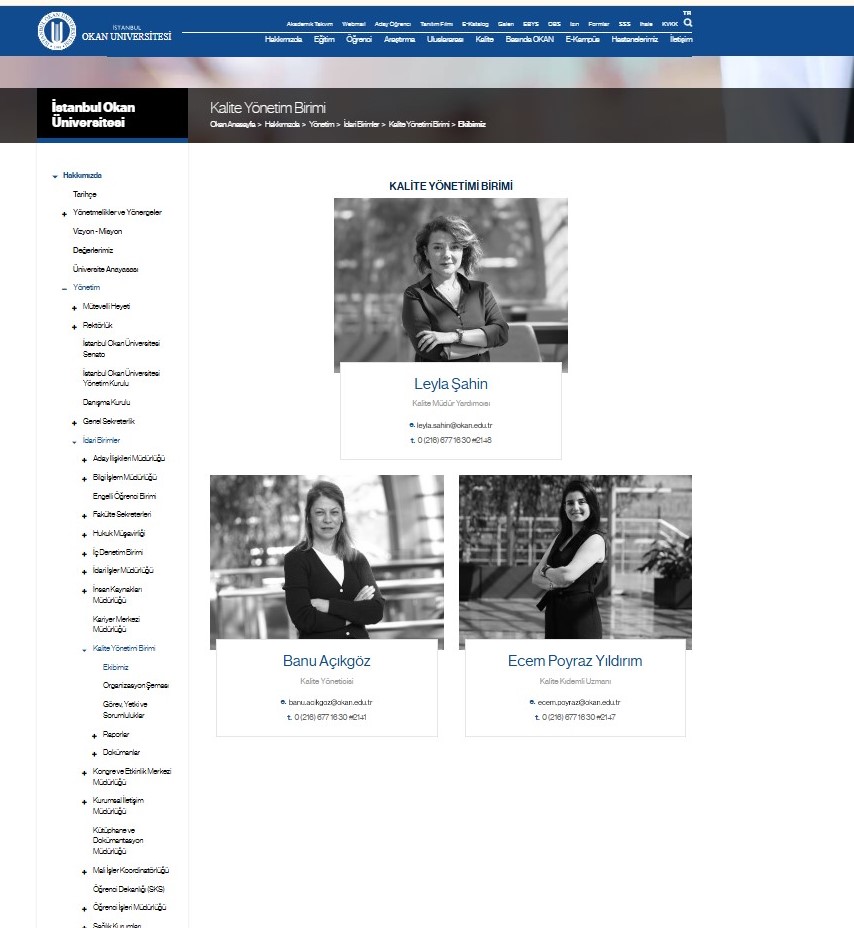 | |
| Staff Members Assigned To The Unit Responsible for Quality Menagement |
Istanbul Okan University has established an institutional framework responsible for coordinating sustainability initiatives to ensure the effective planning, implementation, monitoring, and reporting of sustainability activities. This structure is supported by the Sustainability and Innovation Center, the International Accreditations and Rankings Unit (IA&R), and the Quality Management Unit.
As of 2025, a total of four full-time staff members are dedicated to the coordination, reporting, and continuous development of sustainability activities. Two of these staff members are responsible for developing sustainability strategies, coordinating ESG and sustainability reporting processes, overseeing activities related to the United Nations Sustainable Development Goals (SDGs), managing international rankings and accreditation processes, supporting quality assurance activities, facilitating stakeholder engagement, monitoring environmental performance, managing carbon footprint initiatives, and implementing sustainable campus practices.
While experts within the Sustainability and Innovation Center coordinate sustainability projects, research activities, and community engagement initiatives, staff members of the International Accreditations and Rankings Unit are responsible for monitoring sustainability indicators, collecting data, conducting performance analyses, and managing international ranking processes. The Sustainability and Innovation Center employs two dedicated staff members. The Quality Management Unit staff ensure the integration of sustainability objectives into the university’s quality assurance system, monitor performance indicators, and coordinate continuous improvement processes. The Quality Management Unit also employs two dedicated staff members.
In addition, commission members, coordinators, and expert personnel assigned from various academic and administrative units actively contribute to sustainability-related activities. As a result, the university has established an interdisciplinary and multi-stakeholder sustainability governance structure that enables sustainability initiatives to be effectively implemented across the institution.
This dedicated human resource structure demonstrates Istanbul Okan University’s strong commitment to sustainability and its institutional dedication to achieving sustainable development goals.
İletişim - Sustainability - İstanbul Okan Üniversitesi
Ekibimiz - Sürdürülebilirlik ve İnovasyon Merkezi (SİM) - İstanbul Okan Üniversitesi
Kalite Yönetimi Birimi - İdari Birimler - Yönetim - Hakkımızda - İstanbul Okan Üniversitesi
7.12 Use of ICT for Sustainability Program Planning, Implementiton, Morning and Evaluation (GD6)
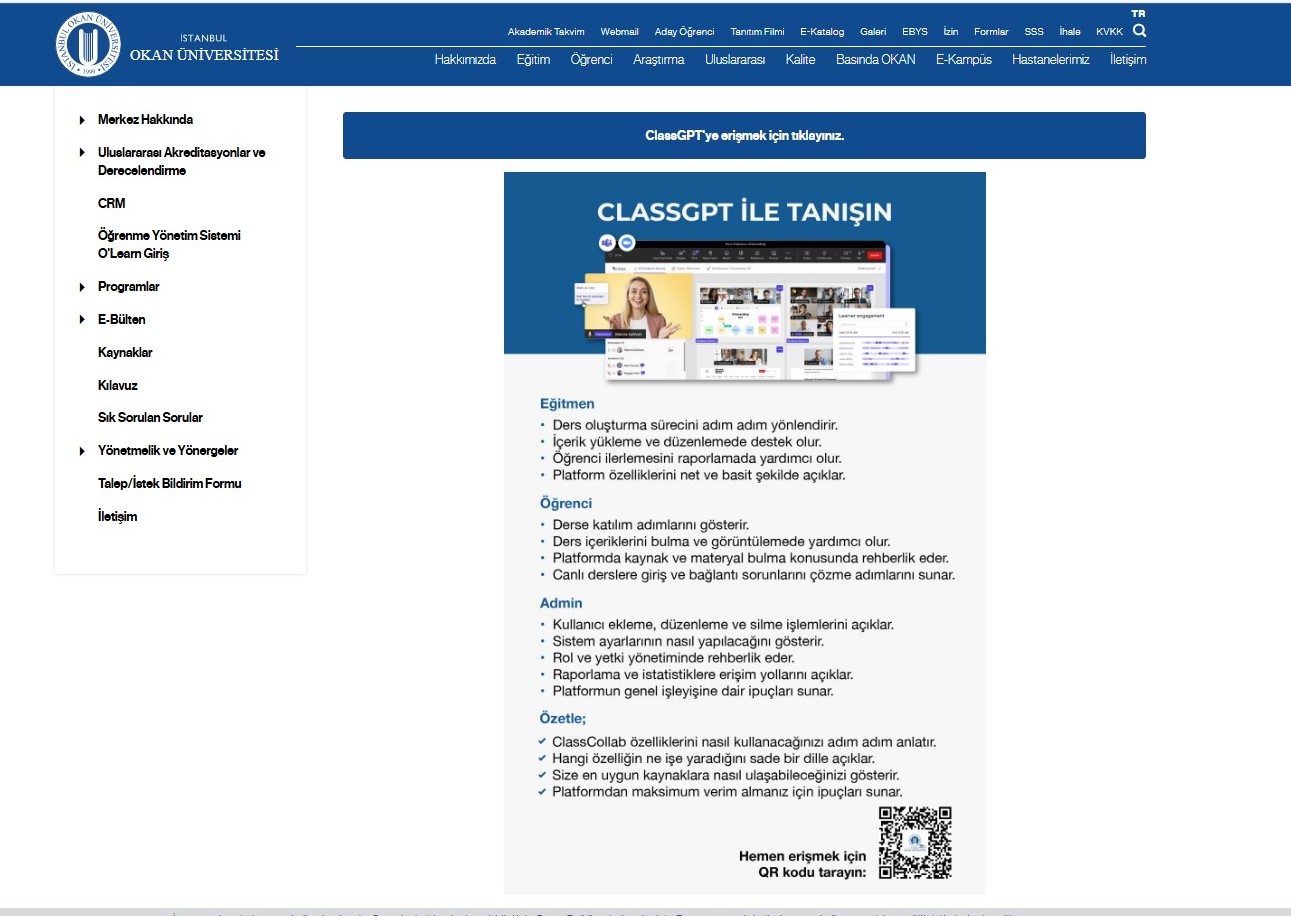 | |
| ClassGPT | |
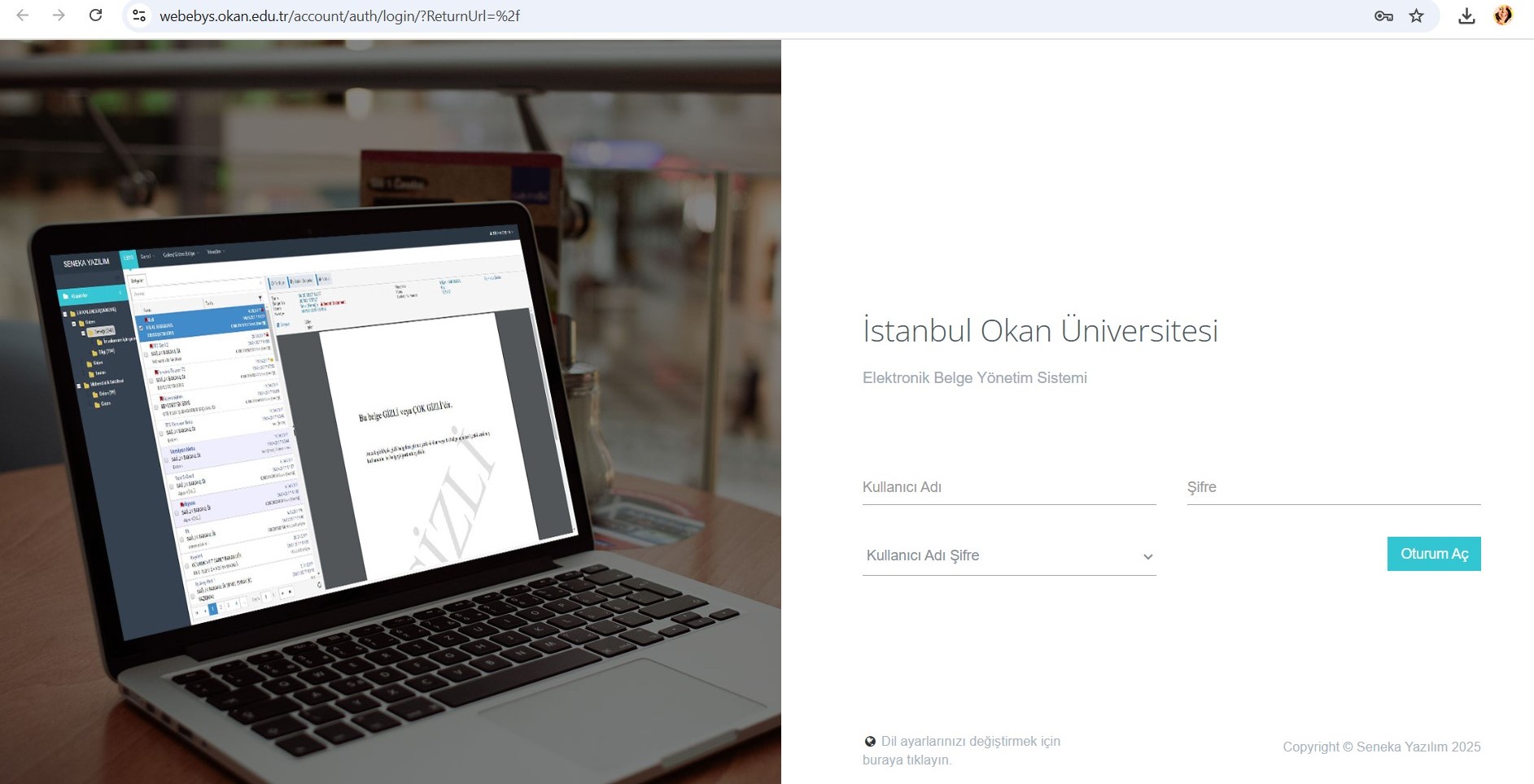 | |
| EBYS | |
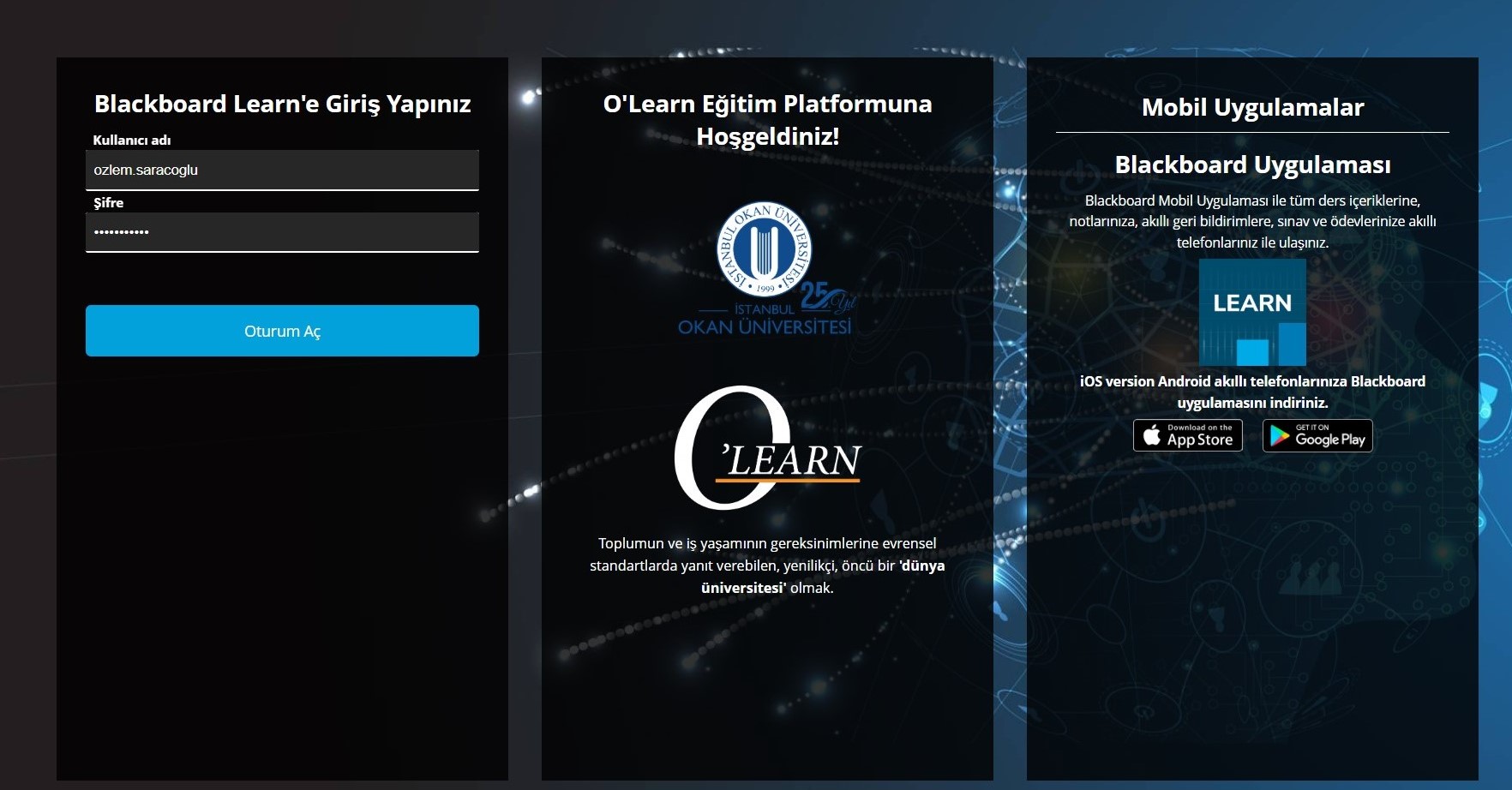 | |
| Learning Menagement Systems- Blackboard Learn-O’Learn | |
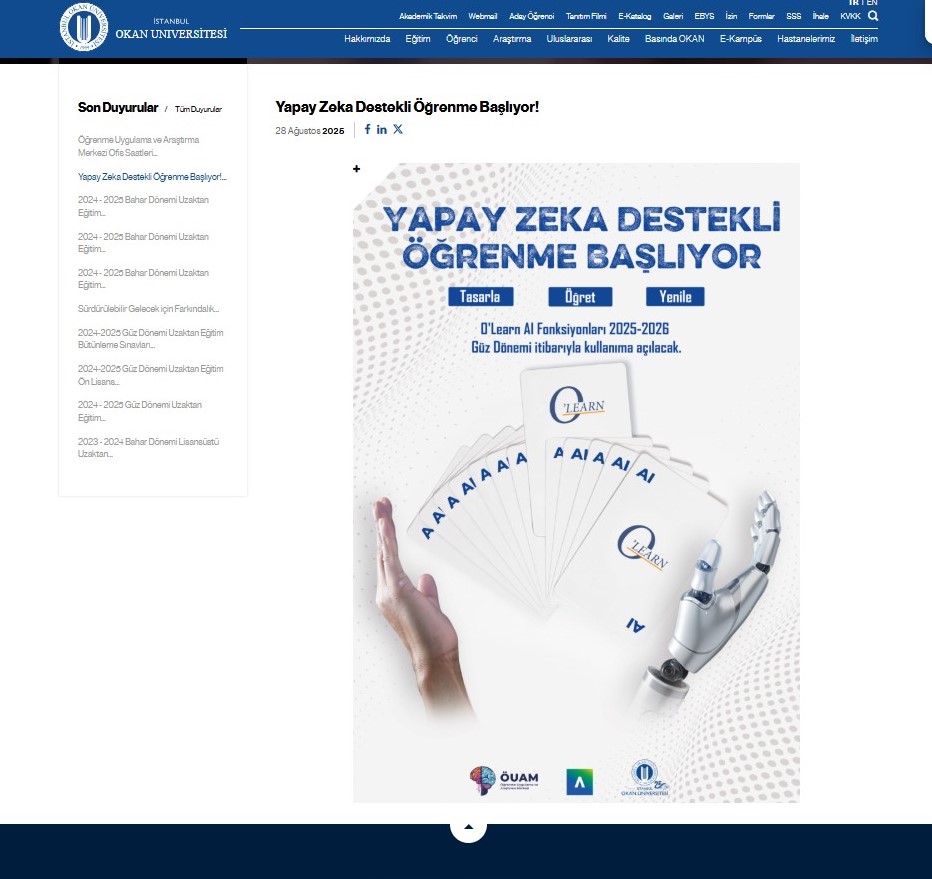 | |
| ClassCollab | |
 | |
| OkanForms | |
 | |
| OIS | |
 | |
| OKANApp | |
 | |
| Vetis | |
 | |
| Scival | |
 | |
| Scopus | |
 | |
| Zero Waste Menagement System ( Rebuplic of Türkiye Ministiry of Environment, Urbanization and Climate Change) | |
| EÇBS Giriş | |
| www.sifiratik.gov.tr | |
| T.C. Ministry of Environment, Urbanisation and Climate Change | |
 | |
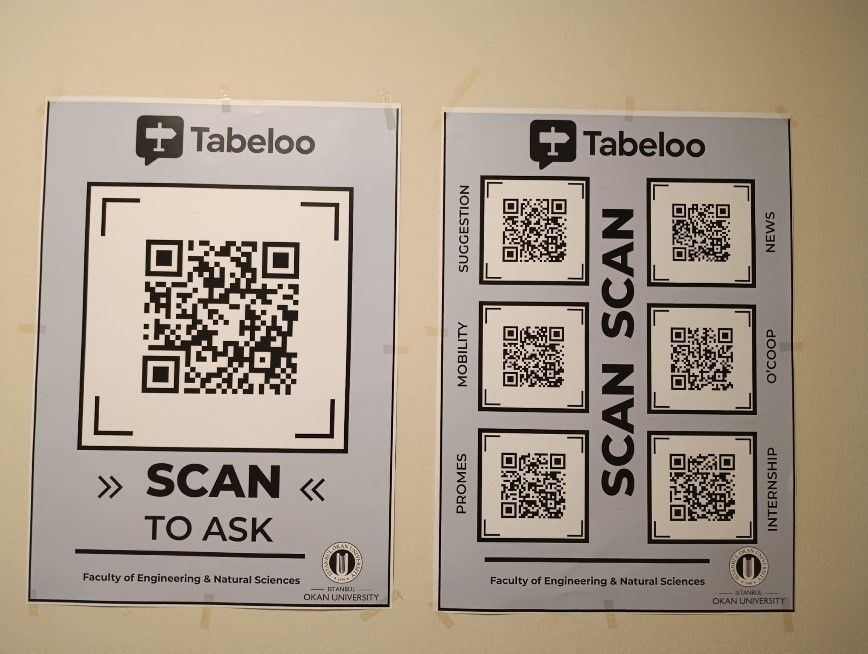 | |
| https://tabeloo.com/ | |
 |  |
 |  |
 |  |
 |  |
 |  |
 |  |
 |  |
 | |
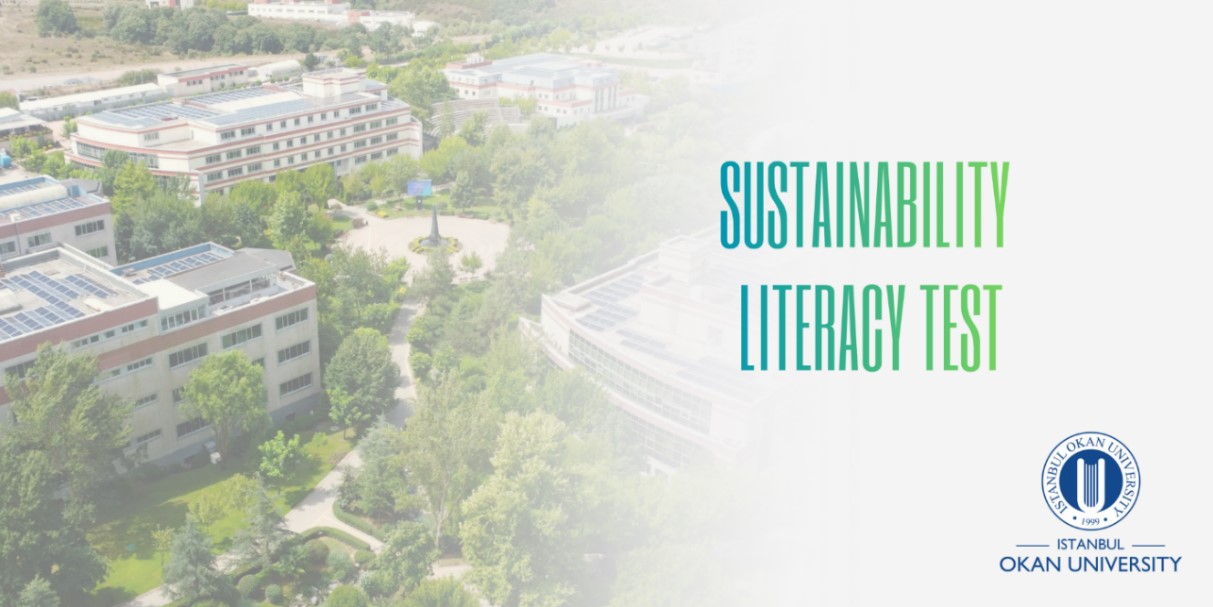 | |
| Sustainability Literacy Assessment | |
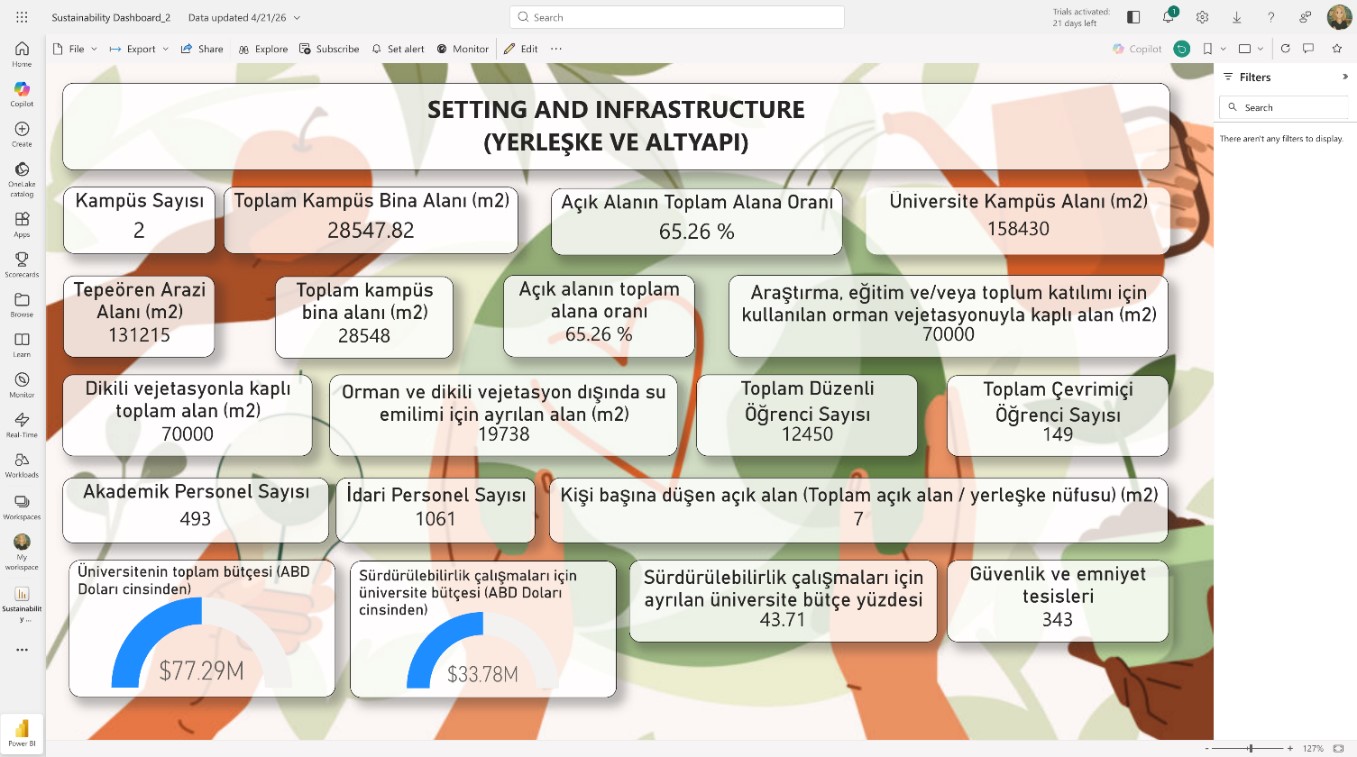 | |
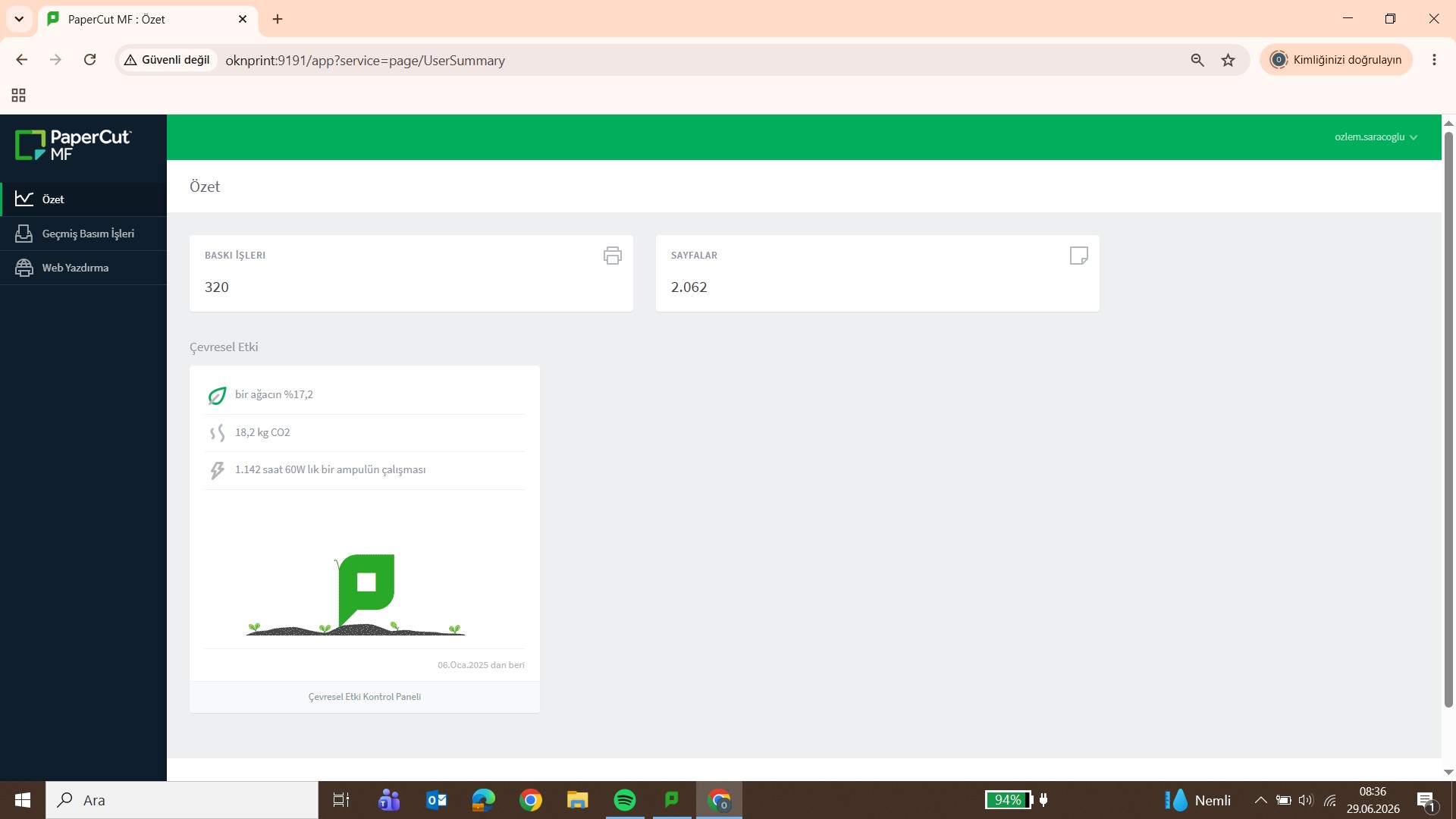
| Sustainability Dashboard | |
Sustainability Data Integration and Decision Support
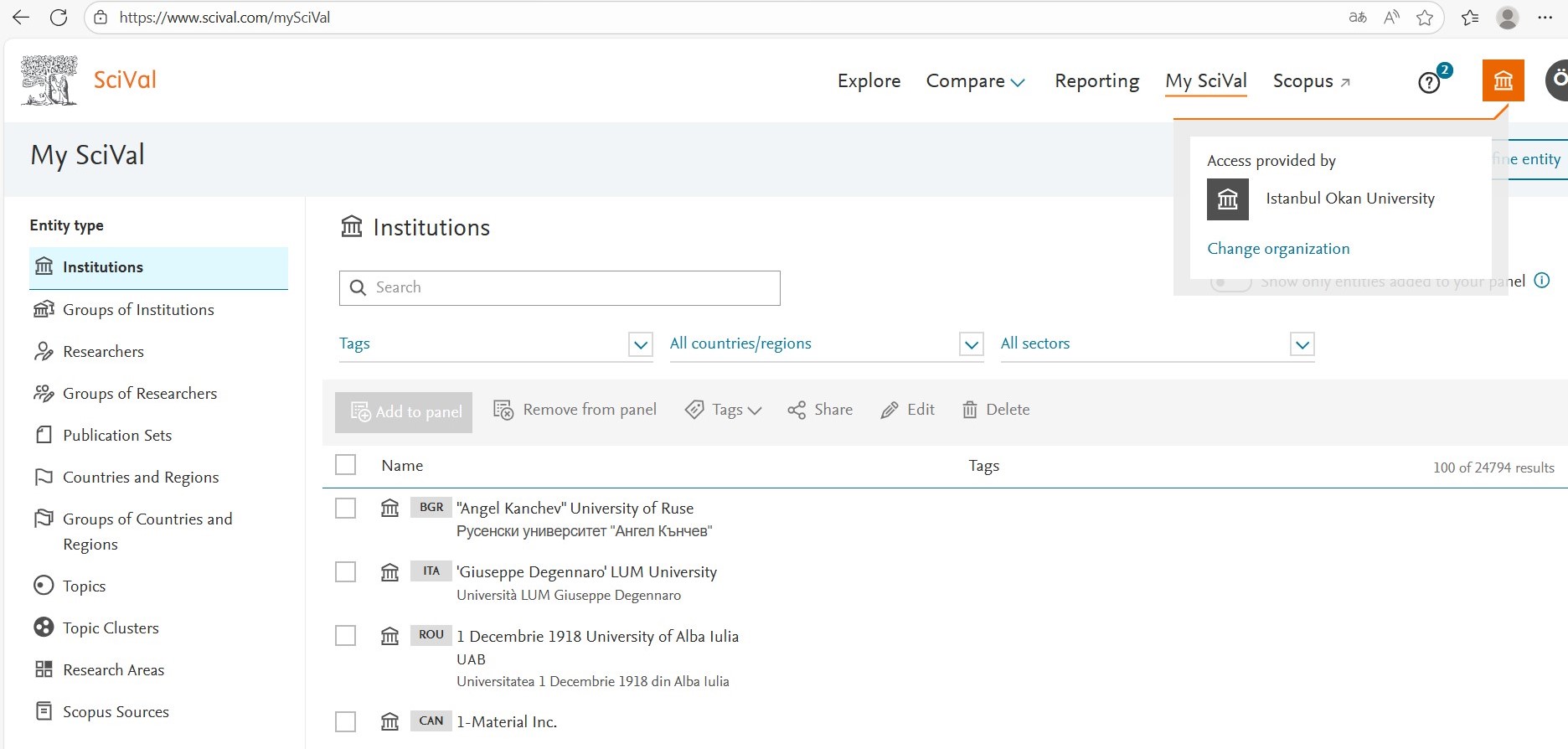
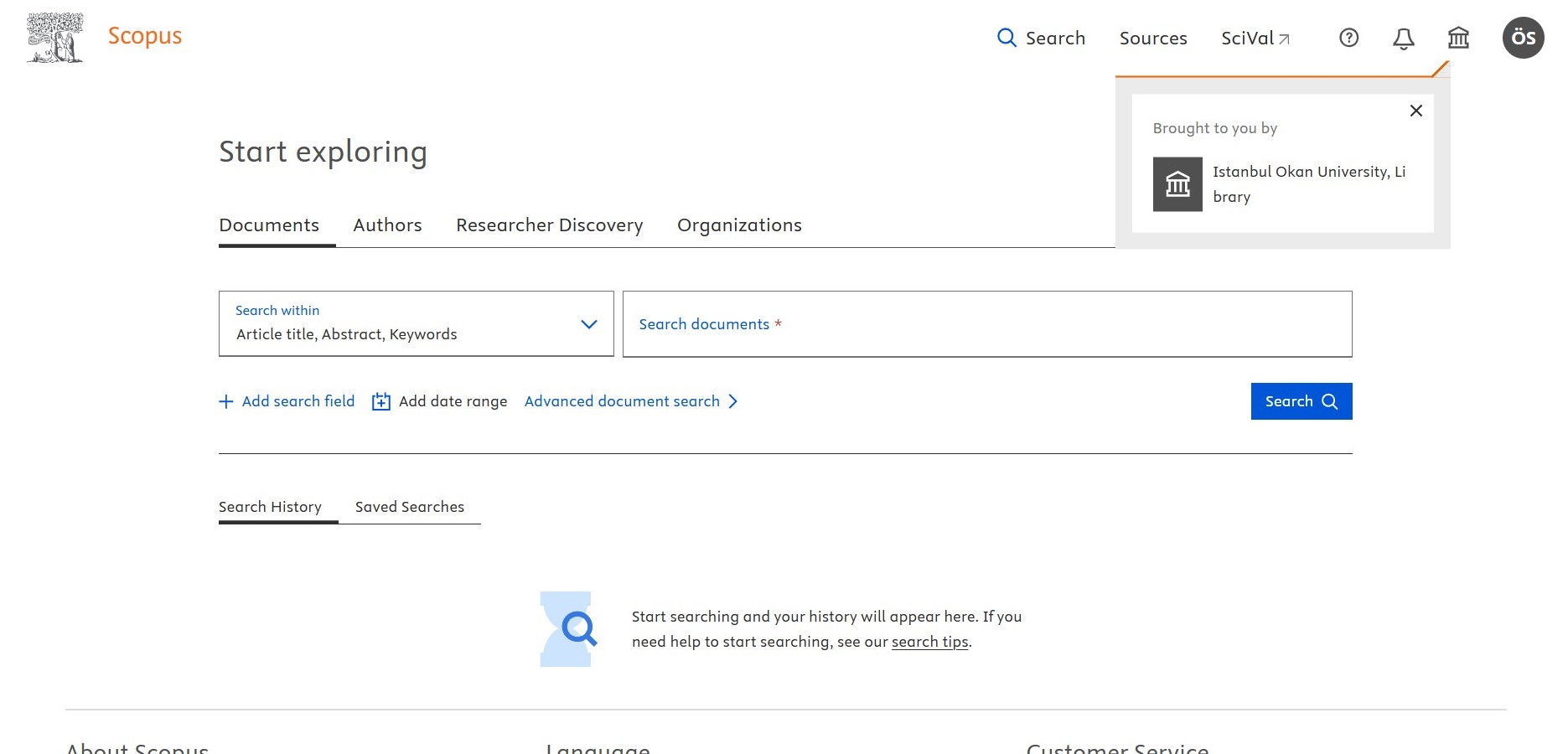
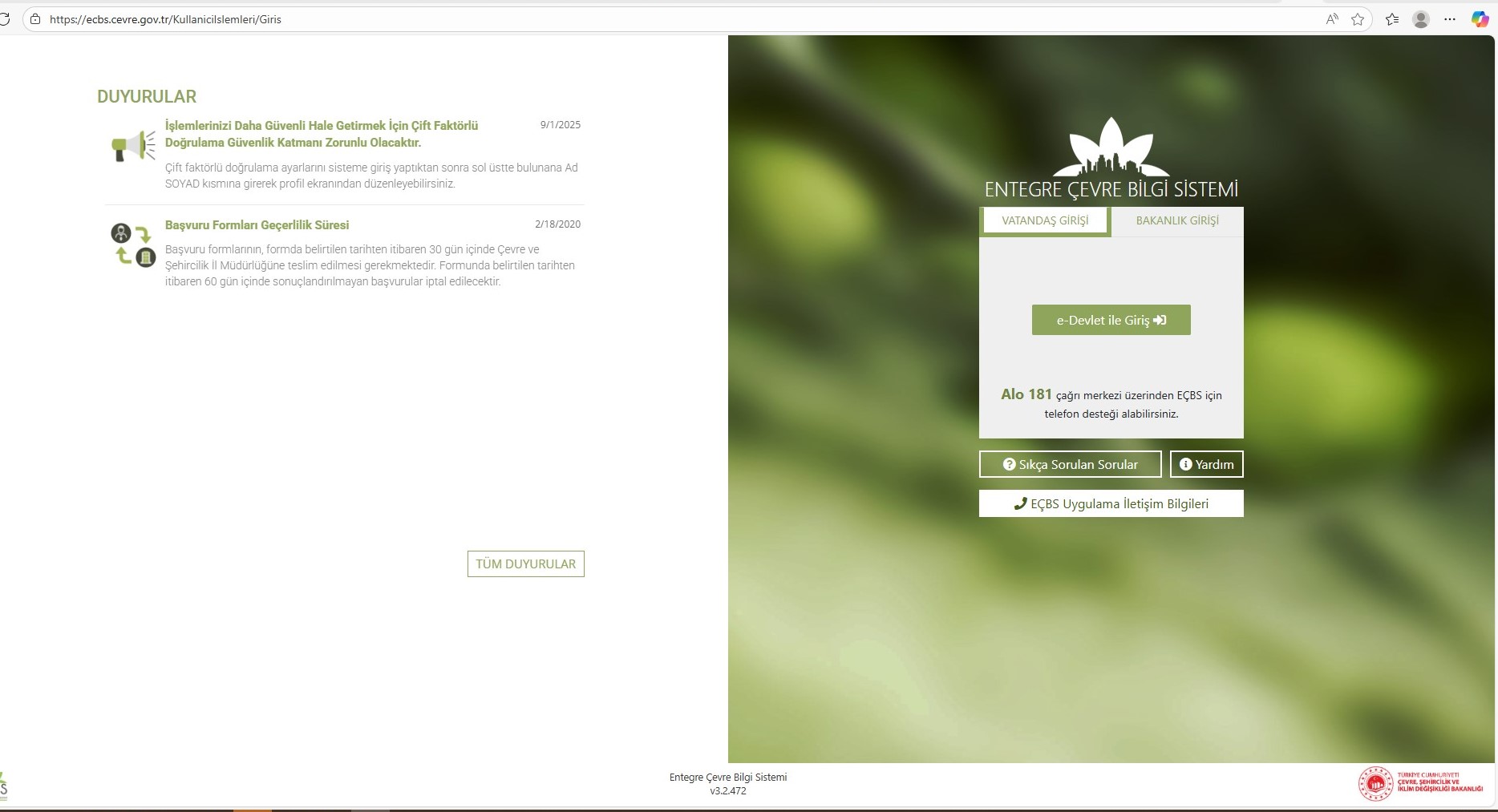
To ensure evidence-based sustainability governance, Istanbul Okan University has established an integrated institutional data management approach that consolidates information from academic, administrative, environmental, and operational systems. Sustainability Key Performance Indicators (KPIs) are collected through centralized digital platforms and visualized using institutional dashboards, enabling senior management to monitor progress toward strategic sustainability objectives in real time.
The University's digital decision-support infrastructure enables data-driven policy development, resource allocation, risk assessment, and performance benchmarking across all sustainability dimensions. Periodic management review meetings utilize ICT-generated reports and analytics to evaluate institutional performance and determine corrective and preventive actions.
Digital Reporting and Transparency
ICT systems play a critical role in preparing institutional sustainability reports and international ranking submissions. Data generated through integrated digital platforms support reporting for UI GreenMetric, THE Impact Rankings, QS Sustainability Rankings, institutional strategic plans, annual performance reports, quality assurance processes, and national sustainability reporting requirements.
Digital documentation significantly reduces paper consumption while improving transparency, traceability, accessibility, and institutional accountability. Electronic workflows ensure that sustainability-related evidence, approvals, meeting minutes, monitoring records, and policy documents are securely archived and easily retrievable.
Stakeholder Engagement through Digital Platforms
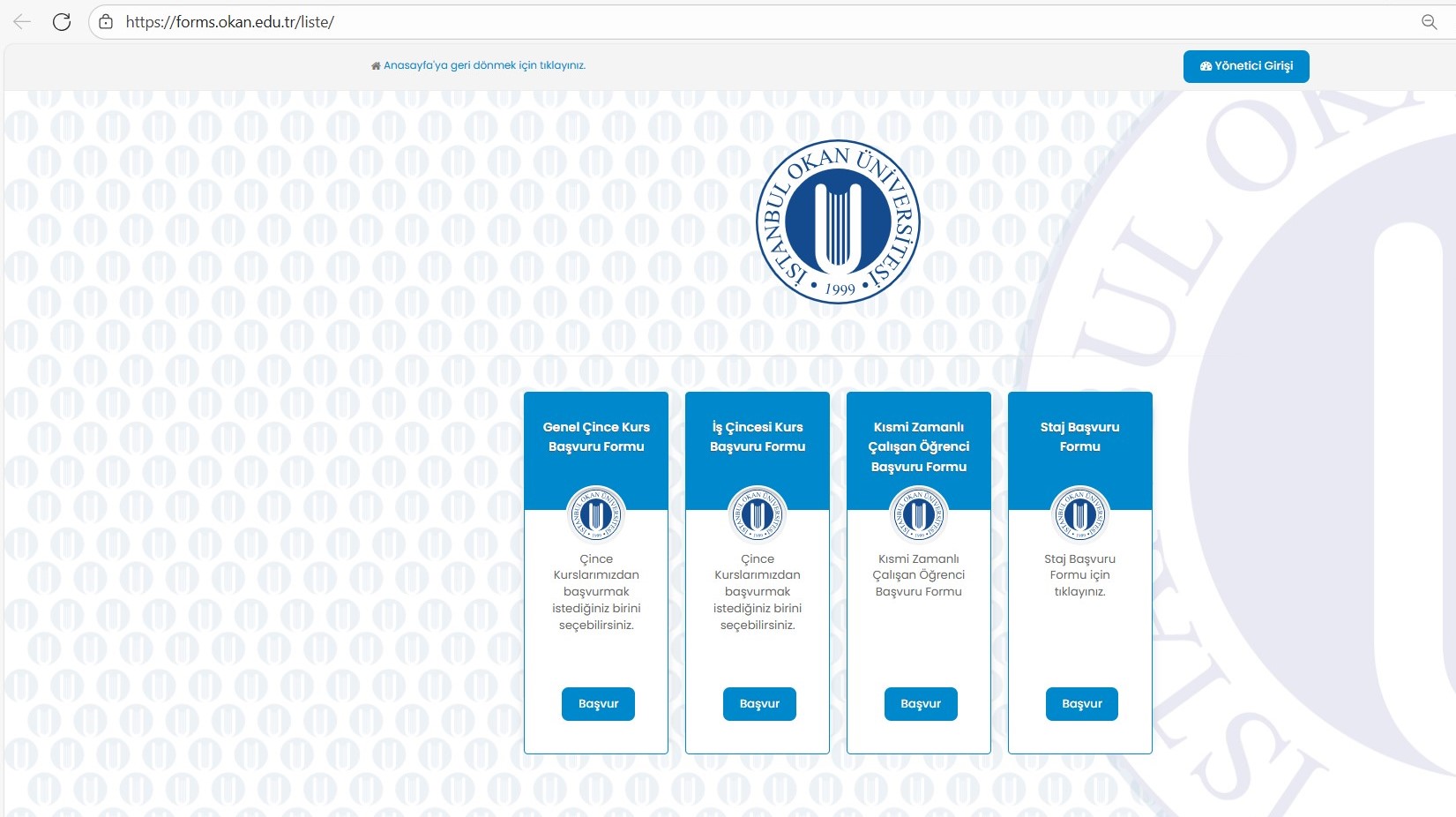
The University actively engages students, academic staff, administrative personnel, graduates, and external stakeholders through digital communication platforms. Sustainability awareness campaigns, online surveys, webinars, digital training modules, virtual workshops, feedback systems, and collaborative online meetings are conducted using Microsoft Teams, Blackboard O'Learn, OkanForms, CLASSGPT, OkanGPT, institutional websites, and social media platforms.
Digital engagement mechanisms facilitate continuous stakeholder participation in sustainability planning, implementation, and evaluation processes while strengthening institutional transparency and shared governance.
Digital Sustainability Literacy Assessment
As part of its digital sustainability governance framework, Istanbul Okan University has developed an online Sustainability Literacy Assessment through the International Accreditations and Rankings Unit of the Learning, Practice and Research Center.
The assessment is designed to evaluate the sustainability knowledge, attitudes, and behaviors of students, academic staff, and administrative personnel regarding sustainable development principles and the United Nations Sustainable Development Goals (SDGs). Delivered in both Turkish and English through digital platforms, the assessment consists of 20 multiple-choice questions measuring sustainability literacy and 10 Likert-scale questions evaluating sustainability-related attitudes and behaviors.
Assessment results are collected electronically, analyzed using institutional data analytics tools, and incorporated into sustainability planning, awareness programs, educational improvements, and institutional decision-making processes. The findings enable the University to identify knowledge gaps, monitor sustainability awareness levels over time, evaluate the effectiveness of sustainability education initiatives, and develop evidence-based action plans for continuous improvement.
This ICT-supported assessment mechanism strengthens stakeholder participation while providing measurable indicators for monitoring and evaluating the University's sustainability performance and capacity-building activities.
Predictive Analytics and Continuous Improvement
Advanced analytics, Artificial Intelligence (AI), and machine learning-supported tools are increasingly utilized to identify consumption trends, forecast resource demands, optimize campus operations, and improve sustainability performance. Historical datasets obtained from institutional ICT systems support predictive analyses related to energy efficiency, water conservation, carbon emissions, and infrastructure management.
The continuous collection, visualization, analysis, and interpretation of sustainability data enable Istanbul Okan University to implement proactive improvement measures, optimize operational efficiency, minimize environmental impacts, and reinforce its long-term commitment to digital transformation and sustainable development.
7.13 Policy of Advanced Digital Technologies Usage, Sucah as Artificial Intelligence and Internet of Things, to Support Decision-Making, Operational Efficieny, and Service Delivery Across University Administrative and Academic Business Process (GD.7)
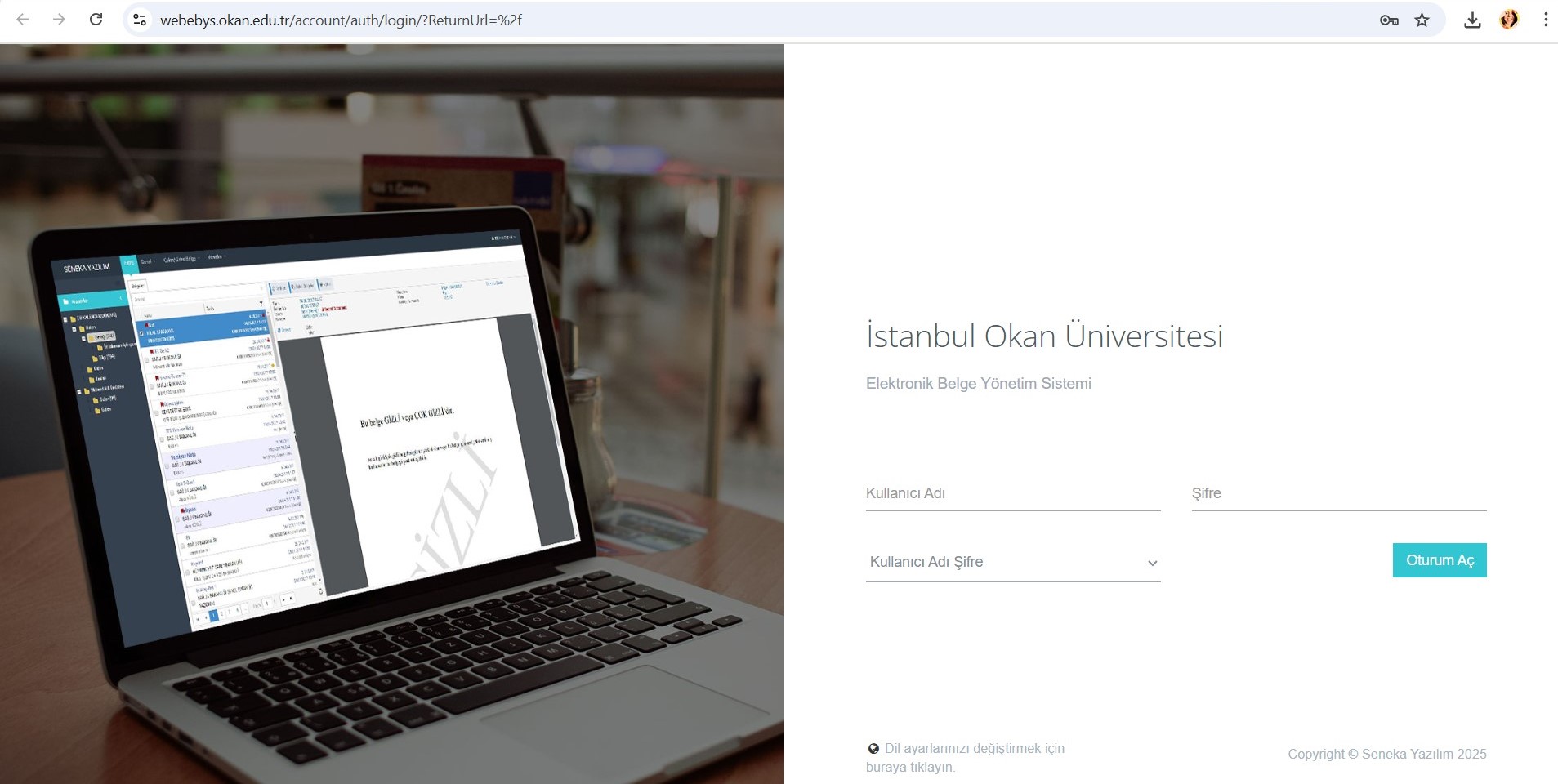 | |
| EBYS | |
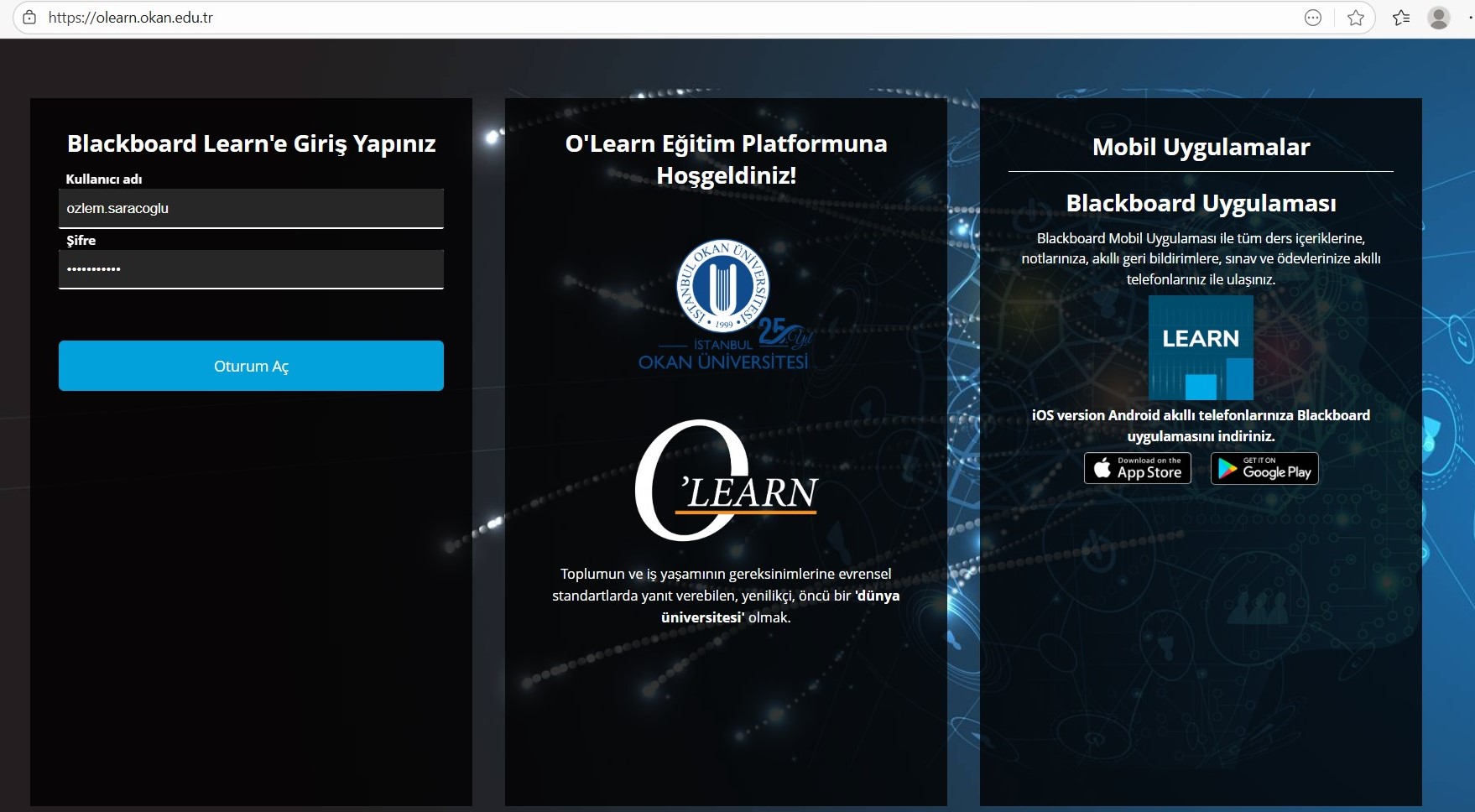 | |
| Learning Menagement Systems- Blackboard Learn-O’Learn | |
 | |
| ClassCollab | |
 | |
| ClassGPT | |
 | |
| Tabeloo | |
 | |
| Tabeloo | |
 | |
| Publications related to Artificial Intelligence |
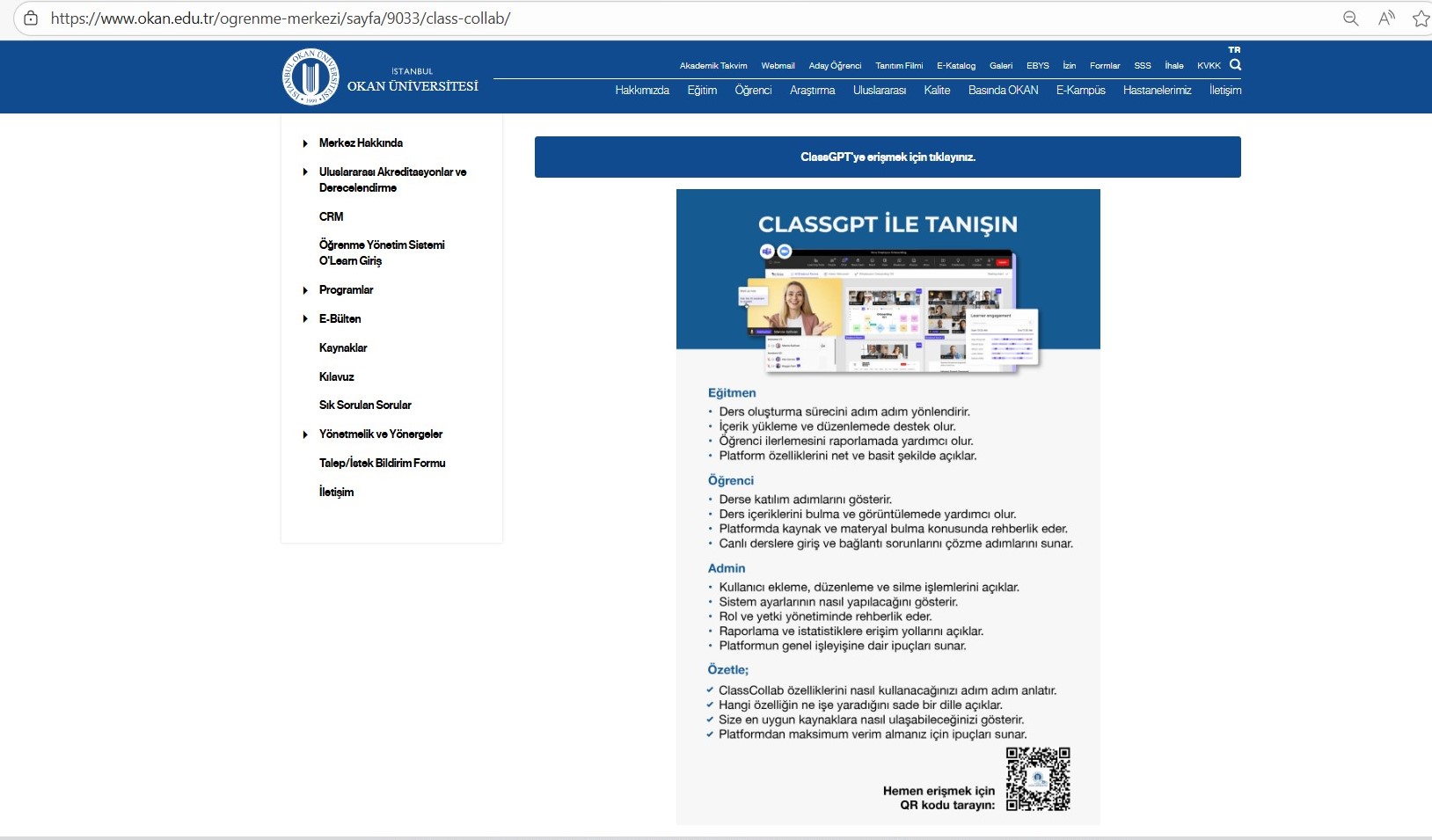
Istanbul Okan University adopts a comprehensive digital transformation approach by integrating advanced digital technologies into its governance, academic, research, and administrative processes to enhance evidence-based decision-making, operational efficiency, institutional performance, and stakeholder services.
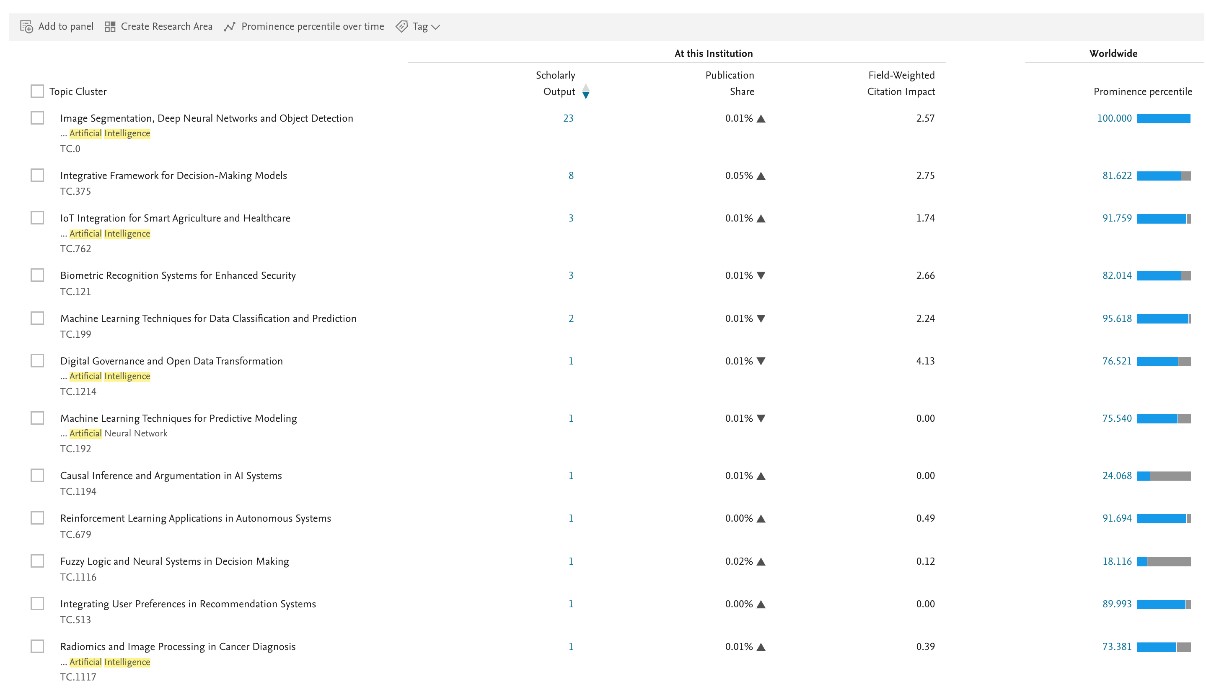
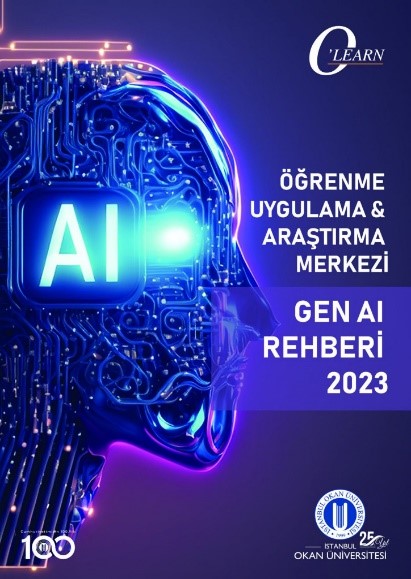
The University promotes the responsible and ethical use of advanced digital technologies, including Artificial Intelligence (AI), Generative Artificial Intelligence (GenAI), Internet of Things (IoT), big data analytics, cloud computing, business intelligence systems, learning analytics, and digital automation across all academic and administrative units.
In line with the Higher Education Council of Türkiye (YÖK) Ethical Guidelines on the Use of Generative Artificial Intelligence in Scientific Research and Publication, Istanbul Okan University has established the "Principles and Rules for the Use of Generative Artificial Intelligence (GenAI)". This institutional policy defines the ethical framework, permitted uses, restrictions, transparency requirements, academic integrity principles, and monitoring mechanisms governing the use of AI technologies in education, research, and academic publishing.
Advanced digital technologies are utilized across the University to:
support evidence-based strategic planning and institutional decision-making through integrated data analytics and performance dashboards;
improve administrative efficiency through electronic document management systems, workflow automation, and digital governance;
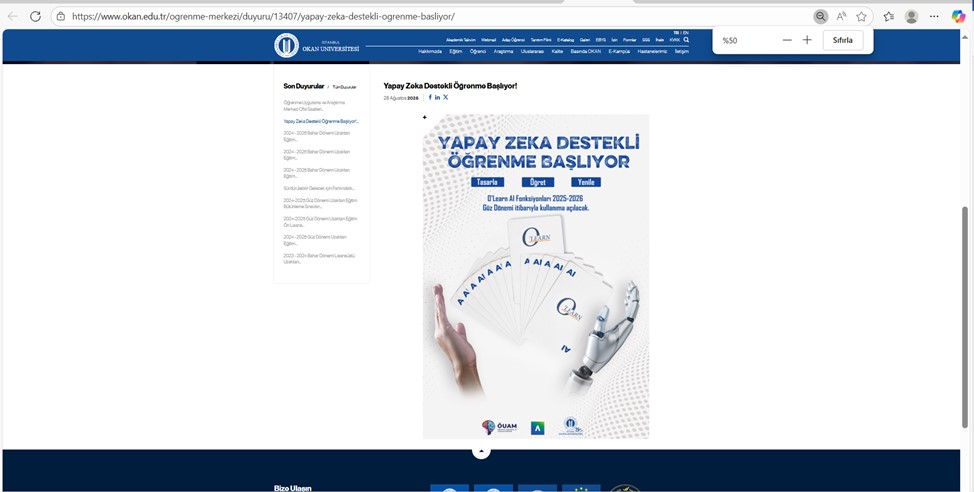
enhance teaching, learning, research, and assessment using AI-supported educational technologies and learning analytics;
provide secure, accessible, and integrated digital services for students, faculty, staff, and external stakeholders;
support sustainability management through digital data collection, monitoring, reporting, and performance evaluation;
strengthen smart campus initiatives by utilizing digital infrastructure and intelligent monitoring systems where applicable.
The University further ensures that all AI-enabled academic activities comply with principles of transparency, academic integrity, responsible use, human oversight, data privacy, and ethical conduct. Students and academic staff are required to disclose AI-assisted work where appropriate, while prohibited uses, academic misconduct procedures, and disciplinary measures are clearly defined under the University's institutional regulations.
Through continuous investment in digital transformation, cybersecurity, staff capacity development, and responsible AI governance, Istanbul Okan University demonstrates its commitment to leveraging advanced digital technologies to improve institutional effectiveness, academic excellence, and sustainable university management.
https://yapayzekaplatformu.org/yapay-zeka-ve-yuksekogretim-istanbul-okan-universitesinde-ele-alindi/
https://www.okan.edu.tr/enstitu/sayfa/9080/ogrenme-merkezi-sistemi-olearn/
https://www.okan.edu.tr/enstitu/sayfa/182/tez-proje-yazim-kilavuzu/
https://www.okan.edu.tr/en/sustainability/page/9670/sustainability-literacy-assessment/
https://ois.okan.edu.tr/auth/login
https://www.okan.edu.tr/yukseklisansprogramlari/bolum/448/yapay-zeka-muhendisligi/
https://www.okan.edu.tr/en/sustainability/page/9670/sustainability-literacy-assessment/
7.14 Compliance with The General Data Protection Regulation (GDPR) or Equivalent National Data Protection Regulations
 | |
| Information Security Policy | |
 | |
| Information Technologies Service Management System Policy | |
 | |
| Human Resources Policy | |
 | |
| Learning Application and Research Policy |
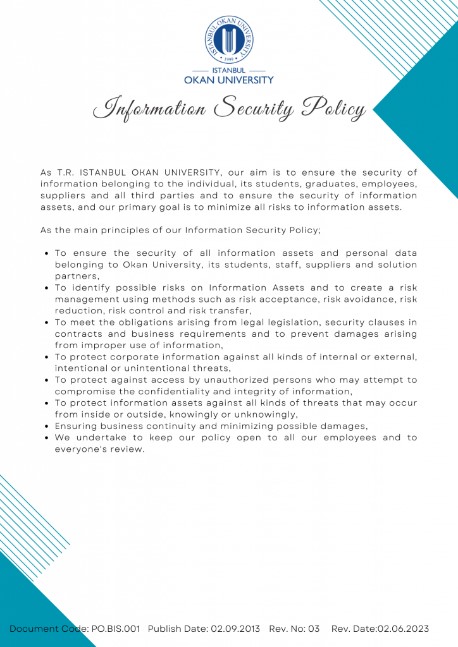
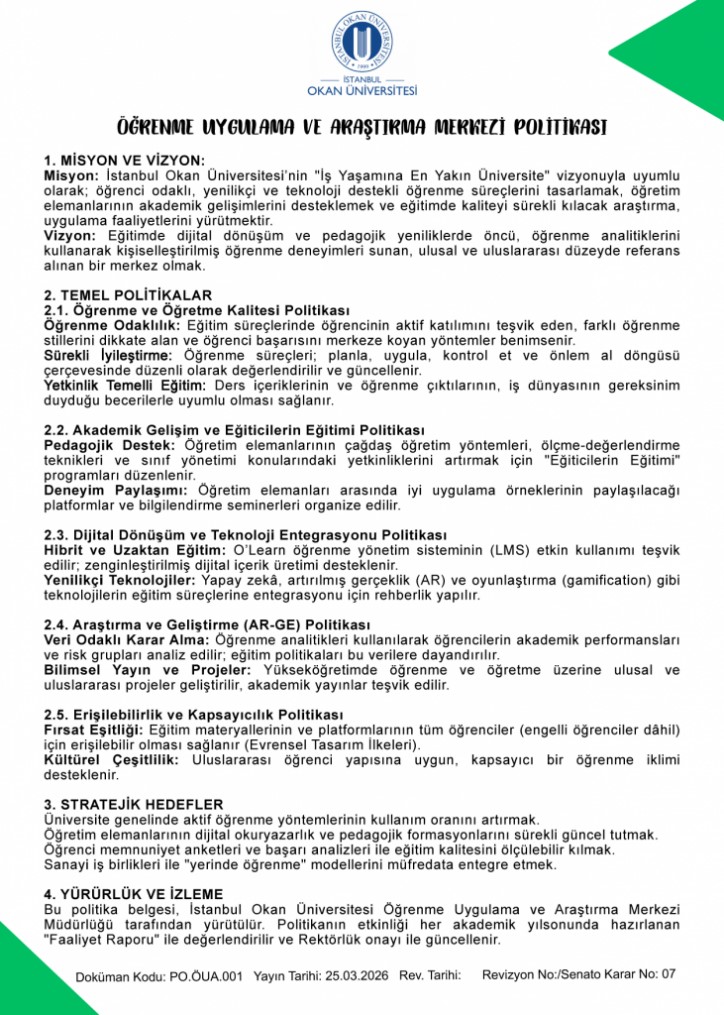
Istanbul Okan University recognizes the protection of personal data as one of its fundamental institutional responsibilities and conducts all personal data processing activities in compliance with the Turkish Personal Data Protection Law No. 6698 (KVKK), which is the national equivalent of the General Data Protection Regulation (GDPR), as well as applicable national legislation and international best practices.
Personal data belonging to students, academic and administrative staff, alumni, prospective students, visitors, business partners, and other stakeholders are processed in accordance with the principles of lawfulness, fairness, transparency, purpose limitation, data minimization, accuracy, storage limitation, integrity, confidentiality, and accountability.
To ensure the security of personal data, the University implements comprehensive technical and organizational measures. Access authorization, multi-level user authentication, role-based access control, encrypted communication, firewall protection, antivirus systems, regular data backups, security monitoring, vulnerability management, and periodic software updates are applied across institutional information systems, including the Electronic Document Management System (EBYS), Student Information System (OIS), Enterprise Resource Planning (ERP) system, e-mail infrastructure, and other digital platforms.
The University operates its Information Security Management System (ISMS) in accordance with internationally recognized information security standards. Regular risk assessments, security audits, access control reviews, incident management procedures, and cybersecurity monitoring activities are carried out to protect institutional information assets. Access to personal data is restricted to authorized personnel based on their responsibilities, while all data processing activities are logged to ensure traceability and accountability.
In compliance with KVKK requirements, the University has established Personal Data Protection and Processing Policies, Privacy Notices, Explicit Consent Forms, Data Retention and Destruction Policy, Cookie Policy, Privacy Policy, and procedures governing the exercise of data subjects' rights. Individuals may submit requests regarding access, correction, deletion, anonymization, restriction of processing, and other legally recognized rights through established institutional mechanisms.
The University also organizes regular training programs and awareness activities on personal data protection, information security, cybersecurity, and secure information management for academic and administrative personnel. Data protection responsibilities are incorporated into employee orientation programs, while continuous awareness is promoted through digital communication channels, institutional learning platforms, and internal guidance materials.
As part of its digital transformation and sustainability governance framework, Istanbul Okan University considers personal data protection to be an integral component of responsible institutional management. Through robust governance mechanisms, secure digital infrastructure, continuous monitoring, and ongoing improvement, the University ensures compliance with national data protection legislation while promoting transparency, accountability, ethical data management, and the secure handling of personal information across all institutional activities.
https://www.okan.edu.tr/en/page/8376/information-security-policy/
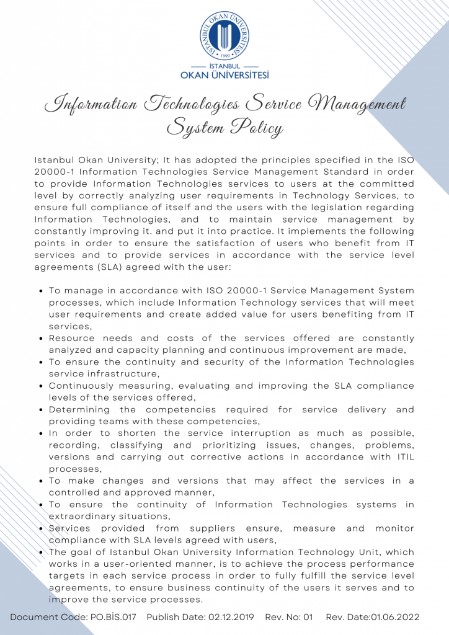
https://www.okan.edu.tr/en/page/8369/information-technologies-service-management-system-policy/
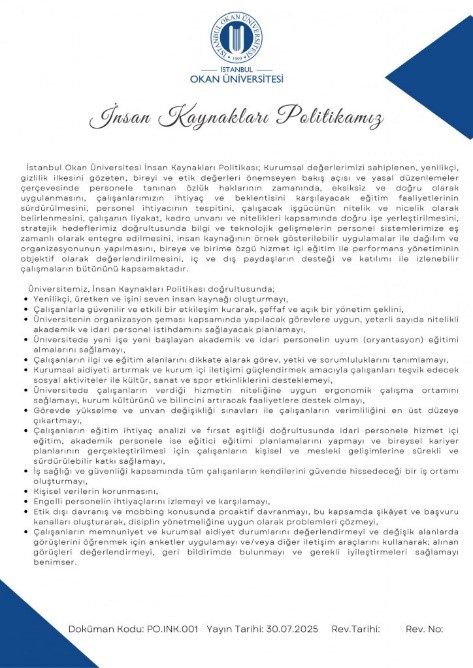
https://www.okan.edu.tr/sayfa/9037/insan-kaynaklari-politikasi/
https://www.okan.edu.tr/sayfa/9702/degerlerimiz/
7.15 Total Number of Institutional Leaders and Deputy Leaders at University, Faculty, Study Program, and University- Level Units
 | |
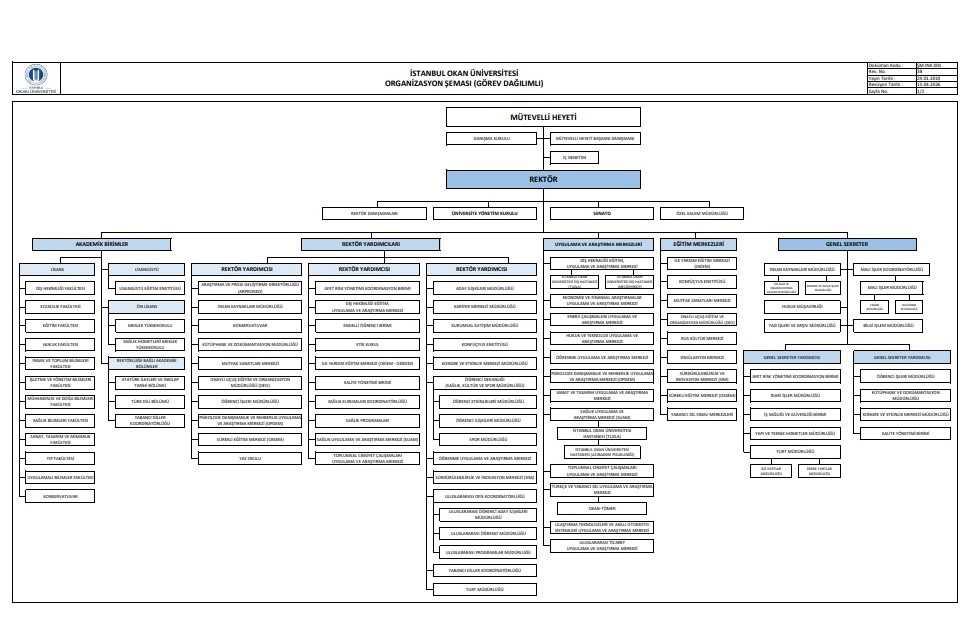 | |
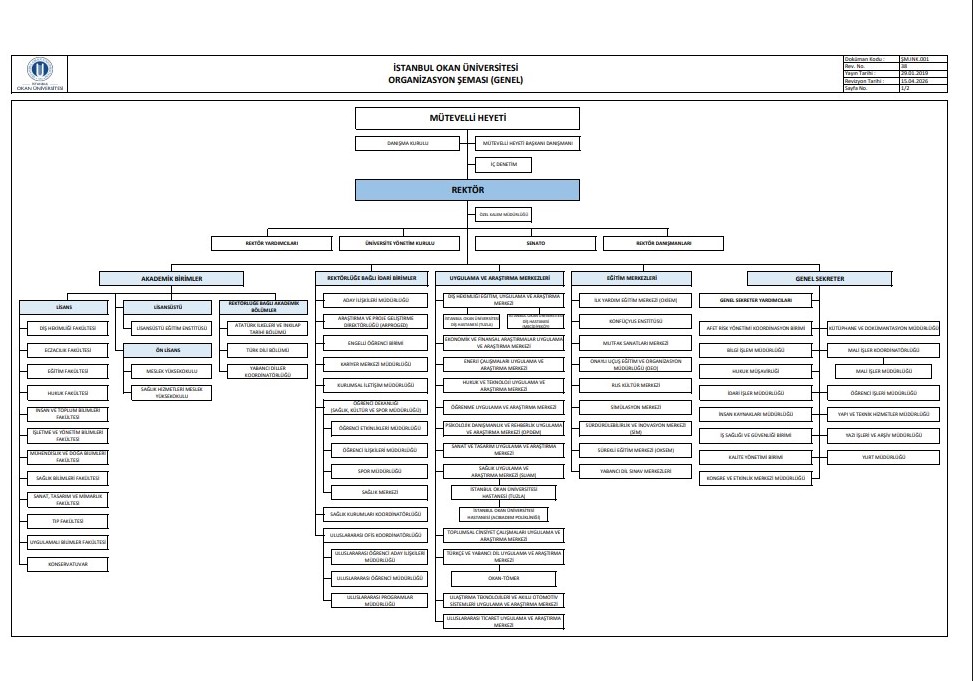
| Organizational Chart of Istanbul Okan University |
Istanbul Okan University operates through a comprehensive governance structure that supports effective institutional management, academic excellence, quality assurance, and sustainable development. Leadership responsibilities are distributed across university-wide, faculty, school, institute, department, study program, research center, and administrative units.
The University's institutional leadership structure includes the Rector, Vice Rectors, Deans, Vice Deans, Directors and Deputy Directors of Institutes, Vocational Schools and Research Centers, Department Chairs, Program Coordinators, Heads of Administrative Departments, Directors of University-Level Units, Coordinators, and other appointed academic and administrative leaders.
This distributed governance model enables efficient decision-making, stakeholder participation, interdisciplinary collaboration, strategic planning, quality management, digital transformation, sustainability implementation, and continuous institutional improvement. Each academic and administrative unit is managed by designated leaders and deputy leaders responsible for planning, implementation, monitoring, reporting, and performance evaluation within their respective areas.
The total number of institutional leaders and deputy leaders is regularly updated by the Directorate of Human Resources and the Rectorate in accordance with the University's organizational structure. The organizational chart and official appointment records provide transparent evidence of the University's leadership capacity and governance framework.
Total Number of Institutional Leaders and Deputy Leaders: 1118
7.18 Anti-Corruption and Integrity System of The University (GD.9)
 | |
| Ethical Sourcing Policy | |
 | |
| Anti Bribery and Anti Corruption Policy |
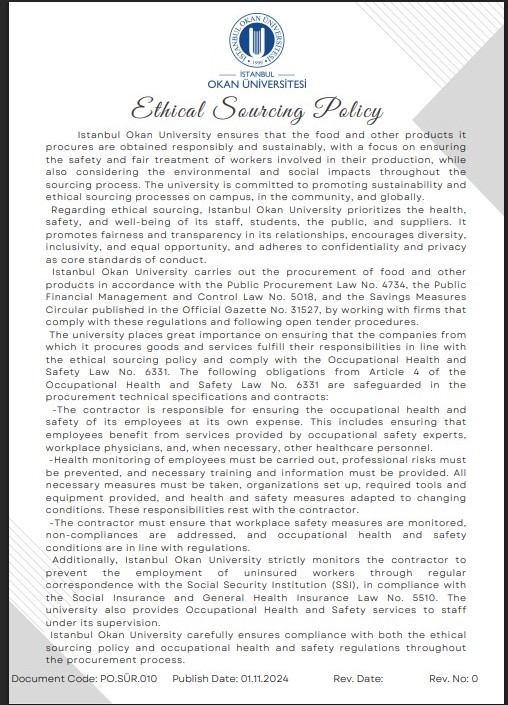
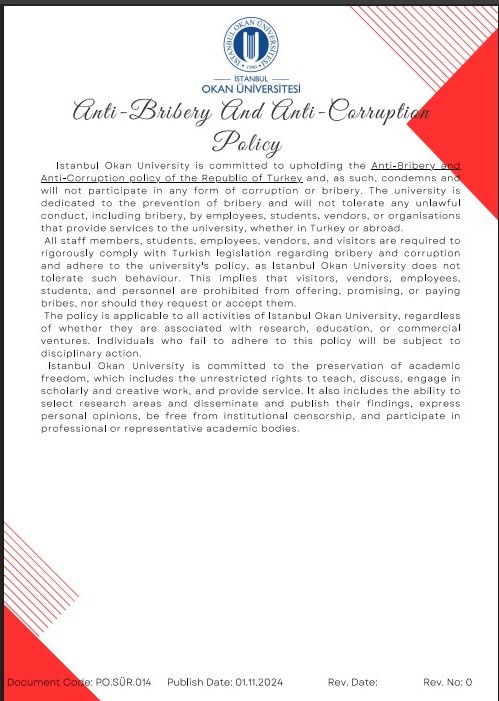
Istanbul Okan University is committed to the principles of transparency, accountability, ethical governance, and institutional integrity. The University promotes a culture of honesty, fairness, impartiality, and responsibility across all academic and administrative activities, while implementing comprehensive measures to prevent corruption, fraud, bribery, conflicts of interest, and other unethical practices.
The University's anti-corruption and integrity framework is implemented in accordance with applicable national legislation, the regulations of the Council of Higher Education (YÖK), the University's Code of Ethics, disciplinary regulations, human resources policies, procurement procedures, financial management regulations, and the institutional quality assurance system.
Transparency and accountability are embedded in institutional decision-making processes. Roles, responsibilities, and authorities are clearly defined through the University's organizational structure, job descriptions, and authorization matrix. Procurement, budgeting, financial management, human resources, student services, research administration, and other administrative processes are conducted through standardized procedures and multi-level approval mechanisms to ensure fairness, compliance, and accountability.
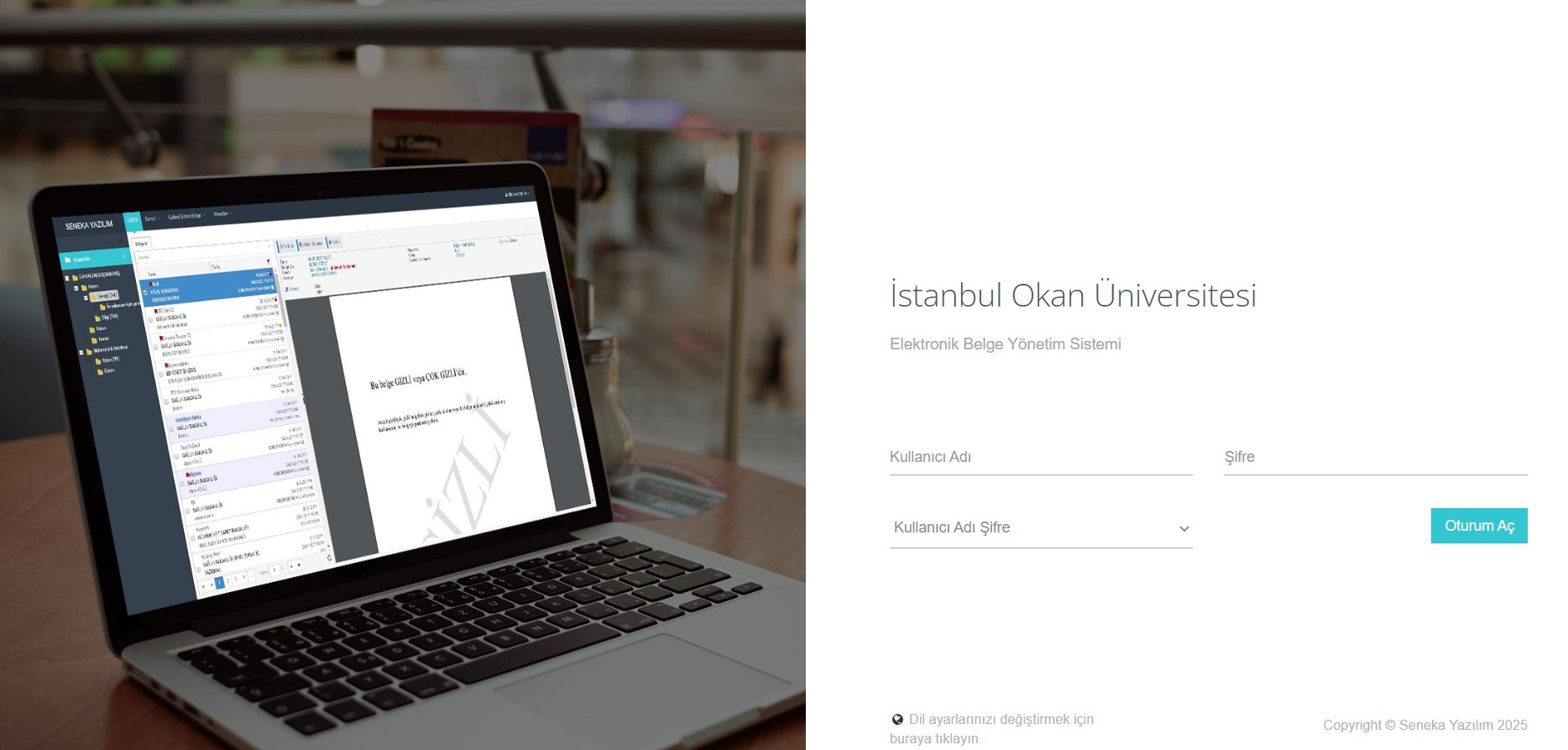
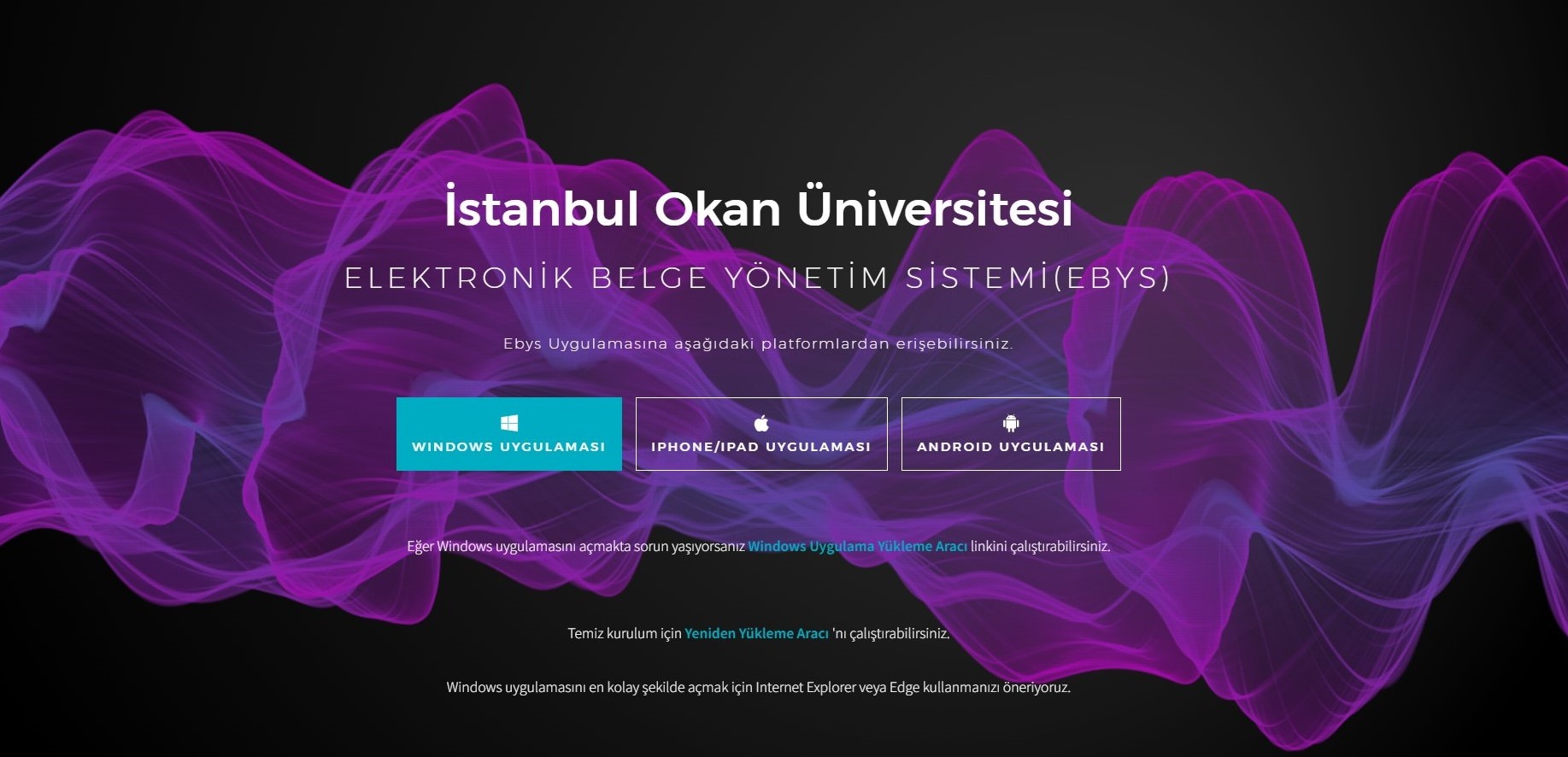
To strengthen institutional integrity, the University utilizes digital governance tools such as the Electronic Document Management System (EBYS), Enterprise Resource Planning (ERP) system, electronic approval workflows, and secure digital record management systems. These platforms ensure traceability, transparency, secure documentation, and effective monitoring of administrative processes. Role-based access controls, electronic signatures, and audit trails further support institutional accountability and reduce operational risks.
Academic integrity is safeguarded through institutional ethics committees, research and publication ethics procedures, and plagiarism prevention mechanisms. Research outputs, theses, and academic publications are reviewed using similarity detection software to ensure compliance with national and international ethical standards for research and scholarly publishing.
The University regularly organizes awareness programs and training activities on ethics, information security, personal data protection, conflict of interest prevention, responsible conduct, and institutional accountability for academic staff, administrative personnel, and students. Reports of ethical misconduct are handled confidentially, impartially, and fairly by the relevant institutional committees, with appropriate corrective and preventive actions implemented where necessary.
Through its robust internal control mechanisms, ethical governance framework, digital management systems, risk-based approach, and continuous improvement practices, Istanbul Okan University fosters a strong culture of integrity, prevents corruption, strengthens institutional accountability, and supports sustainable governance across all areas of operation.
7.19 Whistle Blowing and Complaint System of The University (GD.10)
 | |
| EBYS | |
 | |
| EBYS | |
 | |
| Learning Menagement Systems- Blackboard Learn-O’Learn | |
 | |
| CRM |
Istanbul Okan University is committed to fostering a transparent, accountable, and ethical institutional culture by providing secure, accessible, and impartial mechanisms for reporting complaints, ethical concerns, misconduct, and potential violations of institutional policies and applicable legislation.
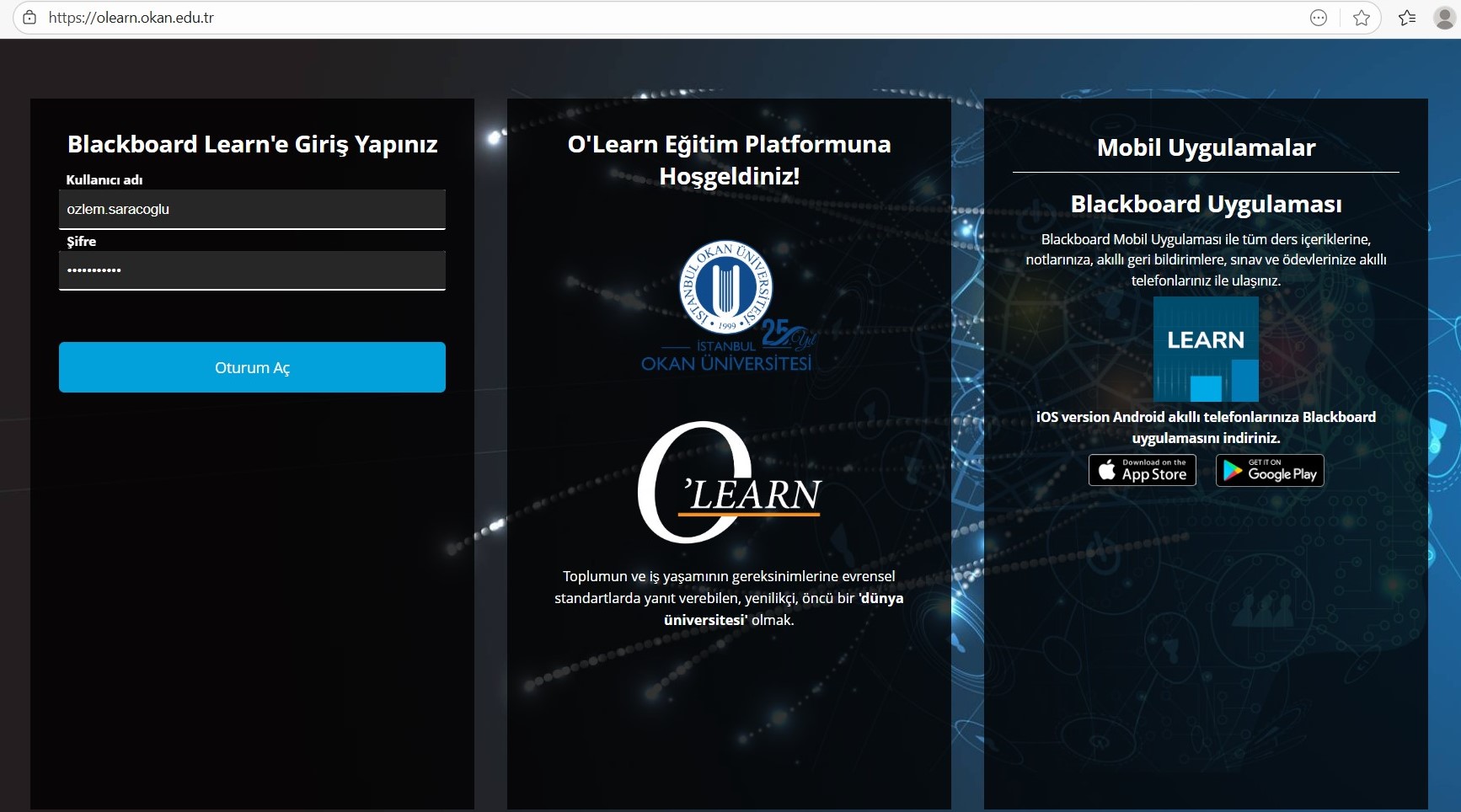
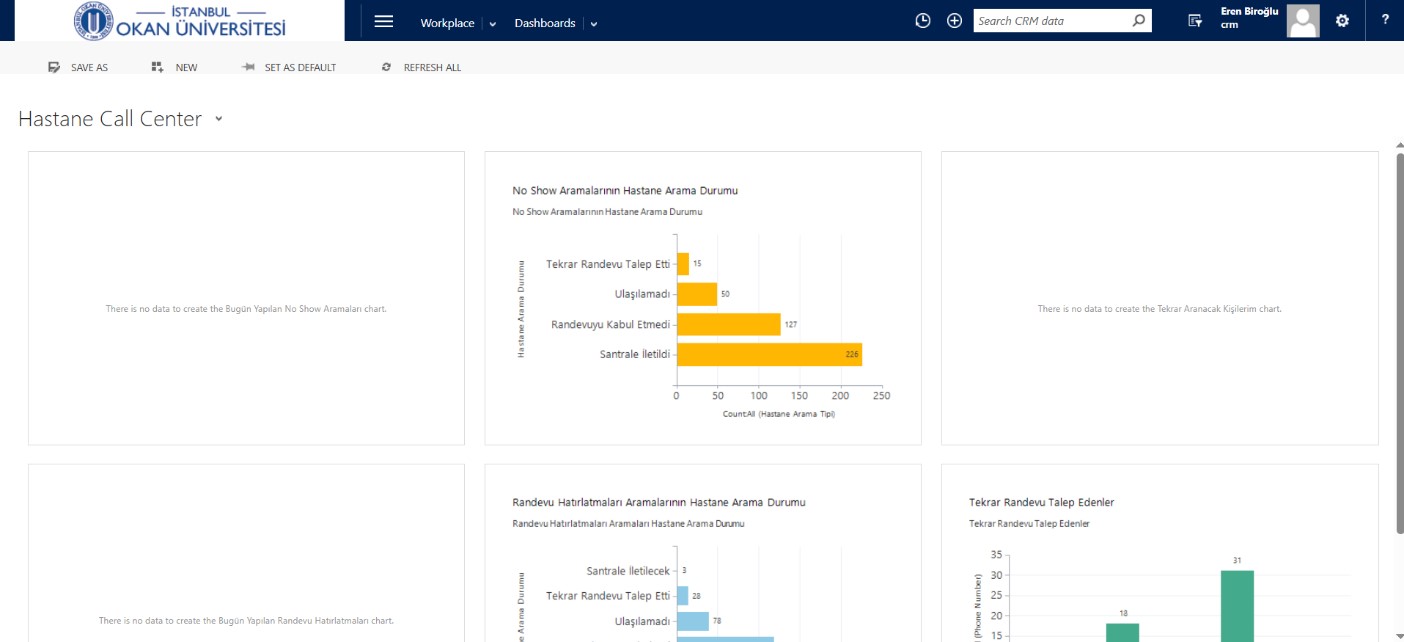
The University has established multiple communication and reporting channels through which students, academic staff, administrative personnel, alumni, and external stakeholders may submit complaints, suggestions, feedback, and reports of suspected misconduct. These channels include the University's official website, institutional e-mail addresses, call center services, online application forms, Electronic Document Management System (EBYS), Student Information System (OIS), Customer Relationship Management (CRM) systems, Blackboard O’Learn Learning Management System, Human Resources communication channels, Quality Management System, and other digital platforms.
Reports may relate to academic integrity, discrimination, harassment, corruption, fraud, conflicts of interest, information security, personal data protection, workplace ethics, administrative misconduct, or other institutional concerns. All reports are received, documented, and evaluated in accordance with the principles of confidentiality, impartiality, fairness, transparency, and due process.
In addition to formal complaint channels, feedback and complaints are also collected through the call center, CRM systems, and Blackboard O’Learn LMS, as well as through institutional survey systems, enabling continuous monitoring of student experience and stakeholder satisfaction. Digital surveys and feedback forms are systematically used across academic and administrative units to capture user experiences and improvement suggestions.
Depending on the nature of the complaint or report, submissions are reviewed by the relevant academic or administrative units, Ethics Committee, Human Resources Directorate, Quality Assurance Office, Rectorate, or other authorized institutional bodies. Where necessary, investigations are conducted in accordance with applicable legislation, internal regulations, and disciplinary procedures, and appropriate corrective and preventive actions are implemented.
The University ensures that individuals submitting complaints or whistleblowing reports are treated fairly and that their personal information is protected in accordance with the Turkish Personal Data Protection Law No. 6698 (KVKK). Information related to complaints and investigations is accessible only to authorized personnel, ensuring confidentiality throughout the entire process.
In addition to complaint management, Istanbul Okan University regularly collects stakeholder feedback through the call center, CRM-based analytics, Blackboard O’Learn LMS feedback tools, digital communication platforms, and quality assurance processes. The findings obtained through these mechanisms are incorporated into institutional decision-making, risk management, service improvement, and continuous quality enhancement activities.
Through its integrated whistleblowing, complaint, and feedback management system, Istanbul Okan University strengthens institutional transparency, ethical governance, stakeholder trust, accountability, and continuous improvement while supporting a responsible and sustainable governance framework.
https://www.okan.edu.tr/en/page/7812/student-application-petitions-and-forms/
https://www.okan.edu.tr/en/page/945/student-affairs/
https://www.okan.edu.tr/ogrencidekanligi/sayfa/8888/formlar/
7.20 LMS-Enabled Digital Literacy Program for Students and Staff
 | |
| Learning Application and Research Center | |
 | |
| O’learn | |
 | |
 | |
| Blackboard | |
 | |
| CRM |
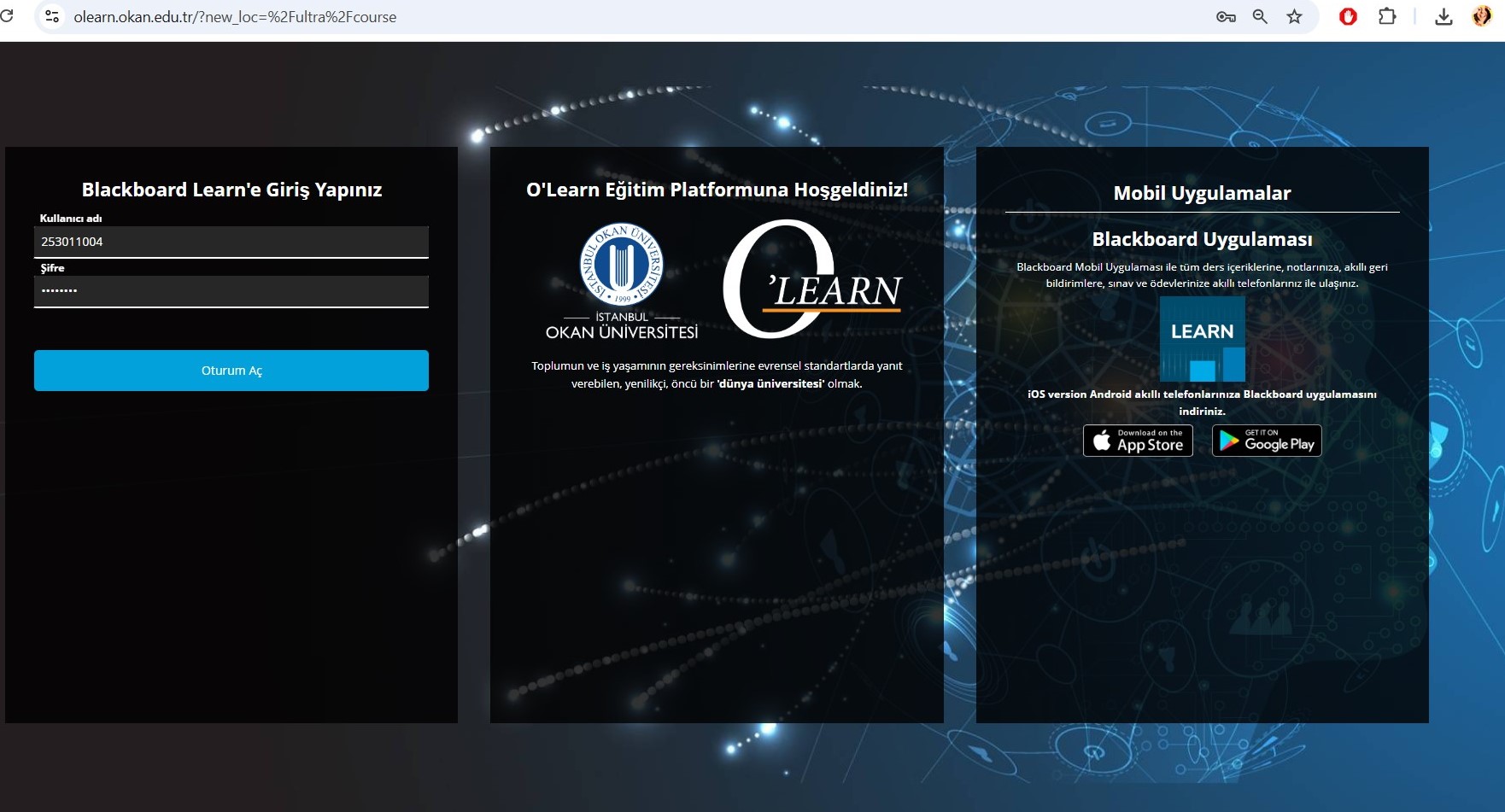
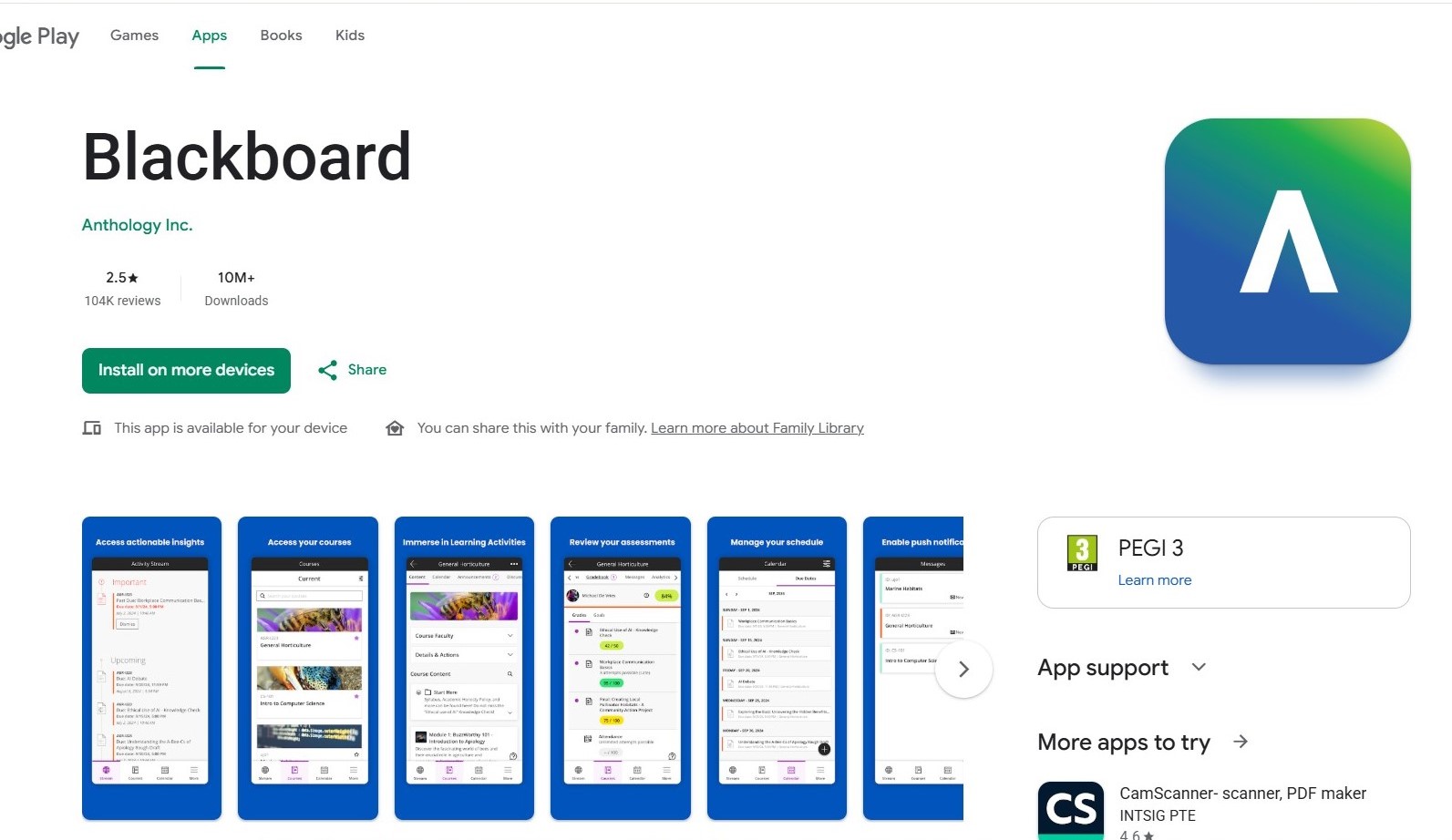
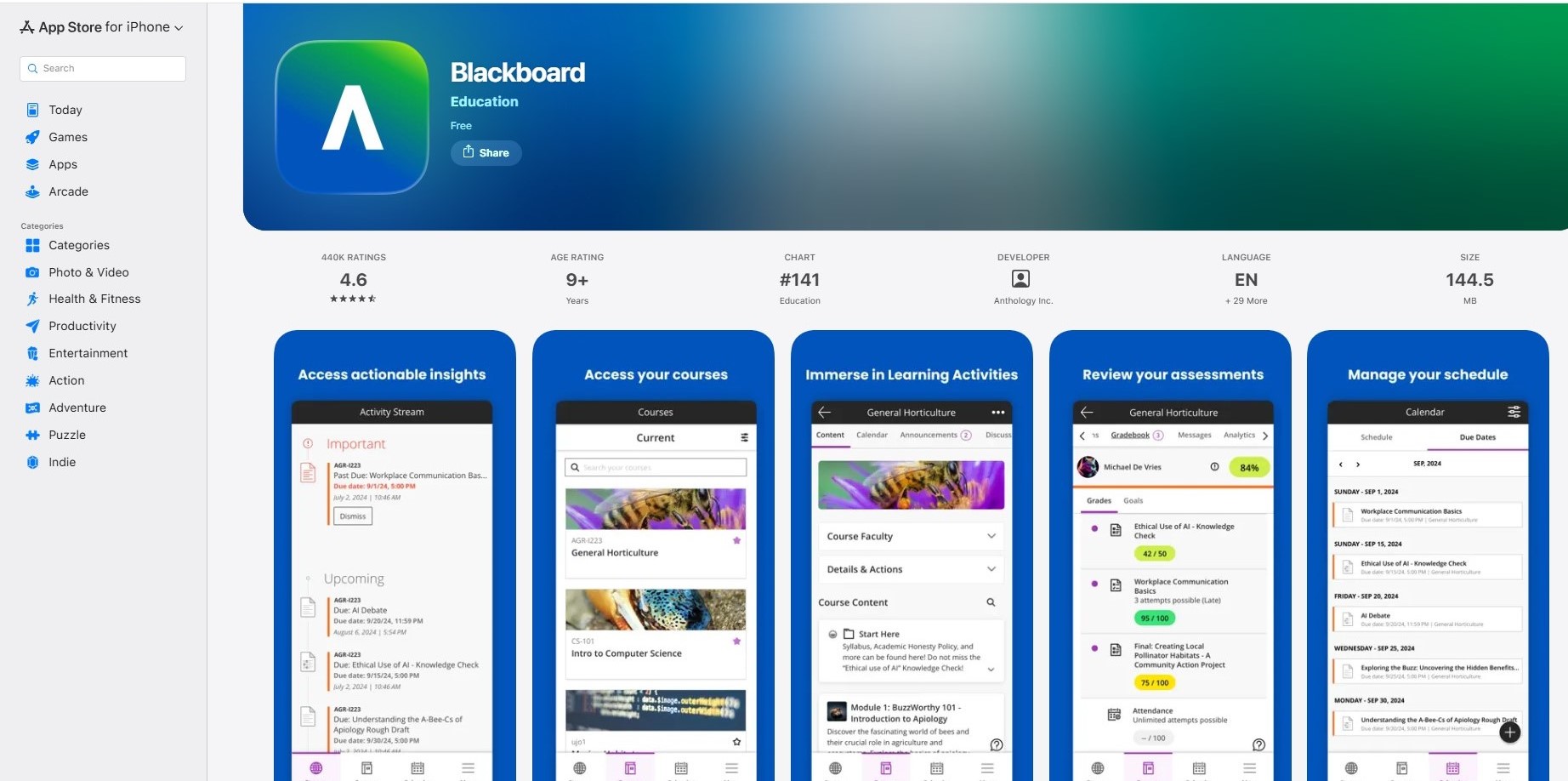
Istanbul Okan University implements a comprehensive LMS (Learning Management System)-enabled digital literacy program aimed at enhancing the digital competencies of students and staff within the scope of its digital transformation strategy. The program is planned, implemented, monitored, and evaluated through the University’s learning management system, Blackboard O’Learn.
The digital literacy program covers key competency areas such as information technology usage, digital learning skills, data literacy, cybersecurity awareness, ethical and effective use of artificial intelligence tools, online communication skills, and access to digital academic resources. It consists of modular training content designed to strengthen the digital capabilities of both students and academic/administrative staff.
Training content is delivered online via Blackboard O’Learn LMS and is supported by video lectures, interactive materials, quizzes, assignments, and digital certification processes. Participants’ progress is continuously tracked through the system, while learning analytics tools are used to monitor performance and engagement levels.
In addition, platforms such as Microsoft Teams, OkanForms, CLASSGPT, and OkanGPT are integrated into the program to provide applied learning environments and to encourage the effective and productive use of digital tools. This approach supports the institutionalization of digital competencies across academic and administrative processes.
The effectiveness of the digital literacy program is regularly evaluated through LMS-based data analytics, participation rates, completion levels, and user feedback. The results are used to continuously improve program content and to design new digital skills training initiatives.
Through this LMS-based digital literacy program, Istanbul Okan University promotes active participation in the digital transformation process and fosters a sustainable, innovative, and technology-driven learning ecosystem for students and staff.
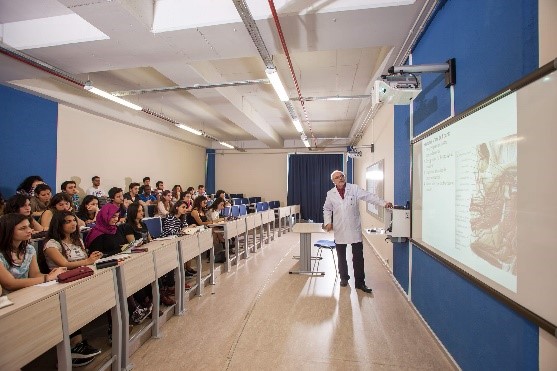
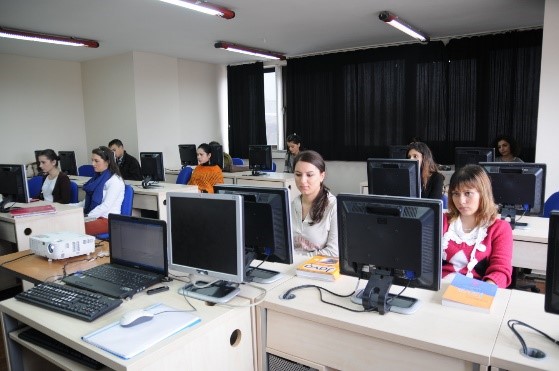
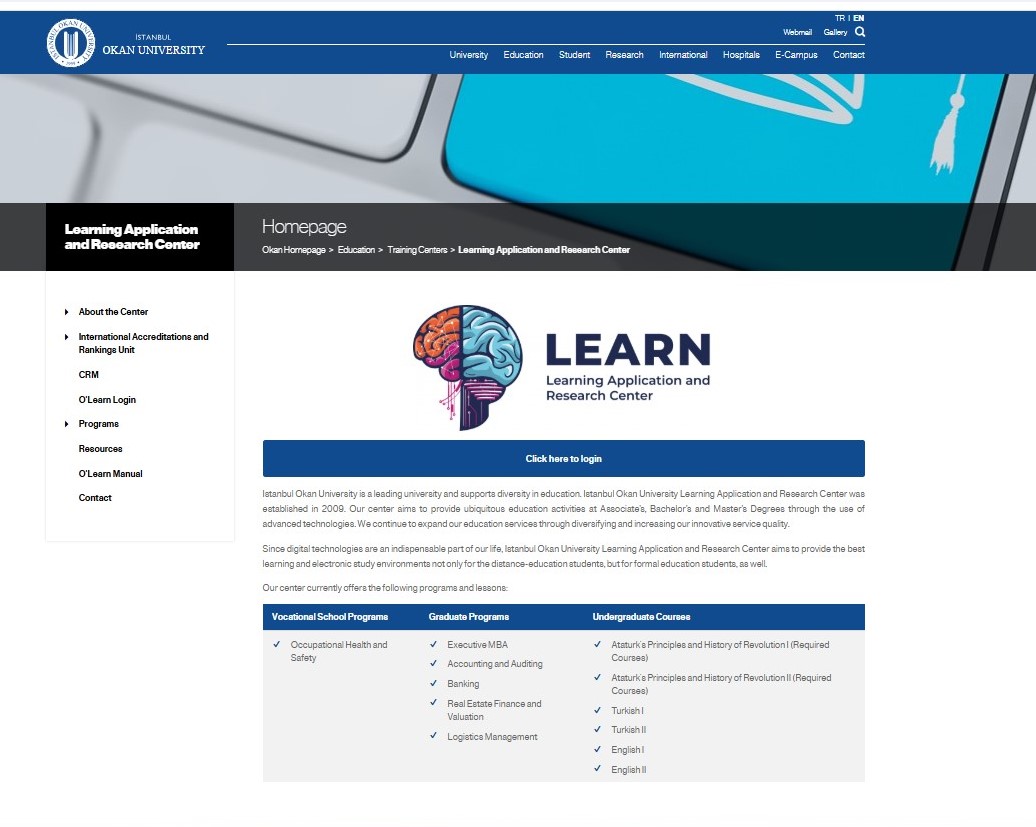
Established in 2009, the Learning Application and Research Center of Istanbul Okan University is a leading institutional unit committed to supporting diversity and inclusivity in education. The Center aims to provide ubiquitous learning opportunities at Associate, Bachelor’s, and Master’s degree levels through the use of advanced educational technologies.
The Center continuously enhances its educational services by diversifying learning methods and improving the quality of innovative, technology-enhanced teaching and learning environments. In line with its mission, it supports both distance education students and on-campus students by ensuring equal access to high-quality digital learning resources.
Recognizing that digital technologies have become an indispensable part of modern life, the Center strives to provide effective, accessible, and high-quality electronic learning environments for all learners. These environments are designed not only for distance education students but also for formal (on-campus) students, ensuring an integrated and inclusive digital education ecosystem across all academic programs.
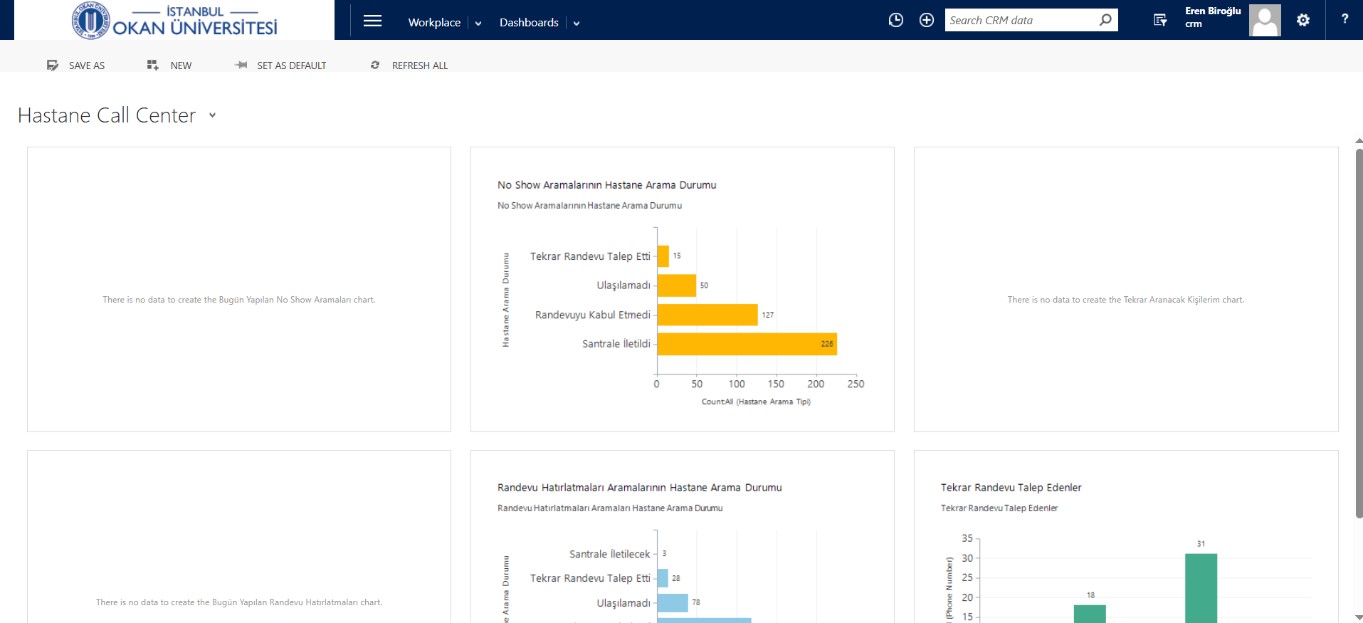
Istanbul Okan University utilizes Customer Relationship Management (CRM) systems to strengthen student relationships and enhance the efficiency of educational processes. The University’s mission is to reinforce student engagement, improve communication, and continuously develop educational practices through a data-informed and student-centered approach. By adopting a needs-sensitive perspective, the University aims to support the academic and social development of its students.
Through the analysis of data obtained via CRM systems, the University seeks to increase student satisfaction and improve the overall quality of education. Consequently, both academic performance and student experience are continuously enhanced through evidence-based decision-making.
CRM systems are utilized in several key areas. Student Relationship Management enables effective engagement with prospective, current, and alumni students, thereby increasing satisfaction and fostering long-term institutional loyalty. Data Analysis supports the collection and interpretation of student data, allowing for the identification of needs and the development of more responsive educational programs. Student Support Services are strengthened through the monitoring of student needs and the coordination of academic and social support mechanisms. In addition, Corporate Collaborations are facilitated through CRM systems, enhancing interaction with industry stakeholders and supporting students and alumni in accessing career development opportunities.
https://olearn.okan.edu.tr/?new_loc=%2Fultra%2Fcourse
https://apps.apple.com/us/app/blackboard/id950424861
https://play.google.com/store/apps/details?id=com.blackboard.android.bbstudent&hl=en
https://www.okan.edu.tr/en/learning-center/
7.21 Written Code of Ethics that Applies to University Leaders, Academic Staff, Administrative Staff, and Students (GD.12)
 | |
| Ethical Sourcing Policy |
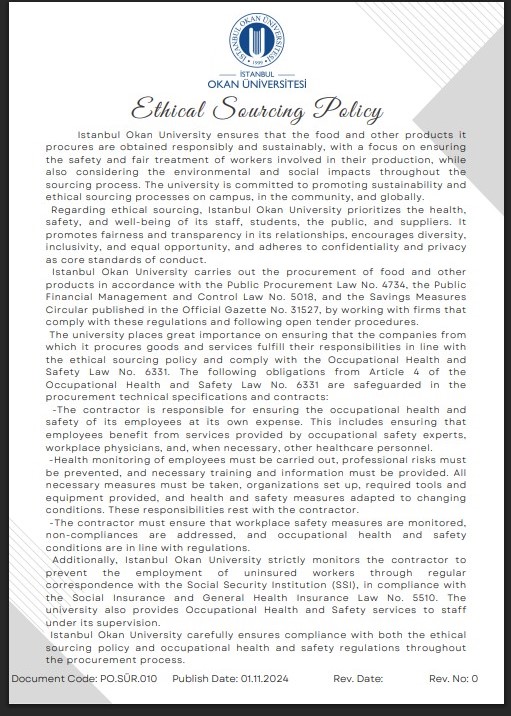
Istanbul Okan University is governed by a written code of ethics that is based on the principles of integrity, transparency, accountability, fairness, and institutional responsibility in all academic and administrative activities. The University adopts ethical governance as a core element of its institutional culture and implements comprehensive ethical principles and behavioral standards that apply to university leaders, academic staff, administrative staff, and students.
The University's code of ethics has been developed in accordance with higher education legislation, national regulations, the institutional quality assurance system, and internal university policies, and it is binding for all stakeholders. It covers key areas such as academic integrity, research ethics, teaching and learning processes, interpersonal conduct, workplace behavior, conflict of interest prevention, confidentiality, data protection, and the proper use of institutional resources.
For academic staff, the ethical framework includes principles of research integrity, avoidance of plagiarism, proper data management, publication ethics, and impartiality in academic evaluation. For administrative staff, it includes the efficient and transparent use of institutional resources, proper fulfillment of duties and responsibilities, information security, and protection of institutional confidentiality. For students, it emphasizes academic honesty, avoidance of cheating and plagiarism in exams and assignments, proper use of university resources, and respect for institutional values.
At the leadership level, ethical governance is based on transparency in strategic decision-making, accountability, fair administration, merit-based appointments, and the sustainable use of institutional resources. All decisions at the leadership level are made in accordance with the institutional ethical framework and applicable regulations.
To support the implementation of ethical standards, the University operates ethics committees, disciplinary mechanisms, quality assurance processes, and internal control systems. Reports of ethical violations are handled in accordance with the principles of confidentiality, impartiality, and fairness, and where necessary, disciplinary procedures and corrective/preventive actions are implemented.
In addition, regular ethics awareness trainings, orientation programs, and informational activities are provided to all stakeholders. These trainings cover topics such as academic integrity, anti-corruption, data protection, information security, conflict of interest, and ethical institutional behavior.
Through its written code of ethics system, Istanbul Okan University aims to strengthen ethical culture across all institutional units, protect institutional integrity, and ensure a sustainable, transparent, and accountable higher education governance framework.