2 Energy and Climate Change (EC)
2.1 Energy Efficient Appliances Usage (EC.1)
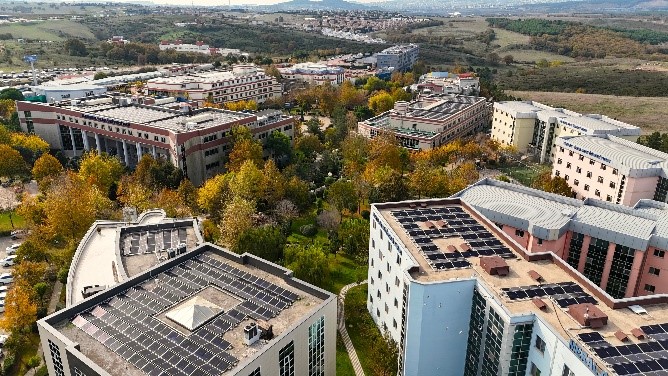
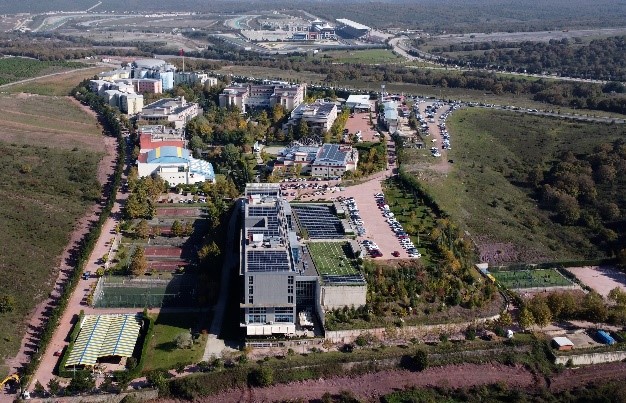
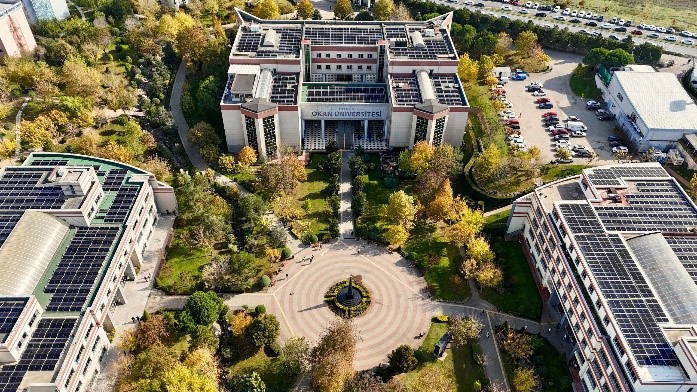
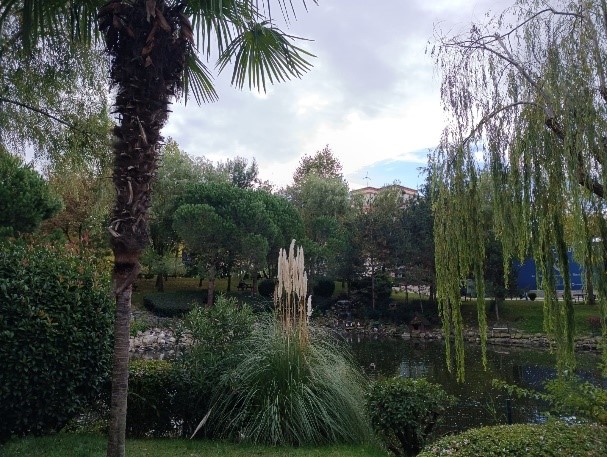
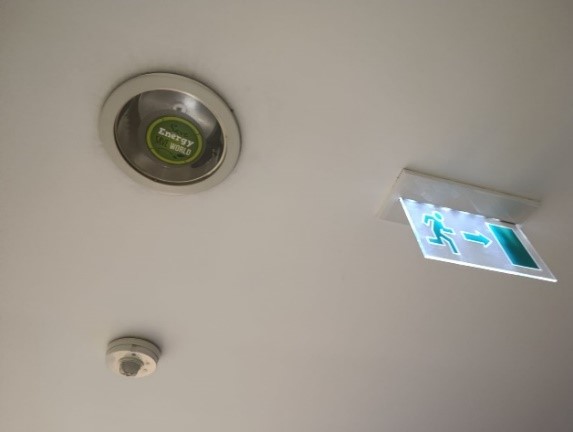
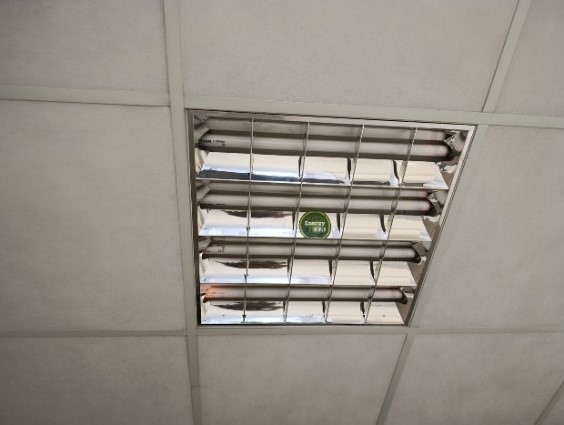
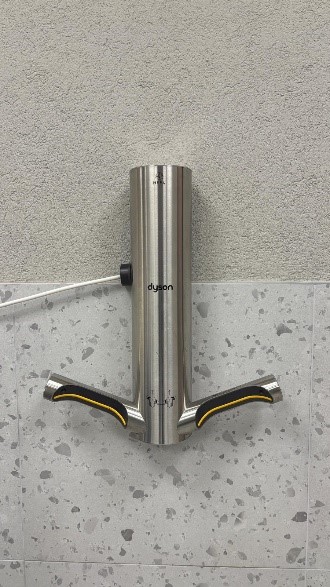
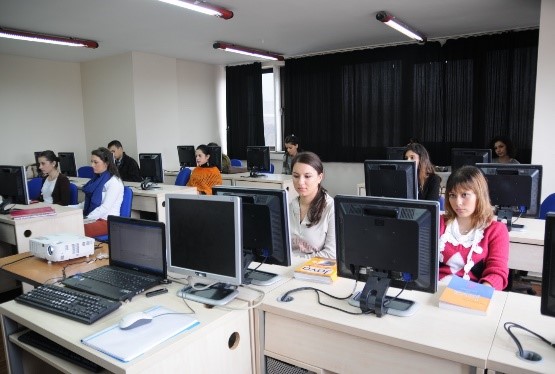
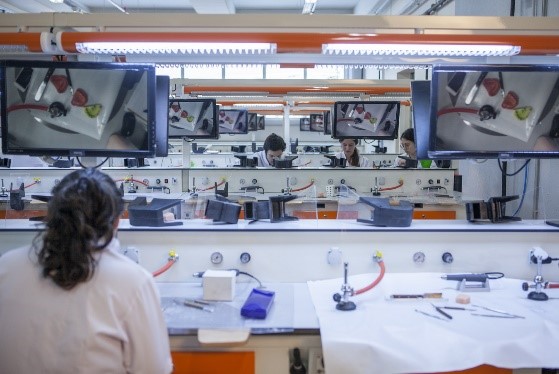
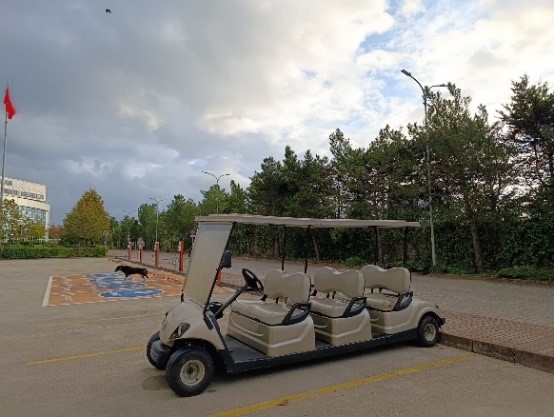
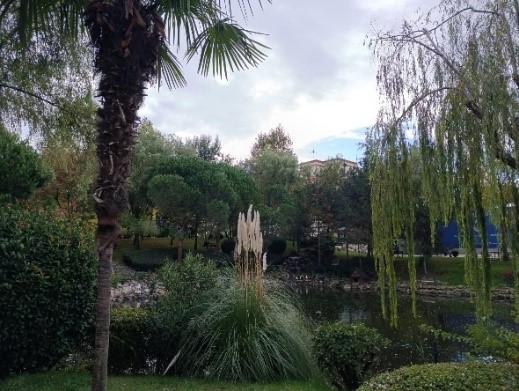
| Example of Energy Efficient Appliances Usage: (Istanbul Okan University, Türkiye) |
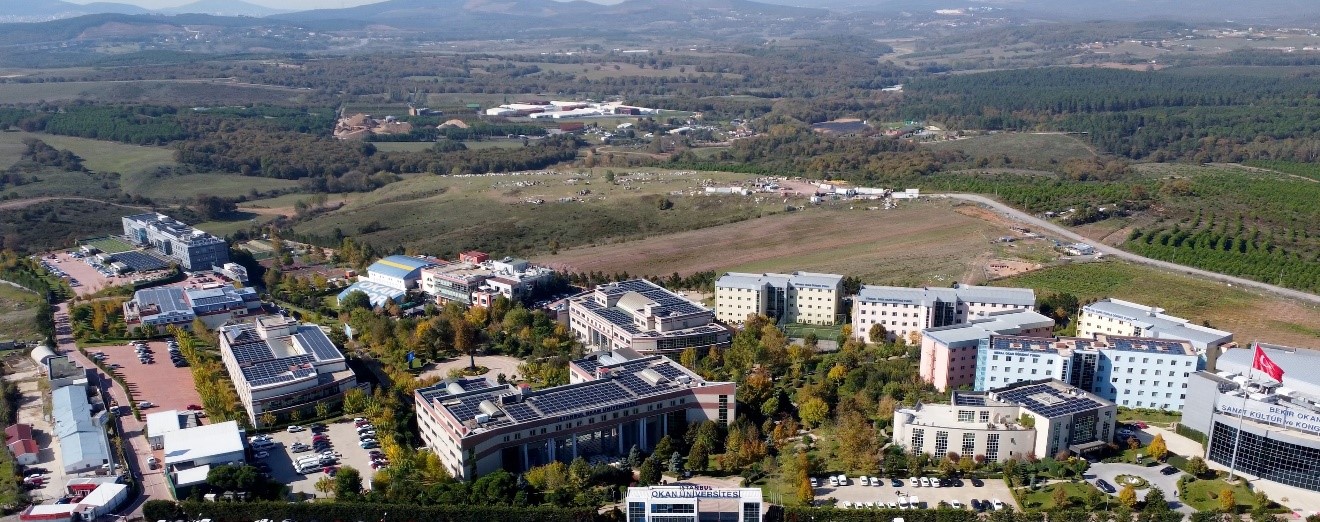
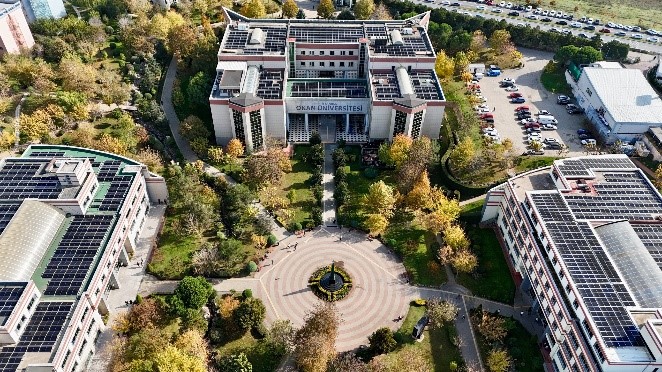
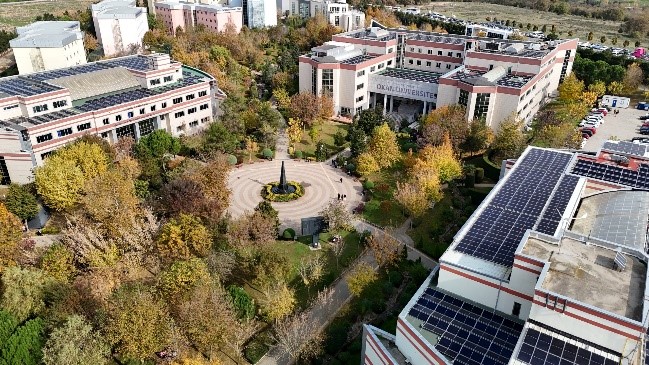

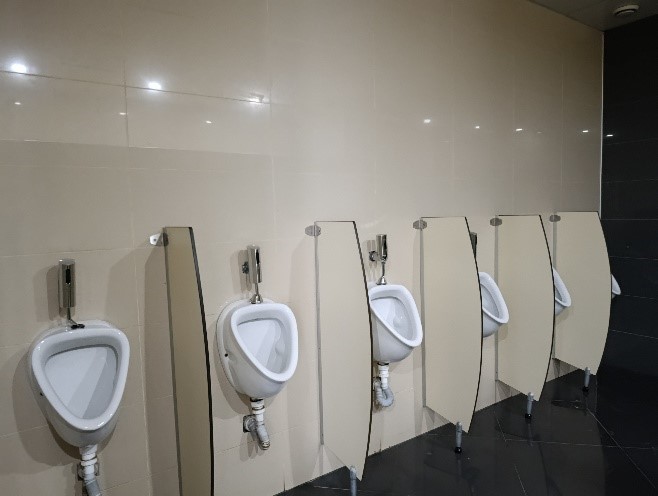
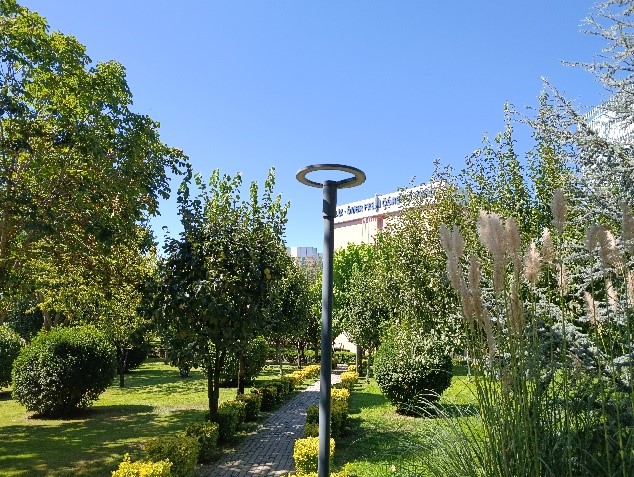
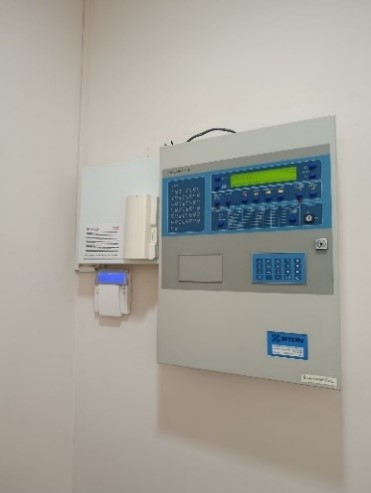
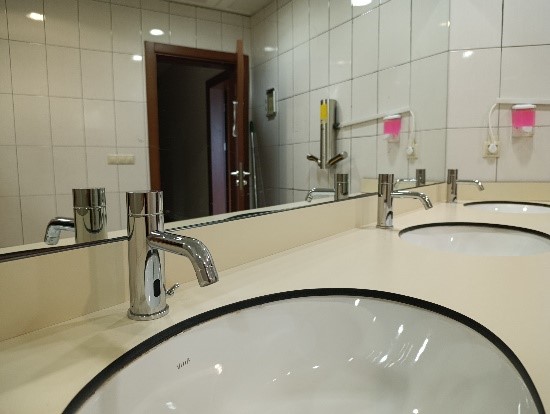

2.2 Total Campus Smart Building Area
Total Closed Area=Total Campus Smart Building Area= 106990m2
2.3 Smart Building Implementation (EC.2)
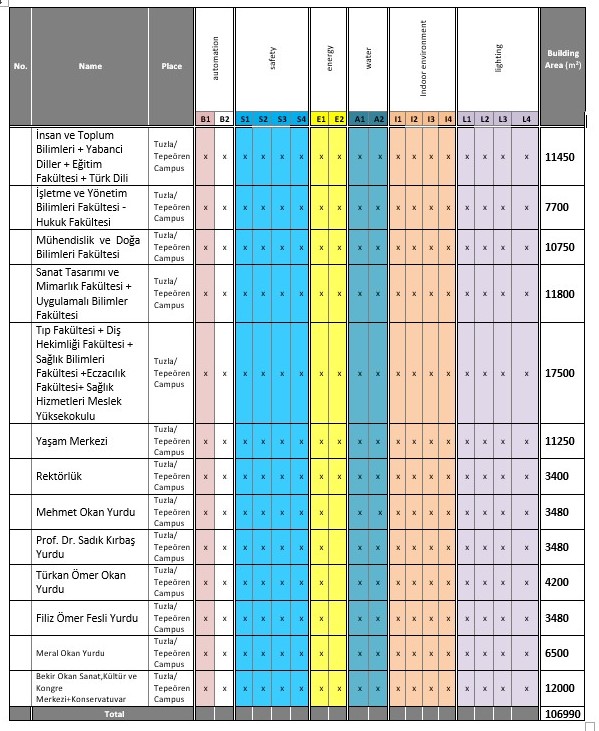
Building Automation (B1, B2)
Security (S1, S2, S3, S4)
Energy (E1, E2)
Water (A1, A2)
Indoor Environment (I1, I2, I3, I4)
Lighting (L1, L2, L3, L4)
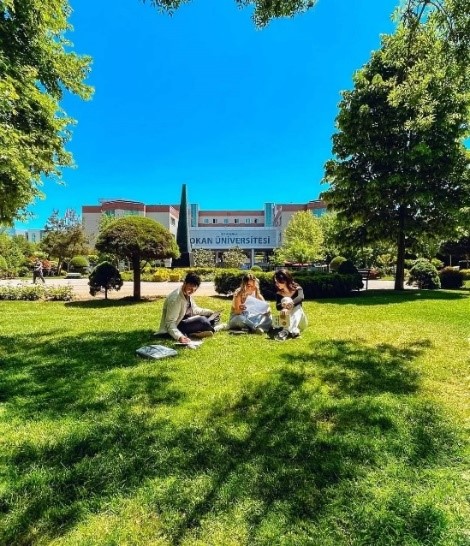
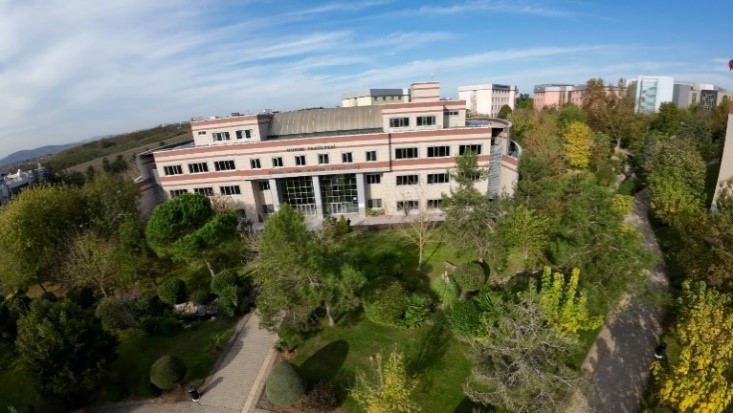
| İnsan ve Toplum Bilimleri + Yabanci Diller + Eğitim Fakültesi + Türk Dili | İşletme ve Yönetim Bilimleri Fakültesi - Hukuk Fakültesi |
|---|---|
| Area: 11450 m2 | Area: 7700 m2 |
 |  |
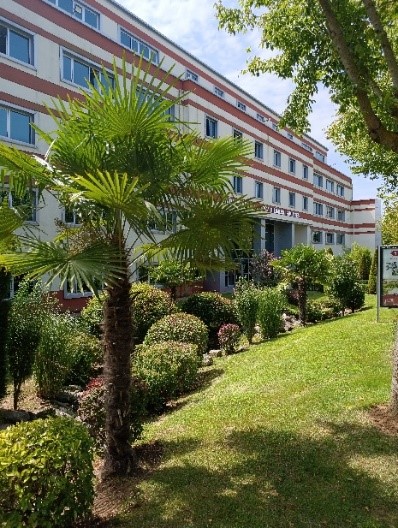
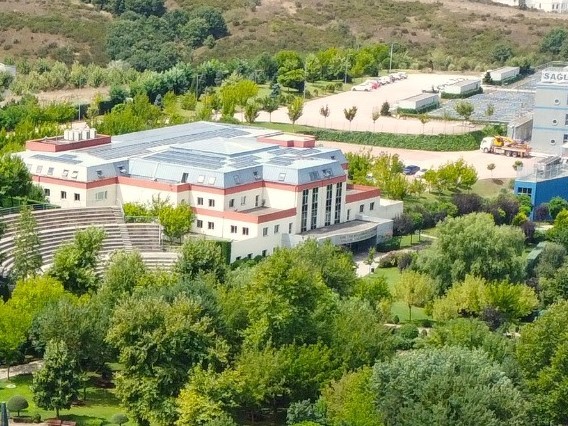
| Mühendislik ve Doğa Bilimleri Fakültesi | Sanat Tasarımı ve Mimarlık Fakültesi + Uygulamalı Bilimler Fakültesi |
| Area: 10750 m2 | Area: 11800 m2 |
 |  |
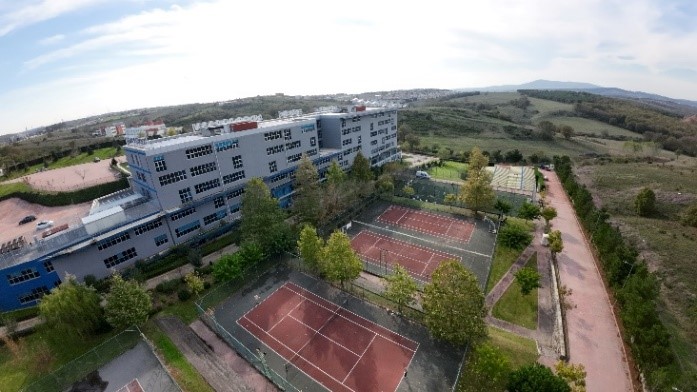
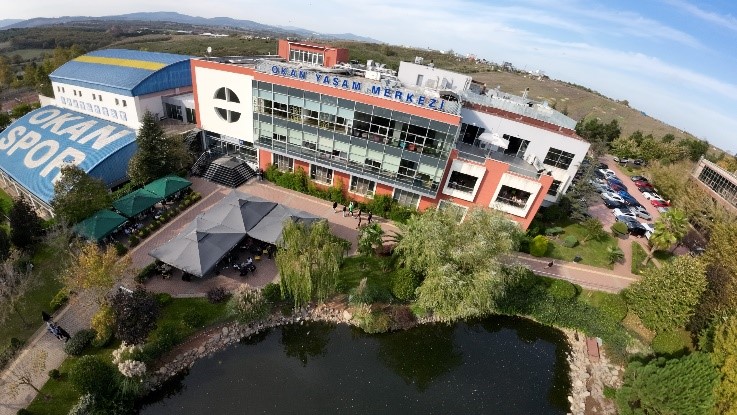
| Tıp Fakültesi + Diş Hekimliği Fakültesi + Sağlık Bilimleri Fakültesi + Eczacılık Fakültesi + Sağlık Hizmetleri Meslek Yüksekokulu | Yaşam Merkezi |
| Area: 17500 m2 | Area: 11250 m2 |
 |  |
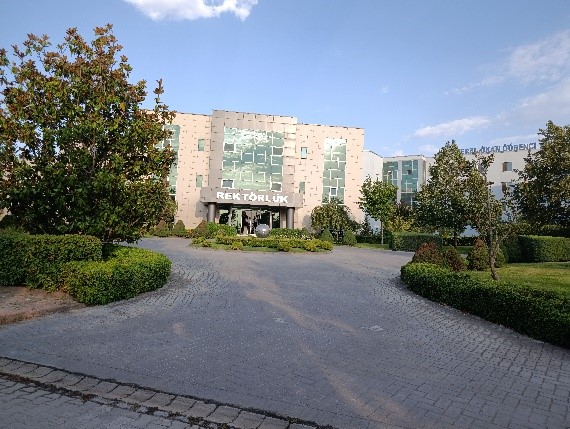
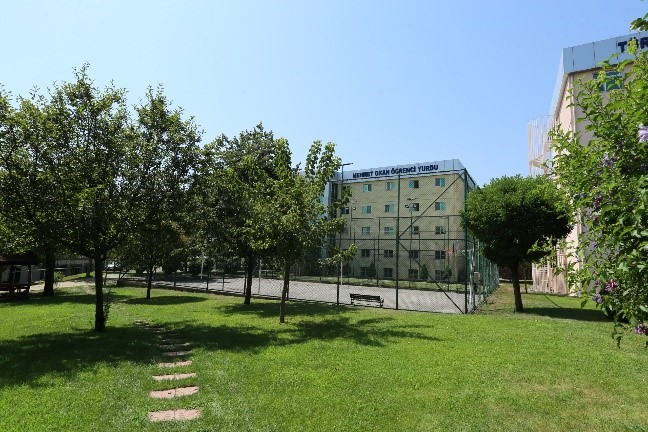
| Rektörlük | Mehmet Okan Öğrenci Yurdu |
| Area: 3400 m2 | Area: 3480 m2 |
 |  |
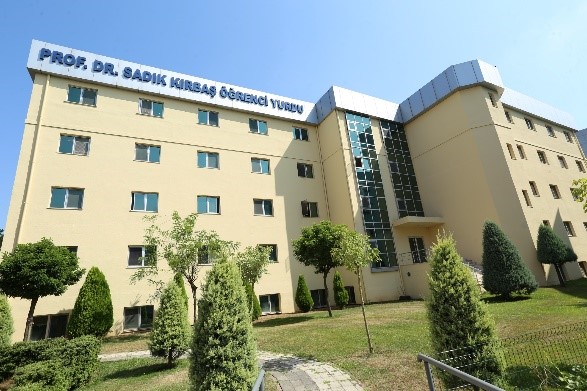
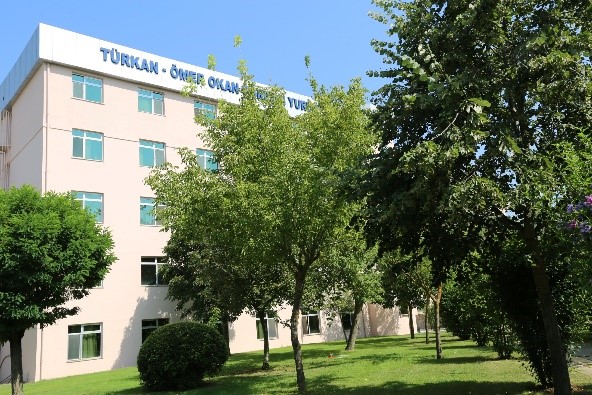
| Prof. Dr. Sadık Kırbaş Yurdu | Türkan Ömer Okan Yurdu |
| Area: 3480 m2 | Area: 4200 m2 |
 |  |
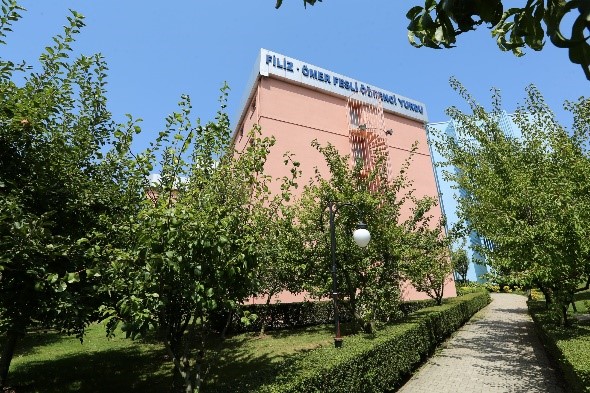
| Filiz Ömer Fesli Yurdu | Meral Okan Yurdu |
| Area: 3480 m2 | Area: 6500 m2 |
 | 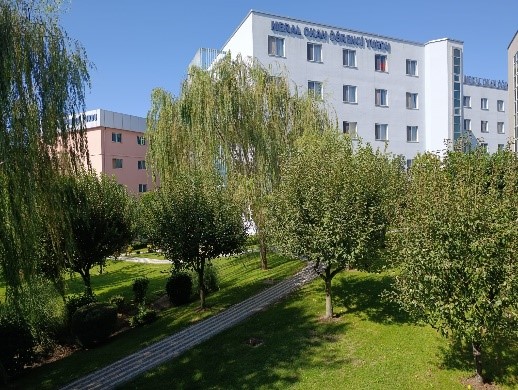 |
| Bekir Okan Sanat, Kültür ve Kongre Merkezi + Konservatuvar | |
| Area: 12000 m2 | |
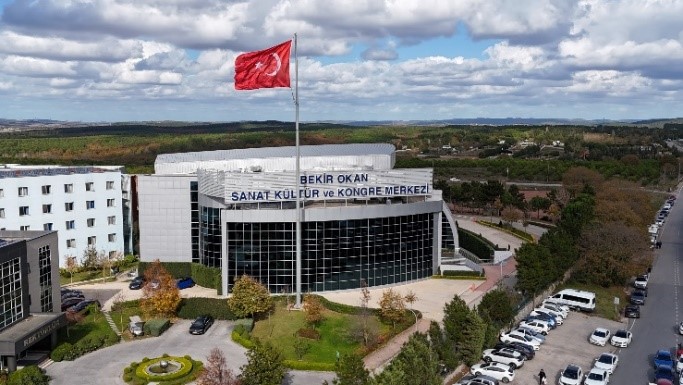 |
2.4 Number of Renewable Energy Sources on Campus
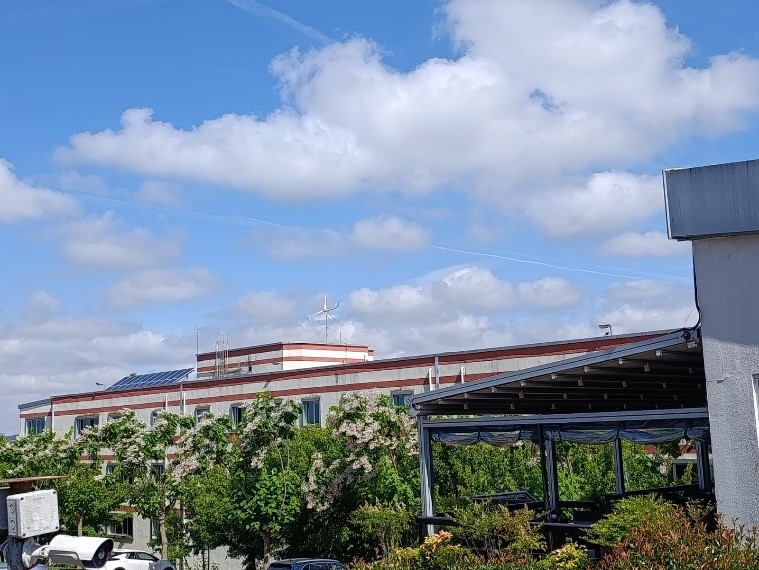
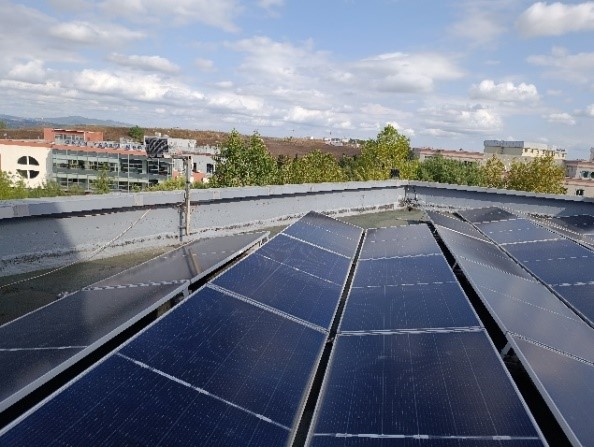
There are two systems: solar panels and a wind turbine.
2.5 Renewable Energy Sources in Campus
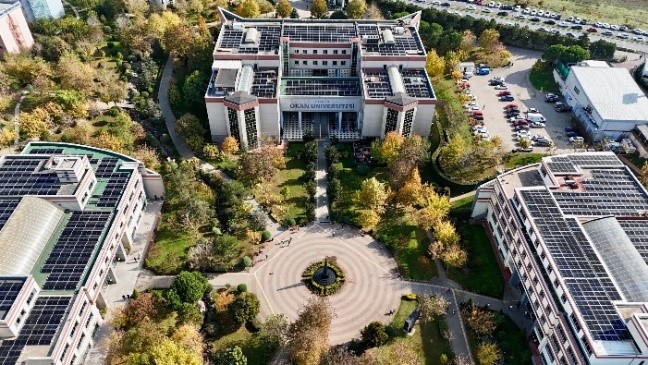 | 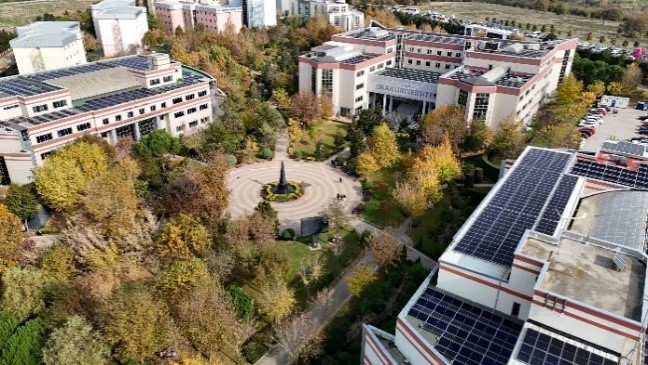 |
 | 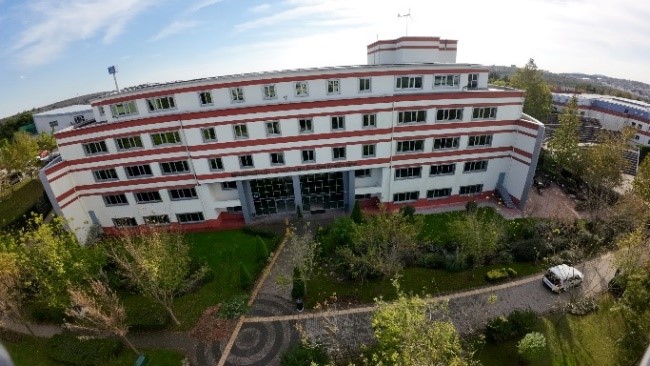 |
| Example of Roof Solar Panels (Istanbul Okan University, Turkiye) | Example of Wind Turbine (Istanbul Okan University, Turkiye) |
 |  |
 | |
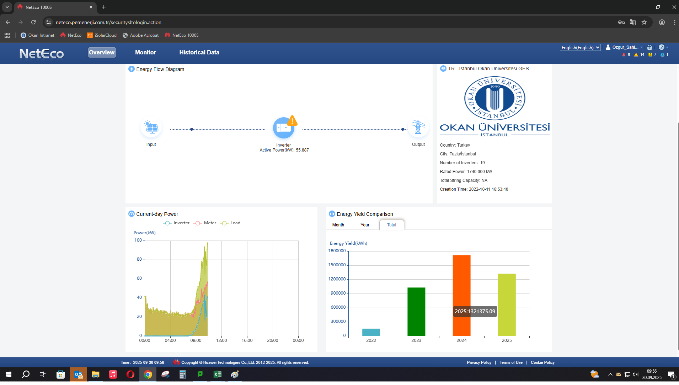
| Solar Energy Monitoring (Istanbul Okan University, Türkiye) | |
There are two systems: solar panels and a wind turbine.
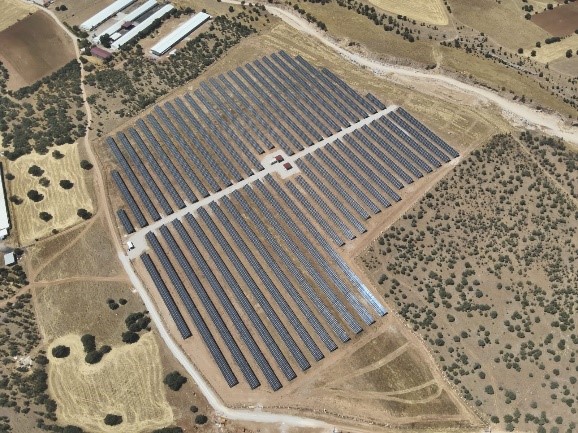
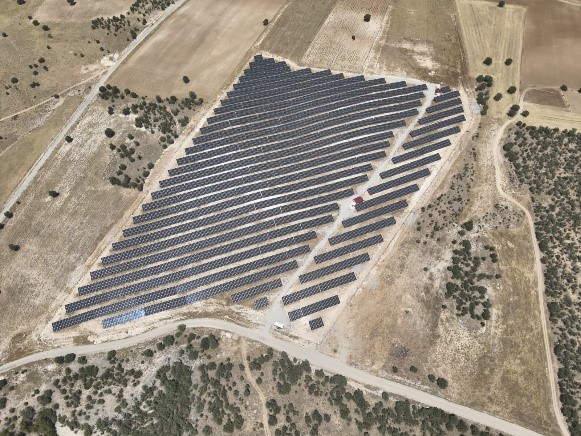
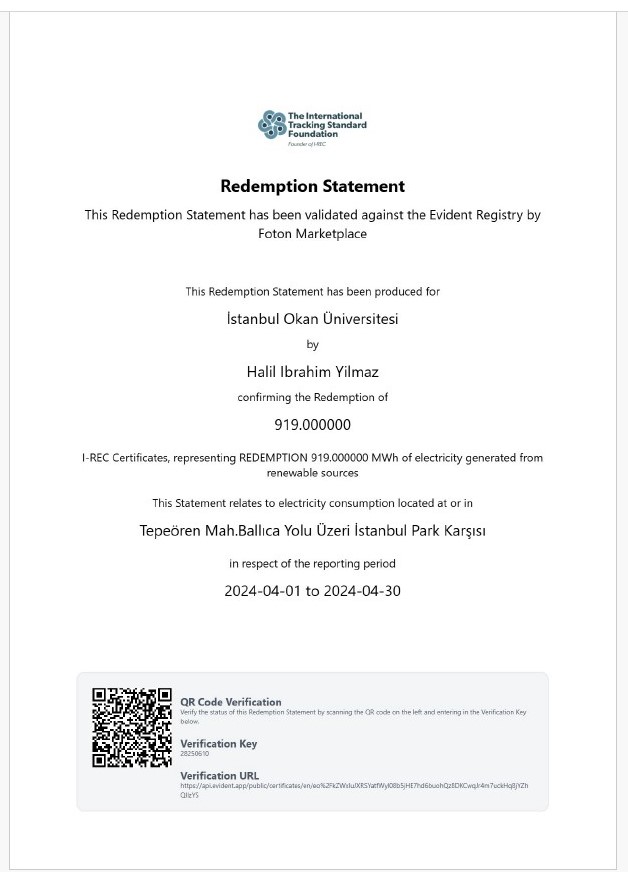
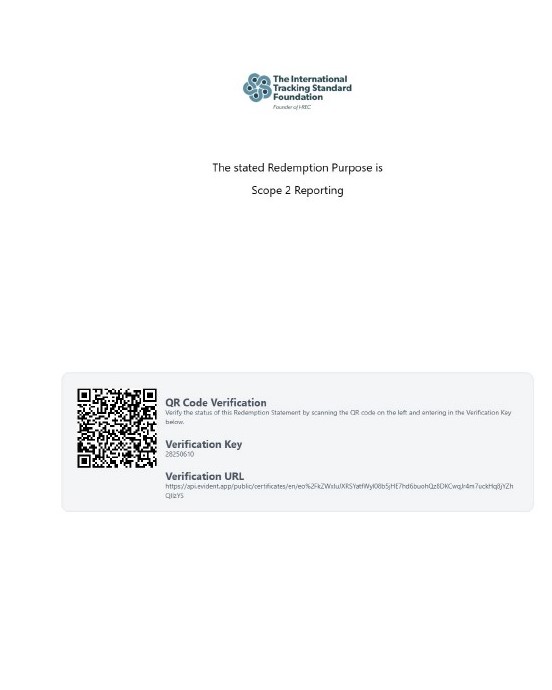
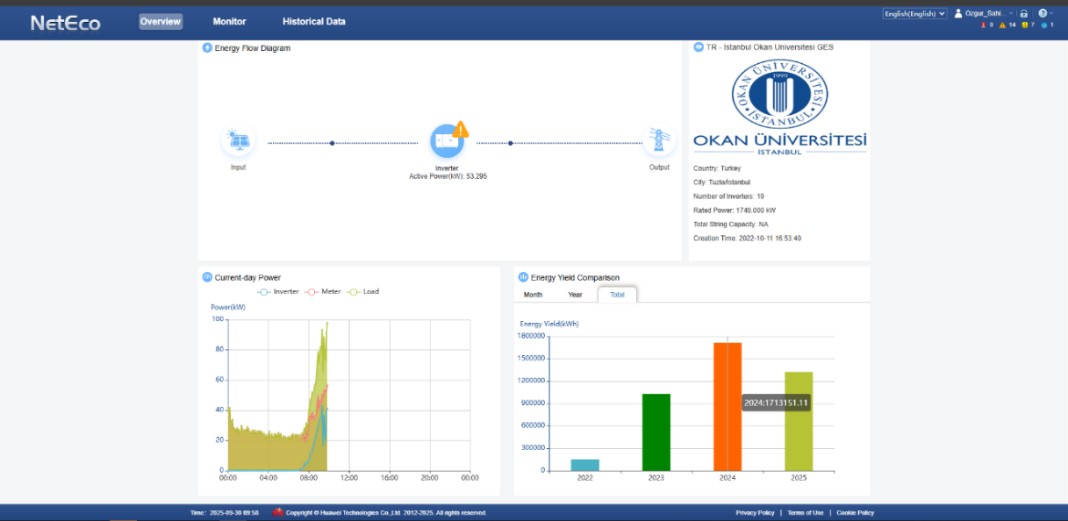
Due to the Solar Power Plants owned by our university, 100% of our electricity consumption (including our hospitals) is supplied from renewable energy sources. In fact, we generate a surplus of electricity and sell the excess energy to the grid. We also hold I-REC certificates for our renewable electricity generation for both 2024 and 2025.
Istanbul Okan University actively supports the commitment to achieving 100% renewable energy beyond its own campus. The University organizes petitions, meetings, discussions, and awareness events to emphasize the importance of transitioning to renewable energy sources. By collaborating with external stakeholders and engaging the wider community, the University advocates for sustainable energy solutions and contributes to broader efforts toward a 100% renewable energy future.
The University's solar power plant has demonstrated remarkable growth in performance. While renewable energy met only 7% of the University's electricity demand in 2022, its capacity has expanded to the point where, by 2025, it is capable of supplying 100% of the University's electricity consumption, including all affiliated hospitals, from renewable energy sources. Moreover, the University now generates a surplus of electricity, which is sold to the national electricity distribution network.
The University has obtained International Renewable Energy Certificates (I-REC) for its renewable electricity generation in both 2024 and 2025. In 2025, Istanbul Okan University generated 28,600,186 kWh of electricity from renewable sources, of which 27,447,272 kWh was exported to the national electricity grid.
| Ay/Yıl | GES-1 Üretim Miktarı (kWh) | GES-2 Üretim Miktarı (kWh) | Tuzla Çatı GES Üretim (İç Tüketim) Miktarı (kWh) | Tuzla Çatı GES (İç Tüketimden Arta Kalan Enerji Fazlası) Üretim Satış Miktarı (kWh) | Toplam GES Üretim Miktarı (kWh) | Dağıtıma Verilen GES-1/ GES-2/ TUZLA GES Üretim Dağıtım Miktarı (kWh) |
|---|---|---|---|---|---|---|
| 2025 | 12.834.920 kWh | 14.393.995 kWh | 1.371.272 kWh | 218.357 kWh | 28.600.186 kWh | 27.447.272 kWh |
 |  |
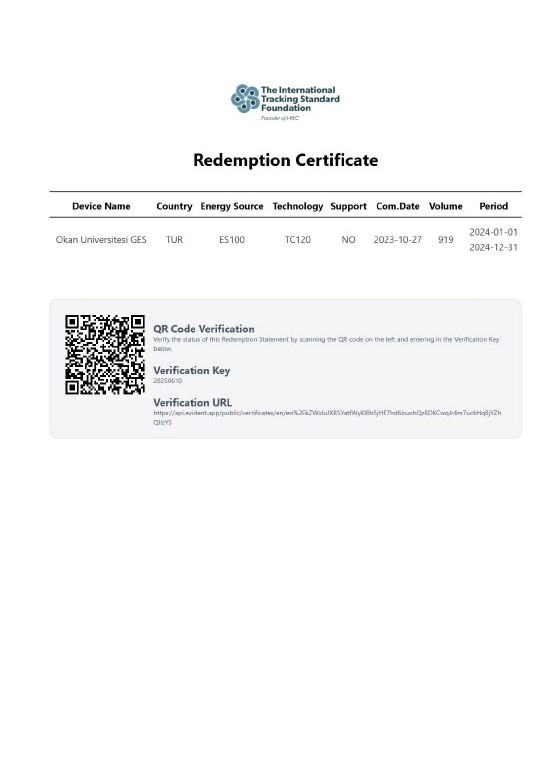 |  |
2.6 Electricity Usage per Year (in Kilowatt hour)
The total electricity usage of Istanbul Okan University Tuzla/Tepeören Campus in 2025 is 4240174 kWh.
According to the GHG Protocol, electricity-related greenhouse gas emissions are reported using two different accounting approaches.
Location-Based Approach
Under the Location-Based approach, the average emission factor of the national electricity grid is applied. Based on this methodology, Scope 2 emissions associated with purchased electricity amount to 2,221.863 tCO₂e. This value is calculated using the national grid emission factor.
Market-Based Approach
As Istanbul Okan University holds International Renewable Energy Certificates (I-REC) demonstrating that its purchased electricity is sourced from renewable energy, Scope 2 emissions from electricity consumption can be reported as zero (0 tCO₂e) under the GHG Protocol Market-Based approach.
This assessment is valid provided that the associated environmental attributes are retained by the University and are not transferred or claimed by any third party.
According to the Location-Based approach, Istanbul Okan University's total greenhouse gas emissions amount to 4,297.470 tCO₂e. The distribution of these emissions is as follows:
51.70% from purchased electricity,
42.98% from natural gas consumption,
4.83% from the vehicle fleet, and
0.48% from emergency generators.
Based on the total number of students and staff on campus, the per capita greenhouse gas emission is 0.313 tCO₂e per year under the Location-Based approach.
Under the Market-Based approach, where Scope 2 emissions from purchased renewable electricity are accounted for as zero, the University's total greenhouse gas emissions decrease to 2,075.607 tCO₂e.
Accordingly, the per capita greenhouse gas emission is reduced to 0.151 tCO₂e per year.
These results demonstrate the significant impact of the University's renewable electricity procurement strategy and verified I-REC-certified renewable energy use in substantially reducing its carbon footprint under internationally recognized greenhouse gas accounting standards.
| Emissions | Location-Based | Market-Based |
|---|---|---|
| Scope 1 | 2075,607 tonCO2e | 2075,607 tonCO2e |
| Scope 2 | 2221,863 tonCO2e | 0 |
| Total | 4297,470 tonCO2e | 2075,607 tonCO2e |
2.7 Total Elecetricity Usage Divided by Total Campus Population (EC.4)
Based on the total number of students and staff on campus, the per capita greenhouse gas emission is 0.313 tCO₂e per year under the Location-Based approach.
Under the Market-Based approach, where Scope 2 emissions from purchased renewable electricity are accounted for as zero, the University's total greenhouse gas emissions decrease to 2,075.607 tCO₂e. Accordingly, the per capita greenhouse gas emission is reduced to 0.151 tCO₂e per year.
| Emissions | Location-Based | Market-Based |
|---|---|---|
| Scope 1 | 2075,607 tonCO2e | 2075,607 tonCO2e |
| Scope 2 | 2221,863 tonCO2e | 0 |
| Total | 4297,470 tonCO2e | 2075,607 tonCO2e |
These results demonstrate the significant impact of the University's renewable electricity procurement strategy and verified I-REC-certified renewable energy use in substantially reducing its carbon footprint under internationally recognized greenhouse gas accounting standards.
2.9 Elements of Green Building Implementation as Reflected in All Buildings (EC.6)
| |
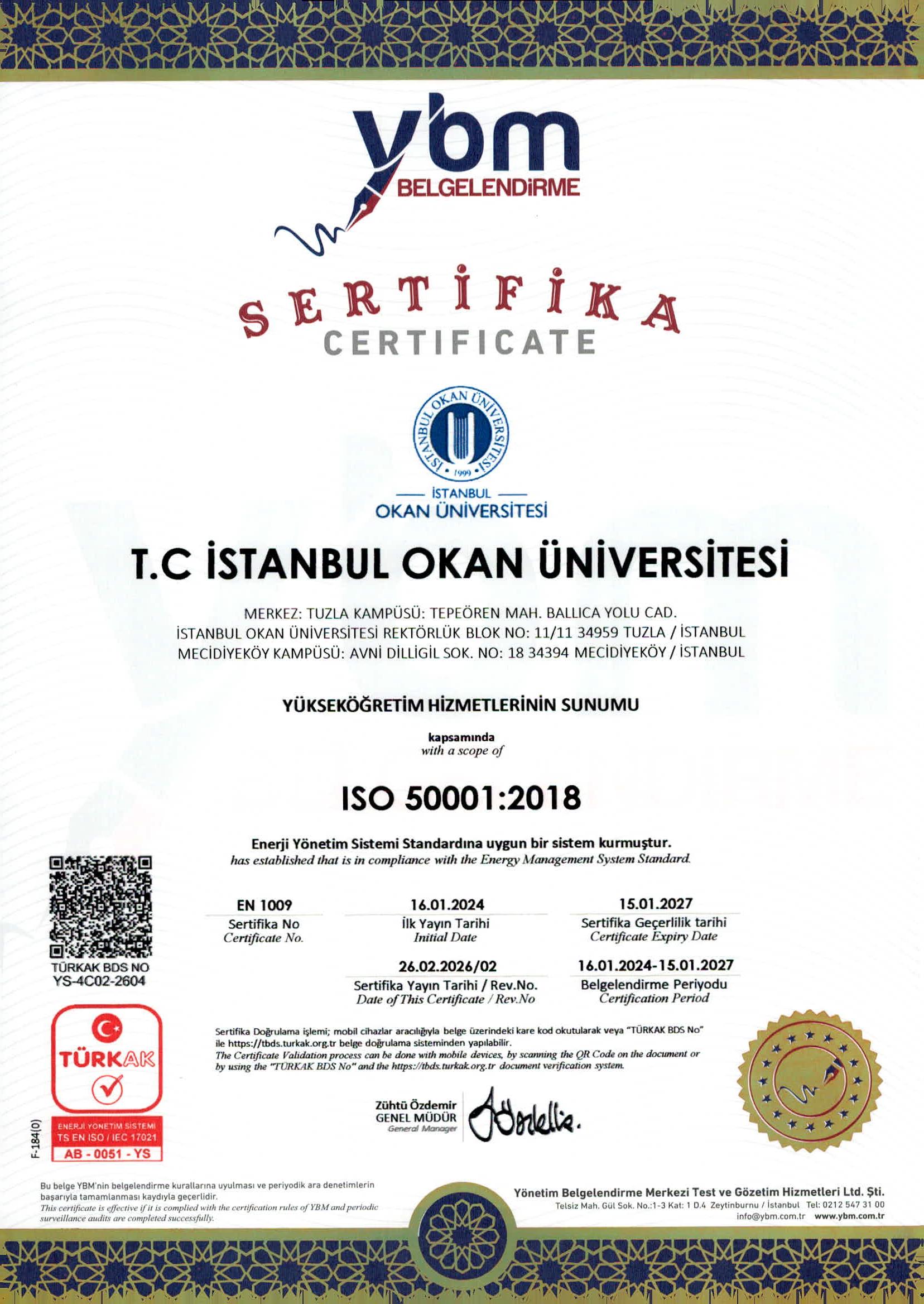
| Example of Green Building Implementation - Copy of theIstanbul Okan University ISO50001 certification (Istanbul Okan University, Türkiye ) |
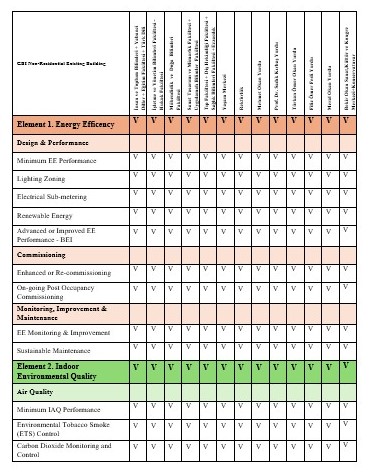
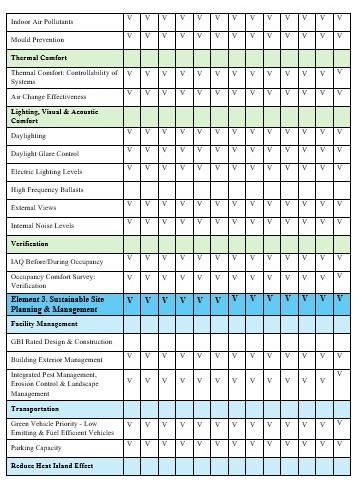
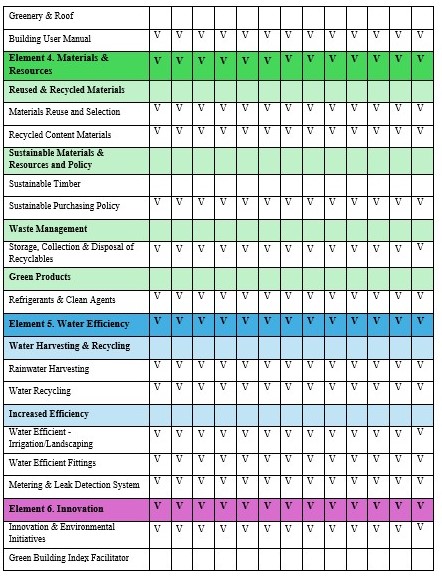
Istanbul Okan University gained ISO 50001 certification – also attached is IOU’s Sustainable Purchasing and Investment Policy and Energy Management System Policy
2.10 Greenhouse gas emission reduction program (EC.7)
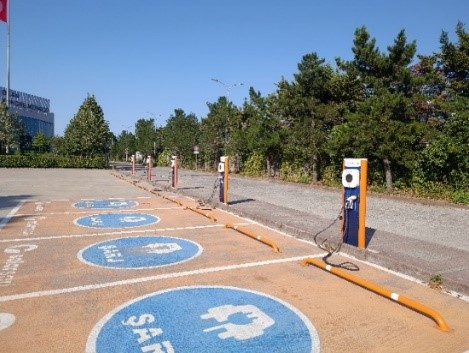 | 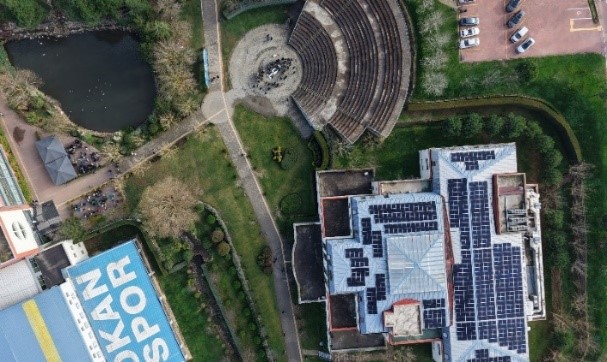 |
| Charge parking (Istanbul Okan University, Türkiye) | Renewable energy (Istanbul Okan University, Türkiye) |
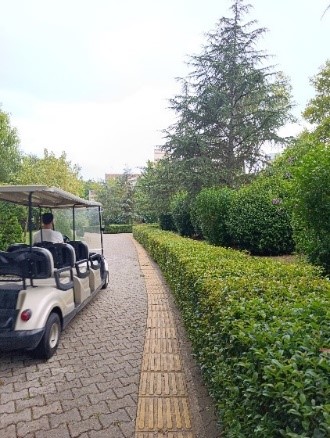 |  |
| Ride Share (Istanbul Okan University, Türkiye) | |
In addition to renewable energy generation, Istanbul Okan University implements a comprehensive greenhouse gas emission reduction program through the following initiatives:
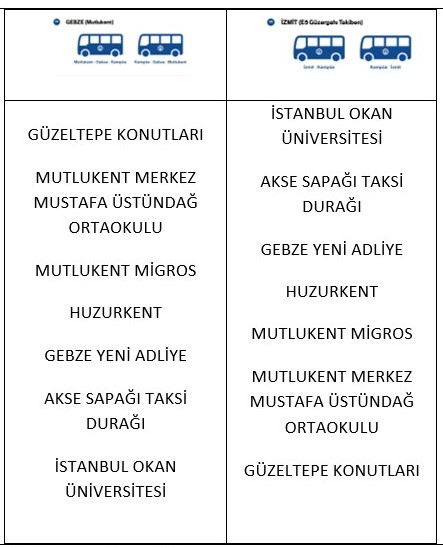
Charging parking fees for private vehicles to discourage the use of individual cars on campus and promote more sustainable transportation choices.
Generating electricity from renewable energy sources, significantly reducing dependence on purchased grid electricity and lowering Scope 2 greenhouse gas emissions.
Promoting shared and sustainable transportation through an extensive shuttle bus and ring service, encouraging students and staff to use collective transportation instead of private vehicles.
Campus-wide replacement of conventional lighting with energy-efficient LED systems.
Installation of high-efficiency HVAC systems integrated with intelligent building automation to optimize energy consumption.
Use of Energy Star-certified office and laboratory equipment to improve operational energy efficiency.
Installation of sensor-operated faucets, low-energy pumps, and other water-efficient technologies to reduce both water and energy consumption.
Promotion of paperless administrative processes and installation of hand dryers to reduce paper waste.
Continuous monitoring of campus energy consumption and implementation of energy efficiency improvement measures.
Expansion of renewable energy infrastructure, including solar photovoltaic systems and a wind turbine.
Furthermore, the University actively supports climate action beyond its campus by organizing awareness campaigns, stakeholder meetings, public discussions, and collaborative initiatives that promote the transition to 100% renewable energy. Through these integrated efforts, Istanbul Okan University continuously reduces its greenhouse gas emissions, increases renewable energy utilization, and contributes to national and global climate change mitigation goals
2.11 Please Provide The Total Carbon Footprint (CO2 emission in the last 12 months, in metric tons)
Renewable Energy Systems and Greenhouse Gas Emissions
Istanbul Okan University operates two renewable energy systems: solar photovoltaic (PV) power plants and a wind turbine. Through these renewable energy facilities, the University supplies 100% of its annual electricity demand, including the electricity consumption of its affiliated hospitals, from renewable energy sources. In addition to meeting its own demand, the University generates a surplus of renewable electricity and exports the excess energy to the national electricity distribution network.
The University's renewable electricity generation has been independently verified through International Renewable Energy Certificates (I-REC) for both 2024 and 2025, confirming compliance with internationally recognized renewable energy standards.
The performance of the University's renewable energy infrastructure has improved significantly in recent years. While renewable energy covered only 7% of the University's electricity demand in 2022, continuous investments in solar power capacity enabled the University to achieve 100% renewable electricity coverage by 2025. As a result, renewable electricity generation now exceeds the University's total annual electricity consumption, allowing excess electricity to be supplied to the national grid.
In 2025, Istanbul Okan University generated 28,600,186 kWh of renewable electricity, of which 27,447,272 kWh was exported to the national electricity distribution network.
Beyond its campus operations, Istanbul Okan University actively promotes the transition toward 100% renewable energy through petitions, meetings, workshops, panel discussions, awareness campaigns, and collaborations with public institutions, industry partners, and civil society organizations. These initiatives encourage the adoption of renewable energy solutions and contribute to national and global sustainable energy objectives.
Greenhouse Gas Emissions
Based on the total number of students and staff on campus, the University's greenhouse gas emissions amount to 0.313 tCO₂e per capita per year under the Location-Based accounting approach.
Under the Market-Based approach, where Scope 2 emissions associated with purchased renewable electricity are accounted for as zero due to the use of verified renewable electricity, the University's total greenhouse gas emissions decrease to 2,075.607 tCO₂e, resulting in 0.151 tCO₂e per capita per year.
| Emissions | Location-Based | Market-Based |
|---|---|---|
| Scope 1 | 2,075.607 tCO₂e | 2,075.607 tCO₂e |
| Scope 2 | 2,221.863 tCO₂e | 0 tCO₂e |
| Total | 4,297.470 tCO₂e | 2,075.607 tCO₂e |
These results clearly demonstrate the effectiveness of Istanbul Okan University's renewable energy strategy. The combination of on-site renewable electricity generation, verified I-REC-certified renewable electricity, and continuous investments in clean energy infrastructure has substantially reduced the University's carbon footprint while supporting international greenhouse gas accounting standards and long-term climate action objectives.
| Ay/Yıl | GES-1 Üretim Miktarı (kWh) | GES-2 Üretim Miktarı (kWh) | Tuzla Çatı GES Üretim (İç Tüketim) Miktarı (kWh) | Tuzla Çatı GES (İç Tüketimden Arta Kalan Enerji Fazlası) Üretim Satış Miktarı (kWh) | Toplam GES Üretim Miktarı (kWh) | Dağıtıma Verilen GES-1/ GES-2/ TUZLA GES Üretim Dağıtım Miktarı (kWh) |
|---|---|---|---|---|---|---|
| 2025 | 12.834.920 kWh | 14.393.995 kWh | 1.371.272 kWh | 218.357 kWh | 28.600.186 kWh | 27.447.272 kWh |
| |
| |
 | |
2.12 Total carbon footprint dvided by total campus population (EC8)
Based on the total number of students and staff on campus, the per capita greenhouse gas emission is 0.313 tCO₂e per year under the Location-Based approach.
Under the Market-Based approach, where Scope 2 emissions from purchased renewable electricity are accounted for as zero, the University's total greenhouse gas emissions decrease to 2,075.607 tCO₂e. Accordingly, the per capita greenhouse gas emission is reduced to 0.151 tCO₂e per year.
| Emissions | Location-Based | Market-Based |
|---|---|---|
| Scope 1 | 2075,607 tonCO2e | 2075,607 tonCO2e |
| Scope 2 | 2221,863 tonCO2e | 0 |
| Total | 4297,470 tonCO2e | 2075,607 tonCO2e |
These results demonstrate the significant impact of the University's renewable electricity procurement strategy and verified I-REC-certified renewable energy use in substantially reducing its carbon footprint under internationally recognized greenhouse gas accounting standards.
There are two systems: solar panels and a wind turbine.
Due to the Solar Power Plants owned by our university, 100% of our electricity consumption (including our hospitals) is supplied from renewable energy sources. In fact, we generate a surplus of electricity and sell the excess energy to the grid.
We also hold I-REC certificates for our renewable electricity generation for both 2024 and 2025. Istanbul Okan University actively supports the commitment to achieving 100% renewable energy beyond its own campus. The University organizes petitions, meetings, discussions, and awareness events to emphasize the importance of transitioning to renewable energy sources.
By collaborating with external stakeholders and engaging the wider community, the University advocates for sustainable energy solutions and contributes to broader efforts toward a 100% renewable energy future.
The University's solar power plant has demonstrated remarkable growth in performance. While renewable energy met only 7% of the University's electricity demand in 2022, its capacity has expanded to the point where, by 2025, it is capable of supplying 100% of the University's electricity consumption, including all affiliated hospitals, from renewable energy sources.
Moreover, the University now generates a surplus of electricity, which is sold to the national electricity distribution network. The University has obtained International Renewable Energy Certificates (I-REC) for its renewable electricity generation in both 2024 and 2025.
In 2025, Istanbul Okan University generated 28,600,186 kWh of electricity from renewable sources, of which 27,447,272 kWh was exported to the national electricity grid.
2.13 Number of innovative program(s) in energy and climate change (EC.9)
Academic Programs
Research and Projects
Management and Campus Practices
Community Contribution and Collaboration
2.14 Impactful university program(s) on climate change (EC.10)
Istanbul Okan University, within the scope of its sustainability vision, carries out numerous programs aimed at combating climate change at both the academic and societal impact levels. The university conducts climate action-focused initiatives across a wide range of areas, from the educational curriculum and research activities to campus management and community awareness programs.
1. Academic Programs and Courses
Topics related to Climate Change and Sustainability are offered as elective or mandatory courses in the Engineering, Architecture, and Business faculties.
Example courses:
Within the Master’s Program in Artificial Intelligence Engineering, projects on climate modeling, energy optimization, and carbon footprint analysis are being conducted.
2. Research Centers and Projects
3. Community Engagement and Awareness Programs
4. Institutional Policies and Management-Level Practices
2.15 Impact of Energy and Climate Change programs in supporting the Sustainable Development Goals (SDGs)
 |  |  |
 |  |  |
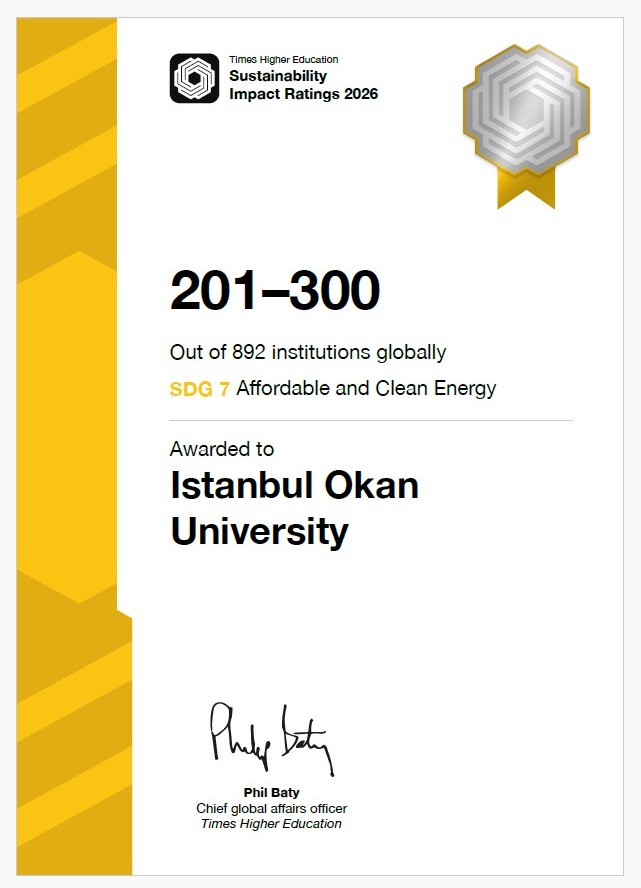
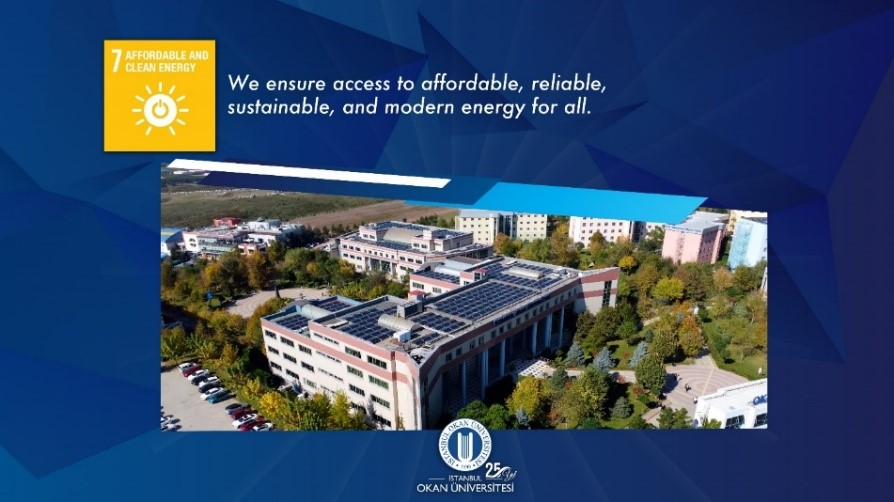 | SDG 7: Ensure access to affordable, reliable, sustainable and modern energy (Istanbul Okan University, Türkiye) |
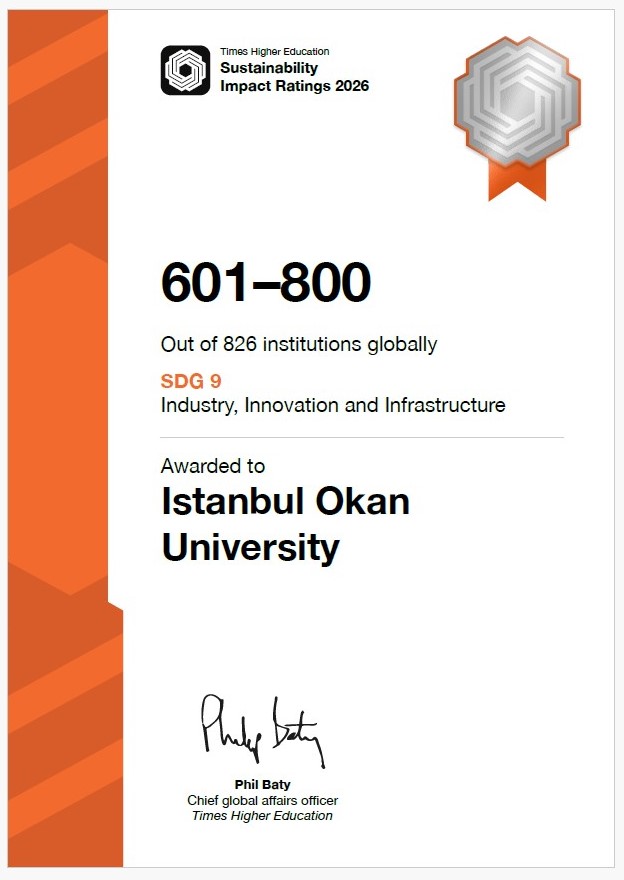
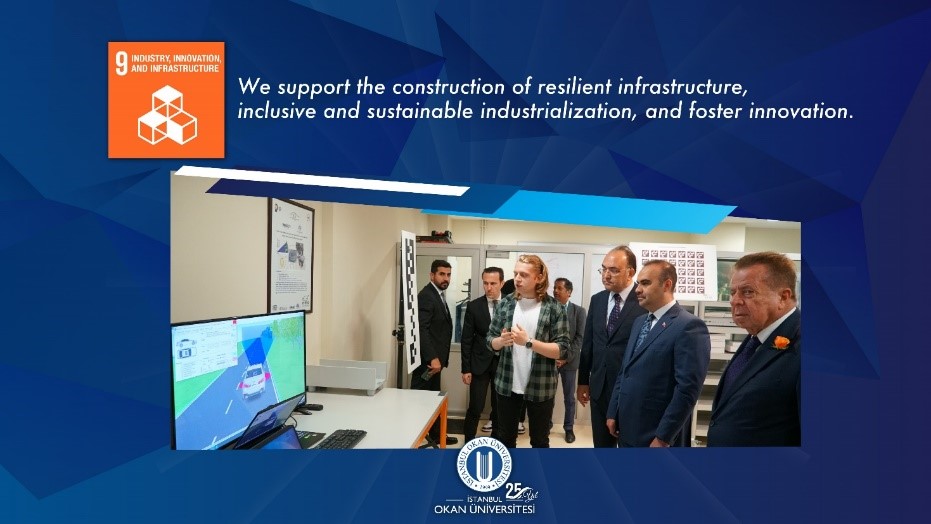 | SDG 9: Build resilient infrastructure, promote sustainable industrialization and foster innovation (Istanbul Okan University, Türkiye) |
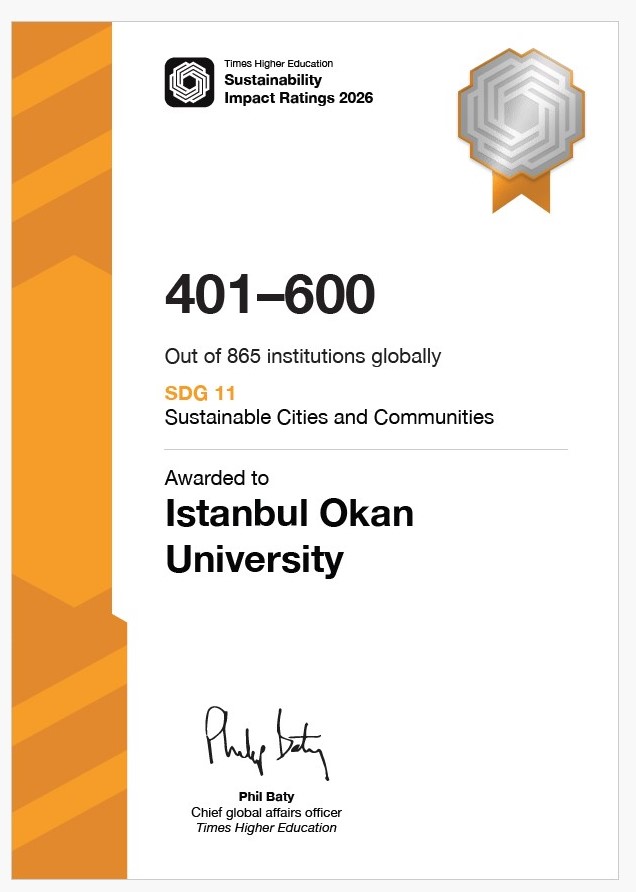
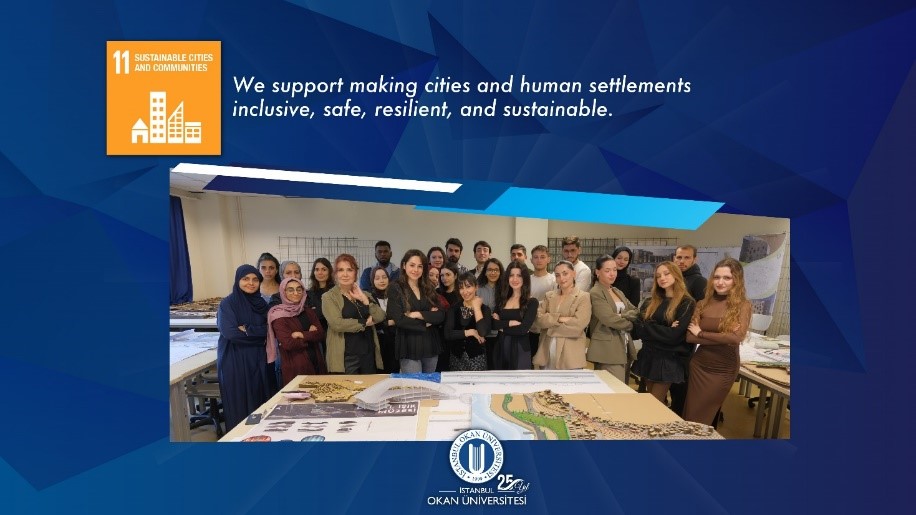 | Goal 11: Make cities inclusive, safe, resilient and sustainable (Istanbul Okan University, Türkiye) |
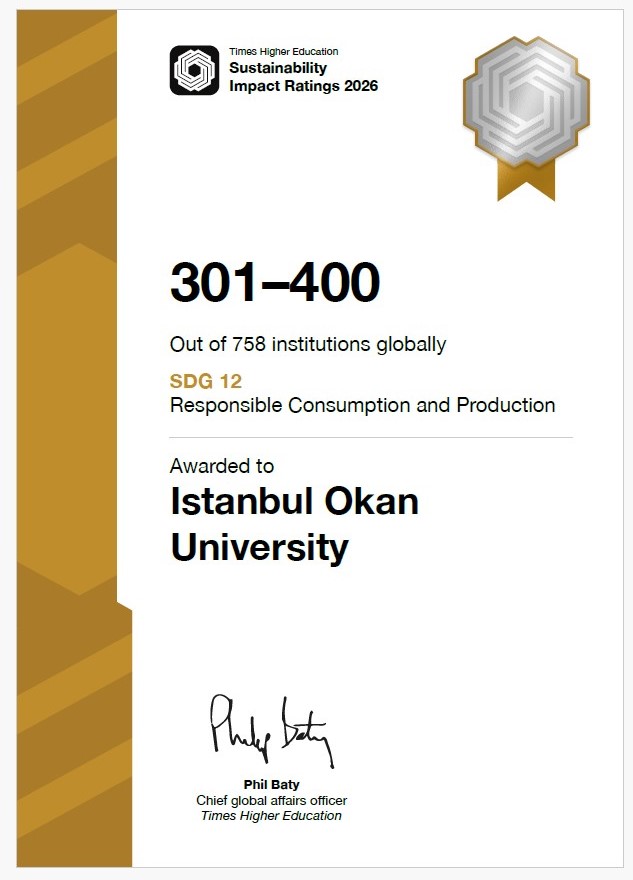
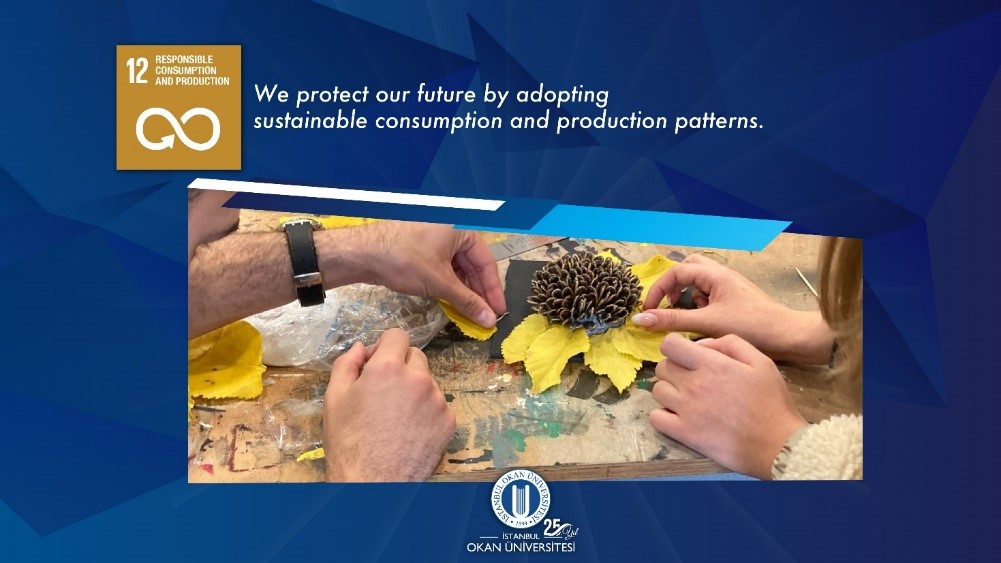 | Goal 12: Ensure sustainable consumption and production patterns (Istanbul Okan University, Türkiye) |
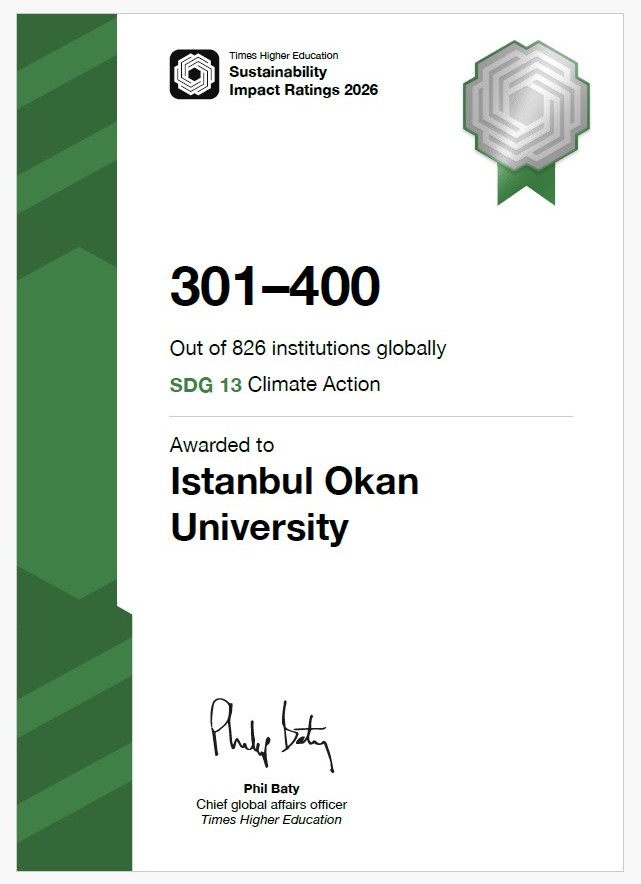
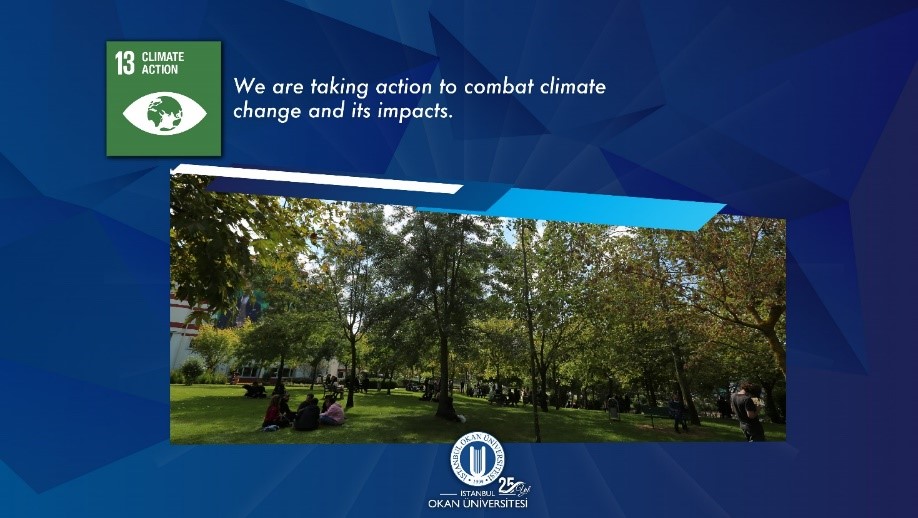 | Goal 13: Take urgent action to combat climate change and its impacts (Istanbul Okan University, Türkiye) |
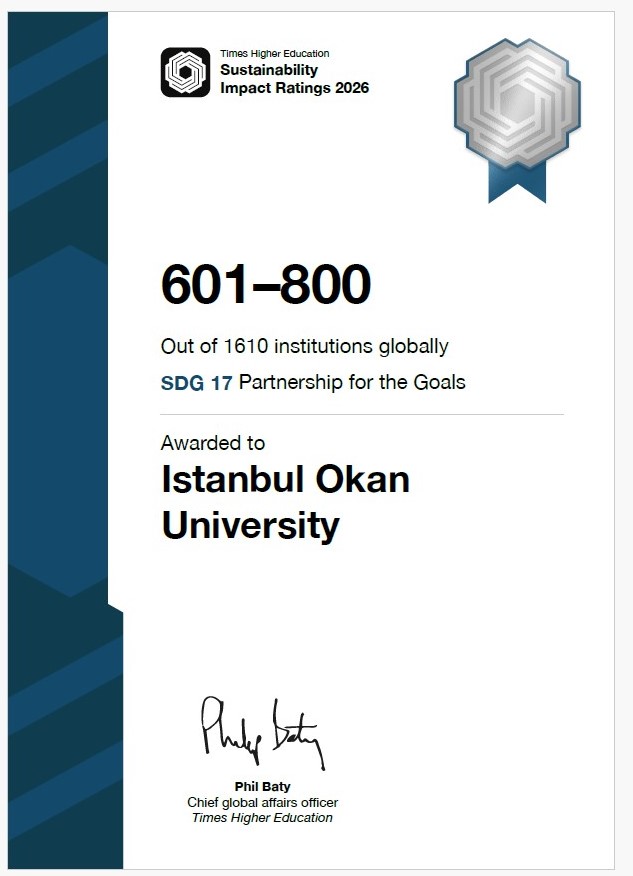
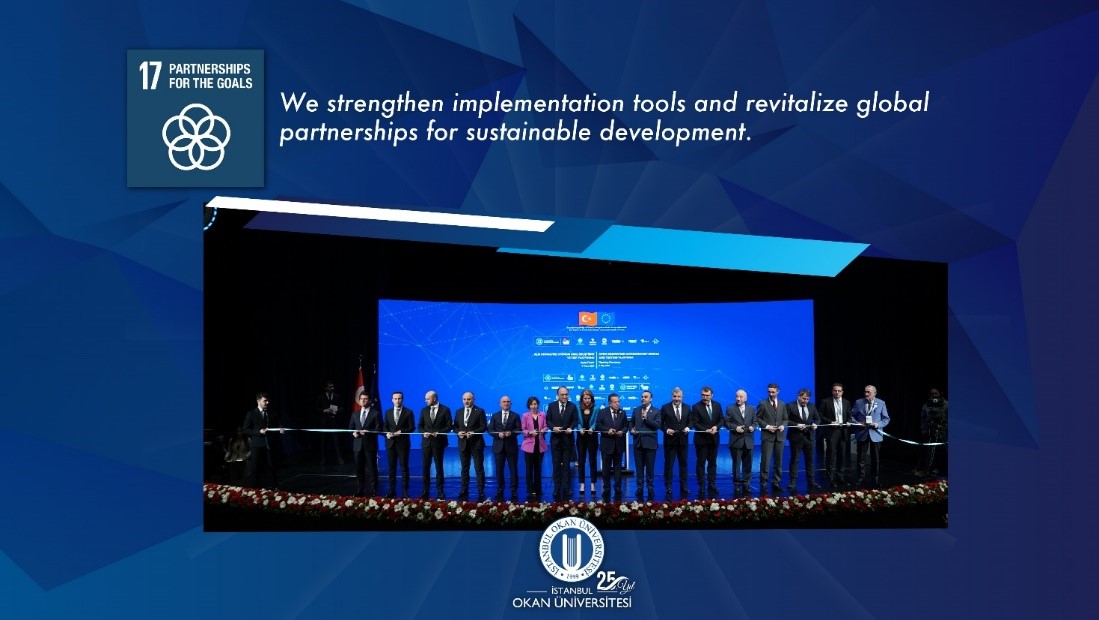 | Goal 17: Revitalize the global partnership for sustainable development (Istanbul Okan University, Türkiye) |
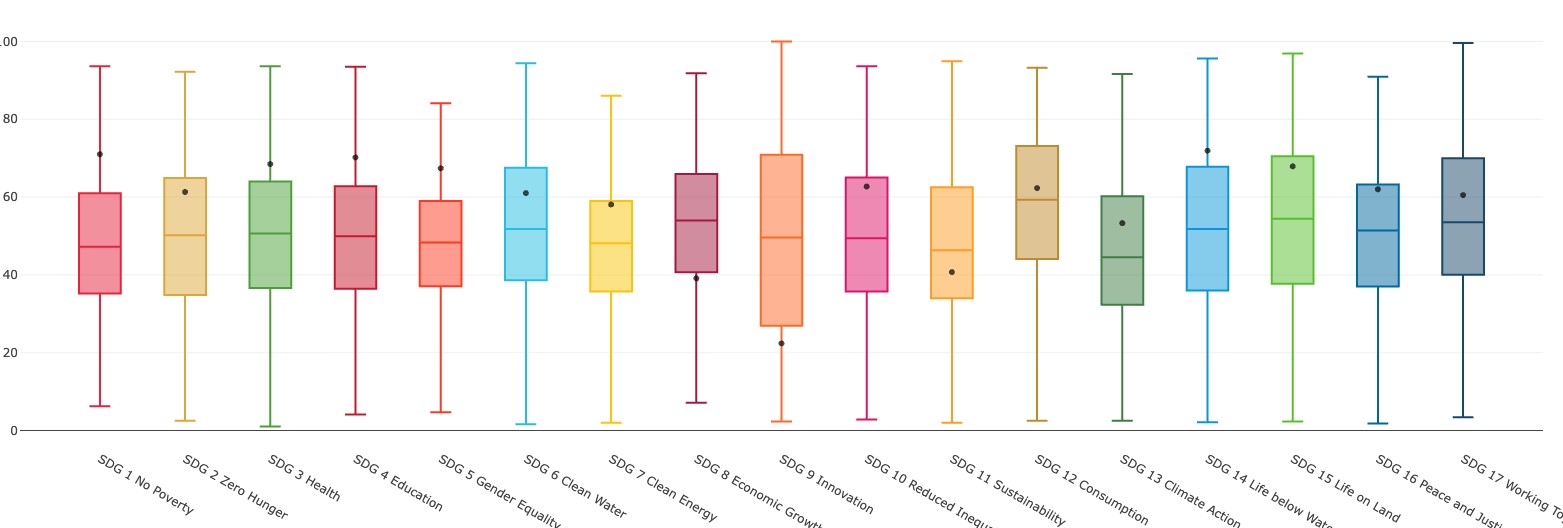
Istanbul Okan University has undertaken a wide range of energy and climate-related programs that contribute significantly to the achievement of the 17 Sustainable Development Goals (SDGs). These initiatives demonstrate a strong commitment to reducing carbon emissions, enhancing energy efficiency, and fostering climate resilience.
Key programs include:
These efforts directly support SDGs 3, 4, 6, 7, 9, 11, 12, 13, and 17, and also contribute indirectly to others, including: